AIINSIGHT NOTE
AI · Web3 · Tech trends and insights at a glance
AI · Web3 · Tech trends and insights at a glance

The Trump administration's strikes on Iran's Kharg Island terminal—through which over 90 percent of Iranian crude exports flow—mark the first time oil infrastructure itself has been directly targeted in the current cycle of Middle East tensions. For AI hyperscalers consuming power at unprecedented scale, the transmission mechanism from crude oil prices to data center operating costs is structural, not incidental.
The Trump administration's decision to strike Kharg Island — the terminal through which more than 90 percent of Iran's crude oil exports flow — marks a qualitative shift in how geopolitical risk interacts with the global technology sector. Previous episodes of Middle East tension, from proxy battles in Yemen to Strait of Hormuz shipping disruptions, rattled energy markets but left the foundational economics of cloud computing largely intact. Targeting the oil infrastructure itself changes that calculus in ways the tech industry has not yet fully priced in.
The link between an island off Iran's southwestern coast and the operating costs of a hyperscaler data center in Virginia or Singapore is not obvious at first glance. It runs through a structural characteristic of modern AI infrastructure that has no precedent in earlier phases of cloud computing: the sheer density of electrical power consumption. A single large-scale GPU cluster engaged in training a frontier language model draws power at a rate that rivals a mid-sized industrial city. Multiply that across the hundreds of facilities that the major cloud providers are currently building or planning, and the aggregate demand number becomes geopolitically sensitive in a way that no prior generation of IT infrastructure ever was.
Natural gas prices in the United States and Europe track crude oil prices with a lag that varies by region and contract structure, but the correlation is robust across commodity cycles. When crude moves up by ten dollars per barrel and sustains that level, the knock-on effect on gas-fired power generation translates to a cost increase of roughly three to five dollars per megawatt-hour. For the average consumer or small business, that increment disappears into quarterly utility bills. For a hyperscaler consuming tens of terawatt-hours annually, the same increment becomes a multi-hundred-million-dollar annual cost event.
The Kharg Island scenario introduces the possibility of a sustained supply shock rather than a temporary disruption. If Iranian crude export capacity is meaningfully reduced for months rather than days, the resulting global oil price premium — estimates in scenarios of prolonged disruption run to twenty or thirty dollars per barrel — would feed into electricity procurement costs at a scale that begins to affect capital allocation decisions. Data centers are long-lived assets, typically depreciated over fifteen to twenty years. When the energy cost inputs that underpin their pro forma economics shift materially, the return calculations that justified hundreds of billions in recent AI infrastructure spending come under pressure.
There is also a more direct geographic channel that receives less analytical attention. Microsoft, Google, and Amazon have all opened or announced major cloud regions in the UAE and Saudi Arabia over the past several years. These facilities draw from regional power grids supplied substantially by natural gas — the same commodity whose price dynamics are most immediately disrupted by Persian Gulf instability. An escalation beyond Kharg Island toward a broader confrontation that threatens regional energy supply could create localized availability risks that long-term power purchase agreements negotiated in calmer times cannot fully absorb.
Hyperscalers are not without defenses against energy price volatility. Long-term power purchase agreements with renewable energy providers lock in generation costs over multi-year horizons and insulate a large share of total consumption from spot market movements. Google has publicly stated that it sources more than ninety percent of its electricity through such contracts. Microsoft and Amazon have similarly aggressive renewable procurement strategies. These arrangements represent genuine risk management, not mere public relations.
But the hedge has limits that a sustained oil price shock would expose. Renewable PPAs cover baseload and intermediate generation; they do not fully neutralize dependence on natural gas peaking plants that come online during periods of high demand or grid stress. The hundred-percent renewable energy claims that hyperscalers publish are measured on an annual average basis, not in real time. During heat waves, cold snaps, or any supply-side disruption that tightens grid capacity, the marginal power clearing price is set by gas — and that gas price now carries a Persian Gulf risk premium that was not in the original model.
The deeper issue is that AI infrastructure investment decisions made over the past two years implicitly assumed that energy remained a manageable cost variable, predictable within a reasonable range and hedgeable through standard commodity instruments. The Kharg Island strike is a reminder that the underlying commodity markets are not separate from the geopolitical order that determines their stability. If the Trump administration's willingness to strike energy infrastructure directly represents a new operational threshold rather than a one-time escalation, the entire cost structure of AI at scale needs to be repriced with a Middle East risk constant that simply was not there before.

The Land-Permit Paradox of Korea's Chip Belt, When the Cluster's Boom Prices Out Its Own Engineers
Dongtan, Giheung, and Guri have been folded into Korea's land-transaction permit regime just as the AI chip capex boom reshapes the property market around the country's largest fabs. The very prosperity the cluster generates is raising the cost for the engineers it depends on to settle nearby. The real test of agglomeration may lie not in siting megafabs but in housing and labor mobility.

The Collapse of the Closed AI Moat and the Supply-Chain Paradox of Unverifiable Weights
DeepSeek-R1's open reasoning weights and Llamafile's single-file distribution are eroding the performance and distribution moats that closed labs once charged a premium for. Yet the same openness collides head-on with the gap exposed by the "250 samples to break an LLM" research: weight distribution that no recipient can verify. Democratized competition and accumulated security debt now sit on the same scale.
Forty-Year Yen Lows as the Hidden Subsidy Behind Japan's Chip Revival
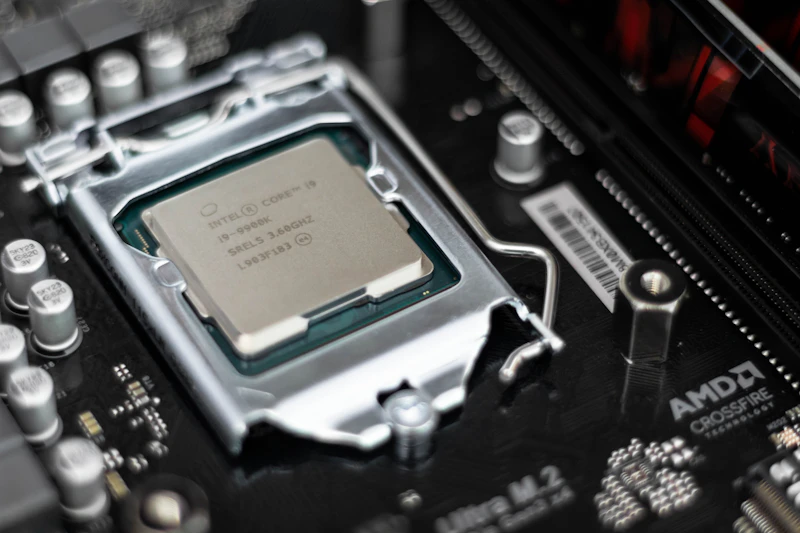
As the yen slides into its weakest territory in four decades, Takaichinomics has entered uncharted monetary terrain. A cheap yen functions as a silent subsidy for Rapidus, Kioxia, and TSMC's Kumamoto fabs—yet the same currency inflates the cost of imported tools and materials and intensifies the talent war with Korea. The question is whether monetary policy can stand in for industrial policy, and what that means for Korea's memory champions.