AIINSIGHT NOTE
AI · Web3 · Tech trends and insights at a glance
AI · Web3 · Tech trends and insights at a glance
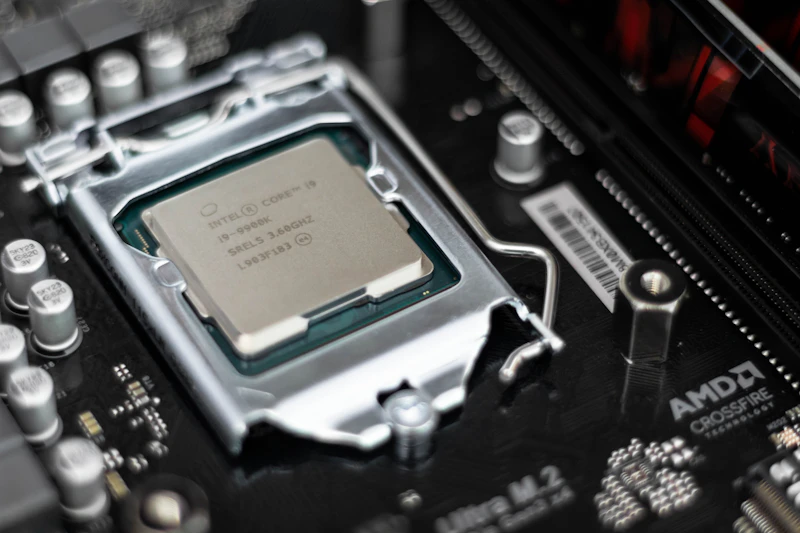
As the yen slides into its weakest territory in four decades, Takaichinomics has entered uncharted monetary terrain. A cheap yen functions as a silent subsidy for Rapidus, Kioxia, and TSMC's Kumamoto fabs—yet the same currency inflates the cost of imported tools and materials and intensifies the talent war with Korea. The question is whether monetary policy can stand in for industrial policy, and what that means for Korea's memory champions.
The yen has slipped into territory it has not seen in forty years, pushing Japan into a stretch of the map the textbooks never charted. The Takaichi government's blend of aggressive fiscal spending and accommodative monetary policy—Takaichinomics—was sold as a recipe for growth and wage recovery. But its most consequential side effect has been to drive the currency to a historic low, and that weak yen has become, intentionally or not, the single most powerful patron of Japan's semiconductor reshoring. Without spending an additional yen of subsidy budget, the exchange rate shaves the entire cost structure of domestic production relative to foreign rivals.
Fab competitiveness ultimately collapses into one number: the cost of producing a wafer at a given process node. Inside Japan, the labor, power, construction, and maintenance bills are all paid in yen—and the moment you convert them into dollars, a four-decade-low exchange rate compresses every line item. TSMC's JASM fab in Kumamoto, Rapidus in Chitose, and Kioxia's NAND lines in Yokkaichi and Kitakami are all beneficiaries of that compression. Run the same tools, etch the same chips, and the Japanese sites enjoy structurally better operating leverage in dollar terms than their counterparts in Taiwan or Korea. On top of the visible industrial policy—the direct equity stakes and grants poured into Rapidus—sits a second, invisible layer of industrial policy delivered entirely through the currency. The point is not that Japan suddenly recovered leading-edge process mastery; it is that the monetary environment now lets it run the same technology more cheaply, and that is what makes the economics of reshoring pencil out.
The trouble is that chipmaking is not a purely domestic industry. Japan dominates the world in critical materials like photoresist and high-purity hydrogen fluoride, but EUV lithography comes from ASML in the Netherlands and advanced EDA tools come from the United States—all billed in dollars or euros. A weak yen lifts export competitiveness, yet it inflates the yen-denominated price of exactly these imported capital goods. Every time a fab installs a lithography system costing tens of billions of yen, the exchange rate pads the invoice. The deeper threat is human. A cheap yen erodes the dollar-equivalent salaries of Japanese engineers, creating an ideal environment for Taiwanese, Korean, and American firms to poach Japanese talent—while making it ever harder for Japanese companies to recruit global specialists on yen-denominated pay. The currency lowers costs, but raises the cost of retaining the very people who are the heart of those costs. For Samsung and SK hynix, this presents a dual challenge: a near-term opportunity to absorb Japanese engineers, and a long-term contest against Japanese sites riding a tailwind of favorable exchange rates.
The deepest question is sustainability. Cost advantage born of the exchange rate evaporates the instant the Bank of Japan turns toward normalization or the US-Japan rate gap narrows. Subsidies are controlled through a budget; the exchange rate is a variable beyond control, and the cost it imposes—through imported inflation eroding household real income—is shared across the entire population. In that sense, the semiconductor boost embedded in Takaichinomics is closer to an implicit redistribution, transferring citizens' purchasing power into a cost subsidy for the fabs. Whether the currency will cooperate for as long as Rapidus needs to reach 2nm volume production, or as long as Kioxia needs to weather the NAND cycle, is something no one can guarantee. The implication for Korea's memory camp is clear. As long as Japan's revival rests on monetary conditions rather than technological self-sufficiency, it is a potent but borrowed competitiveness. When the monetary wind shifts direction, the bill comes due—and both the beneficiaries and the victims of the exchange rate would do well not to forget it.

The Land-Permit Paradox of Korea's Chip Belt, When the Cluster's Boom Prices Out Its Own Engineers
Dongtan, Giheung, and Guri have been folded into Korea's land-transaction permit regime just as the AI chip capex boom reshapes the property market around the country's largest fabs. The very prosperity the cluster generates is raising the cost for the engineers it depends on to settle nearby. The real test of agglomeration may lie not in siting megafabs but in housing and labor mobility.

The Collapse of the Closed AI Moat and the Supply-Chain Paradox of Unverifiable Weights
DeepSeek-R1's open reasoning weights and Llamafile's single-file distribution are eroding the performance and distribution moats that closed labs once charged a premium for. Yet the same openness collides head-on with the gap exposed by the "250 samples to break an LLM" research: weight distribution that no recipient can verify. Democratized competition and accumulated security debt now sit on the same scale.
Apple's Shift to Early Patching, and the Collapse of the Cycle AI Has Compressed
Apple's move from a predictable patch cadence toward early release reflects a deeper recognition: large language models have collapsed the time between a flaw's discovery and its mass exploitation. As attackers automate patch diffing and one-day weaponization, the traditional defensive rhythm breaks down, and defenders must embrace the same AI asymmetry in an escalating machine-versus-machine arms race.