AIINSIGHT NOTE
AI · Web3 · Tech trends and insights at a glance
AI · Web3 · Tech trends and insights at a glance

The Trump administration's public consideration of a $300 billion Iran reconstruction fund—explicitly naming South Korean, Japanese, and European firms as participants—signals a potential restructuring of Middle East energy supply chains that could reshape AI data center economics across the region. For Korean construction and IT firms, the prospect offers a rare opening into a vast, long-dormant market, though structural constraints from American domestic politics and the unresolved Israel-Iran standoff remain formidable barriers.
When the Trump administration floated the idea of a $300 billion Iran reconstruction fund—naming South Korea, Japan, and Europe as intended partners—it did more than send a diplomatic signal. It introduced a variable into the Middle East's emerging AI infrastructure calculus that most analysts were not yet pricing in. Iran holds the world's fourth-largest proven oil reserves and second-largest natural gas reserves. If sanctions relief becomes real rather than rhetorical, the regional energy landscape will shift in ways that reverberate well beyond oil futures markets.
The connection between Iranian hydrocarbons and artificial intelligence computing might seem oblique at first glance. It becomes clearer when you look at how Gulf states have positioned themselves over the past several years.
Saudi Arabia and the UAE have spent the better part of this decade constructing a strategic argument that cheap, abundant energy is the foundation of competitive AI infrastructure. The logic is straightforward: large-scale AI training and inference clusters consume electricity at a rate that makes power pricing one of the dominant variables in total cost of ownership for any cloud or compute operator. The Gulf's combination of hydrocarbon wealth and rapidly expanding solar capacity has made it one of the most attractive regions in the world for hyperscale data center investment. Microsoft, Amazon, and Google have all committed to major deployments across the Gulf precisely because of this cost advantage.
If Iran enters the regional energy market, the arithmetic changes again. Iranian natural gas flowing into regional power grids would intensify price competition among Gulf electricity providers, pushing compute costs lower still and accelerating the capital inflows that are already transforming the Gulf into a global AI hub. More consequentially, Iran itself—with a young, highly educated population that has been digitally isolated by decades of sanctions—would represent one of the largest untapped digital infrastructure markets in the world. The demand for data centers, cloud services, telecommunications upgrades, and smart city platforms would be immediate and massive, adding a new node to the Gulf AI infrastructure belt that currently runs from Riyadh to Abu Dhabi.
This is the dimension of Trump's Iran gambit that tends to get lost in coverage focused narrowly on nuclear negotiations or oil prices. The geopolitical restructuring it implies is as much about who builds the servers and lays the fiber as who pumps the crude.
South Korea's inclusion in the list of intended reconstruction partners is not incidental. Korean construction and engineering firms accumulated deep experience in Middle Eastern markets during the project boom of the 2000s and early 2010s, and while the subsequent oil price downturn compressed margins and intensified local competition, the institutional knowledge and regional relationships remain. More recently, Korean companies have been building a new layer of references in Gulf digital infrastructure—participating in NEOM-related contracts in Saudi Arabia and smart city development projects in the UAE.
An open Iran market would create opportunity across two distinct vectors. The first is traditional infrastructure: decades of underinvestment in Iranian oil, gas, petrochemical, and power facilities have left a backlog of modernization demand that would translate immediately into large-scale engineering procurement and construction contracts. Korean firms have the technical capability and regional credibility to compete credibly for this work.
The second vector is digital infrastructure, and it may prove more durable. Building data centers, deploying enterprise cloud platforms, standing up e-government systems, and supplying AI semiconductors to a market of 88 million people that has been cut off from global technology supply chains is a once-in-a-generation commercial opportunity. Samsung and SK Hynix, already central to the global AI chip supply chain, would find themselves in a structurally advantaged position to serve Iranian demand for memory and logic semiconductors. Korean systems integrators and telecom vendors would find a market that needs to build from the ground up rather than layer onto legacy infrastructure.
The realistic near-term posture for Korean firms, however, is preparation rather than commitment. The prudent strategy is to advance readiness—mapping counterpart relationships, studying regulatory frameworks, modeling commercial scenarios—while simultaneously consolidating positions in UAE and Saudi markets where the business case is already executable. Iran is the high-variance, high-upside bet. The Gulf is the base case.
None of this happens without clearing obstacles that are genuinely formidable. The Israel-Iran conflict has not been resolved; it has been periodically managed, sometimes through near-war. From Israel's perspective, Iranian economic reintegration is inseparable from the question of whether Tehran will regain the financial capacity to sustain its nuclear program and its network of regional proxies. The Trump administration's ability to construct a security architecture that gives Israel credible reassurance while simultaneously offering Iran credible economic incentives is precisely the kind of multi-dimensional negotiation that has defeated every previous diplomatic effort.
Domestic American politics add another layer of uncertainty. The Republican coalition includes constituencies—pro-Israel evangelicals, foreign policy hawks, military aid supporters—that would view any form of Iranian economic rehabilitation as an ideological betrayal. Trump himself, in his first term, withdrew from the JCPOA and imposed the most comprehensive sanctions regime Iran had ever faced. A full reversal in his second term would require him to outmaneuver opposition within his own political base, not just from Democrats or foreign governments.
Even if a nuclear deal were reached, the path from agreement to actual business activity involves additional obstacles: Congressional action on sanctions relief, reintegration into the SWIFT international payments system, insurance and legal clearance for multinational firms operating in Iran, and the management of hardliners within Iran's own political system who have built careers on resistance to Western economic engagement.
Geopolitical opportunity has always come packaged with uncertainty. If Trump's $300 billion reconstruction vision is realized, it will redraw the Middle East AI infrastructure map and open commercial doors that have been closed for decades. The probability of full realization in the near term remains lower than the volume of speculation suggests. But the direction of travel—toward some form of Iranian reengagement with the global economy—is clearer now than it has been at any point since 2015. For Korean firms with the patience to prepare and the flexibility to move quickly when conditions change, that directional clarity is itself a form of strategic signal worth acting on.
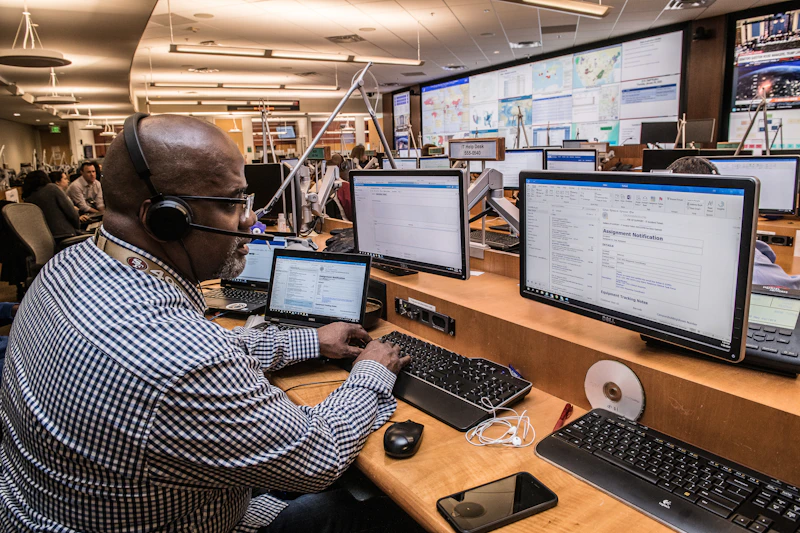
The Land-Permit Paradox of Korea's Chip Belt, When the Cluster's Boom Prices Out Its Own Engineers
Dongtan, Giheung, and Guri have been folded into Korea's land-transaction permit regime just as the AI chip capex boom reshapes the property market around the country's largest fabs. The very prosperity the cluster generates is raising the cost for the engineers it depends on to settle nearby. The real test of agglomeration may lie not in siting megafabs but in housing and labor mobility.
The Collapse of the Closed AI Moat and the Supply-Chain Paradox of Unverifiable Weights
DeepSeek-R1's open reasoning weights and Llamafile's single-file distribution are eroding the performance and distribution moats that closed labs once charged a premium for. Yet the same openness collides head-on with the gap exposed by the "250 samples to break an LLM" research: weight distribution that no recipient can verify. Democratized competition and accumulated security debt now sit on the same scale.
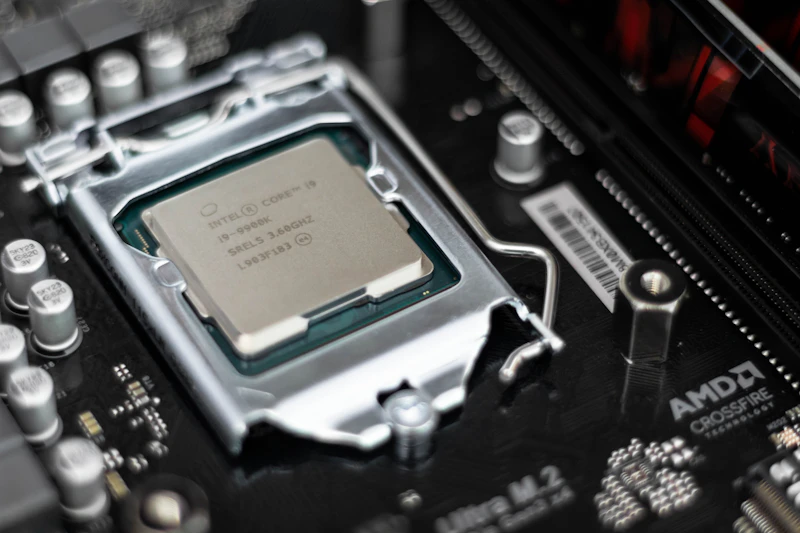
Forty-Year Yen Lows as the Hidden Subsidy Behind Japan's Chip Revival
As the yen slides into its weakest territory in four decades, Takaichinomics has entered uncharted monetary terrain. A cheap yen functions as a silent subsidy for Rapidus, Kioxia, and TSMC's Kumamoto fabs—yet the same currency inflates the cost of imported tools and materials and intensifies the talent war with Korea. The question is whether monetary policy can stand in for industrial policy, and what that means for Korea's memory champions.