AIINSIGHT NOTE
AI · Web3 · Tech trends and insights at a glance
AI · Web3 · Tech trends and insights at a glance

When thousands of retail investors received zero shares in the SpaceX public offering, it was framed as a demand-supply mismatch. In reality, it exposed a deeper architecture: the most explosive growth phases of AI-era hypercale companies are systematically captured by institutional insiders before the public is ever invited in. This column examines how the zero-share outcome mirrors the broader concentration of compute capital — and why AI's democratization narrative conceals a new form of structural inequality.
When SpaceX conducted its long-anticipated public offering in 2026, thousands of retail investors discovered they had been allocated zero shares. The explanation offered was straightforward: demand overwhelmed supply. But this framing treats the outcome as a failure of logistics rather than a feature of design. The zero-share result was not an anomaly. It was the system operating exactly as intended.
The real price discovery for SpaceX did not happen on IPO day. It happened across multiple rounds of secondary market transactions, special purpose vehicles accessible only to institutional partners, and insider tender offers reserved for accredited investors with the right relationships. By the time a retail investor clicked submit on a brokerage application, SpaceX's valuation had already been stress-tested and repriced through dozens of private transactions. The IPO was not an entry point into a growth story. It was an exit ramp for those who had entered years earlier.
This architecture is not unique to SpaceX. Anthropic, OpenAI, xAI, and the other companies defining the current AI era have all made the same structural choice: delay public markets, extend the private capital phase, and keep early-stage returns circulating within a closed network of venture capital firms, sovereign wealth funds, and the personal networks of founders and early employees. The investors most culturally and economically disrupted by AI are precisely those who have no access to the private funding rounds where AI's most consequential wealth is being created. By the time public participation is offered, the growth curve's steepest section has already been monetized.
History has seen this pattern before. The venture returns of the dot-com era, the platform monopolies of the smartphone age, the infrastructure lock-ins of the cloud transition — each technology cycle has concentrated early-stage gains within a network invisible to most participants. What distinguishes the current moment is velocity and opacity. The time from founding to billion-dollar valuation has compressed from years to months for leading AI companies. And the mechanisms of exclusion — algorithmic access controls, GPU scarcity, proprietary data moats — are considerably less legible to regulators and the public than the patent monopolies or distribution lock-ins of prior cycles.
Running parallel to this capital exclusion is the AI industry's loudly proclaimed commitment to democratization. Meta releases Llama model weights as open source. Google makes Gemini available at no cost to consumers. Microsoft bundles Copilot into Office subscriptions at scale. The message is consistent and sincere in its way: AI is for everyone.
But this narrative is incomplete in a way that matters. What is being democratized is access to AI outputs — the ability to generate text, images, code, and analysis. What is not being democratized is the infrastructure that produces these outputs. The GPU clusters, hyperscale data centers, proprietary training pipelines, and energy contracts underpinning frontier AI remain concentrated in the hands of perhaps five or six companies globally. No open-source release changes that arithmetic.
Open-source models, for all their freely distributed weights, cannot escape this gravitational field. Running a large language model at meaningful scale requires exactly the compute infrastructure that only the hyperscalers control. A model released freely by Meta effectively becomes a customer acquisition mechanism for Amazon Web Services, Google Cloud, or Microsoft Azure. The "free" model is, in practice, a funnel into the compute market the democratization narrative was supposedly challenging. The tool is shared; the machine that makes the tool run is not.
This is the second layer of capital concentration in the AI era. If the first layer is the institutional lock-up of equity in private AI companies, the second is the consolidation of the physical and digital means of production. The dynamic recalls the industrial revolution: the technology becomes widely used, but the factories that produce it are owned by fewer and fewer hands. Access to outputs is not the same as access to productive assets.
There are genuine efforts to address these asymmetries. Retail investor access reform, tokenized equity markets, and decentralized compute networks represent real attempts to redesign the capital stack from the outside. But regulatory and institutional apparatus consistently moves at a pace the technology cycle outpaces. By the time access rules are rewritten for the AI era, the next infrastructure layer — quantum compute, neuromorphic architectures, whatever follows — will already be in its own private accumulation phase, with its own exclusive SPVs and its own network of pre-selected beneficiaries.
The zero-share allocation at SpaceX is, in this light, less about one company's IPO and more about the operating logic of technological capitalism in the mid-2020s: the frontier is always already owned by the time the public is invited in. Each technology transition produces a version of this pattern, but the AI era's version is faster, less visible, and insulated by a democratization narrative that makes critique harder to land. Pointing to Llama's open weights while the compute stack consolidates is the equivalent of celebrating the public library while the printing presses remain in private hands.
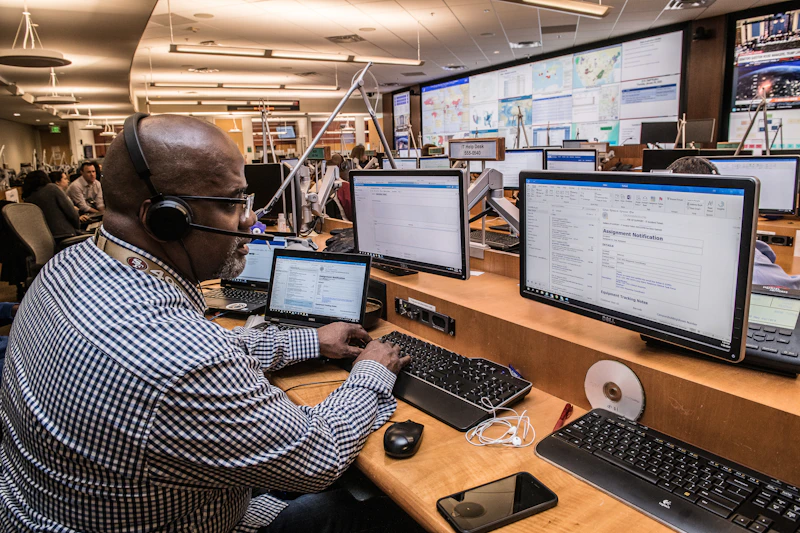
The Land-Permit Paradox of Korea's Chip Belt, When the Cluster's Boom Prices Out Its Own Engineers
Dongtan, Giheung, and Guri have been folded into Korea's land-transaction permit regime just as the AI chip capex boom reshapes the property market around the country's largest fabs. The very prosperity the cluster generates is raising the cost for the engineers it depends on to settle nearby. The real test of agglomeration may lie not in siting megafabs but in housing and labor mobility.

The Collapse of the Closed AI Moat and the Supply-Chain Paradox of Unverifiable Weights
DeepSeek-R1's open reasoning weights and Llamafile's single-file distribution are eroding the performance and distribution moats that closed labs once charged a premium for. Yet the same openness collides head-on with the gap exposed by the "250 samples to break an LLM" research: weight distribution that no recipient can verify. Democratized competition and accumulated security debt now sit on the same scale.
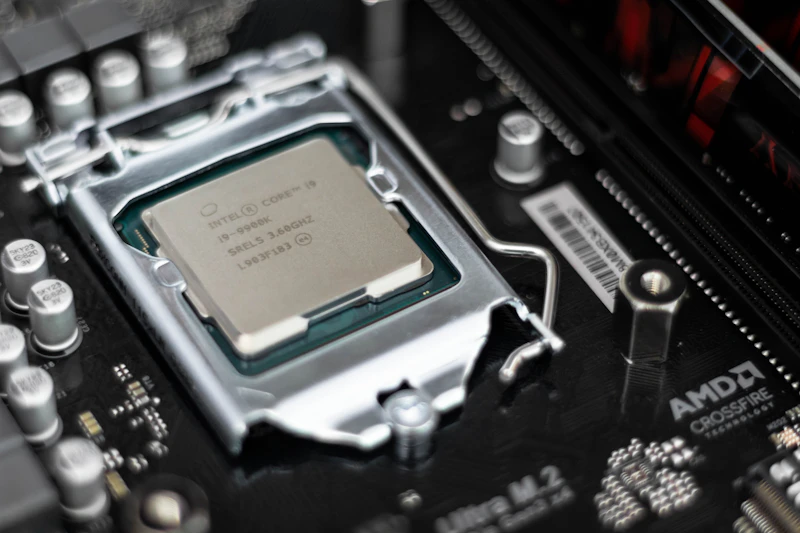
Forty-Year Yen Lows as the Hidden Subsidy Behind Japan's Chip Revival
As the yen slides into its weakest territory in four decades, Takaichinomics has entered uncharted monetary terrain. A cheap yen functions as a silent subsidy for Rapidus, Kioxia, and TSMC's Kumamoto fabs—yet the same currency inflates the cost of imported tools and materials and intensifies the talent war with Korea. The question is whether monetary policy can stand in for industrial policy, and what that means for Korea's memory champions.