AIINSIGHT NOTE
AI · Web3 · Tech trends and insights at a glance
AI · Web3 · Tech trends and insights at a glance

Mirae Asset's decision to open SpaceX pre-IPO subscriptions to Korean retail investors marks a structural shift: space infrastructure moving from institutional privilege to accessible asset class. The more consequential framing, however, is whether Starlink represents a satellite internet company or the foundational orbital edge layer of distributed AI inference.
When Mirae Asset Securities opened SpaceX pre-IPO subscriptions to Korean retail investors in June 2026, the announcement arrived dressed as a democratization story—a chance for ordinary savers to access one of the world's most valuable private companies before its eventual public listing. That framing is not wrong, but it is incomplete. The more consequential question is not who gets to buy SpaceX, but what exactly they are buying into: a satellite connectivity business, or the foundational infrastructure layer of distributed AI for the next decade.
The conventional narrative treats Starlink as broadband for the underserved—connectivity for fishing vessels, remote farms, and disaster zones where fiber cannot reach. That reading is accurate, but it captures only the surface of the strategic position SpaceX now occupies. As AI workloads migrate outward from centralized data centers toward the edge of the network, the relevant question becomes: where does the edge end?
Low Earth Orbit constellations are already approaching terrestrial fiber in both throughput and latency. The next frontier is not simply faster satellite internet but computational satellites—nodes equipped with AI inference chips that process data autonomously without routing every request back to a ground station. Military reconnaissance, maritime logistics, precision agriculture, and autonomous ocean monitoring are already piloting this model. As connected systems push intelligence into environments where fiber never reaches, the entity controlling the orbital compute layer captures value that looks less like a telecom company and more like a cloud provider.
SpaceX's structural advantage here is not merely technological. Its ownership of the full launch stack—Falcon 9 and Starship—compresses satellite deployment costs by an order of magnitude relative to competitors. This is not a temporary lead; it functions as a structural moat. Rivals like Amazon's Kuiper and Europe's OneWeb must purchase or negotiate launch capacity, meaning their own cost curves are partially governed by the pricing decisions of the company they are competing against. That vertical integration of launch and connectivity is what gives SpaceX an asymmetric position in any scenario where orbital compute graduates from science fiction to real infrastructure.
Investing on a ten-year infrastructure convergence thesis is intellectually coherent. Acting on it through a pre-IPO subscription product sold to retail participants is a different proposition, and the distance between the two deserves clear-eyed attention.
Valuation opacity is the first tension. SpaceX has never filed public financials, and the reference prices used for subscription products derive from secondary market trades among sophisticated institutional and high-net-worth participants. Those prices embed liquidity premiums, information asymmetries, and narrative momentum that may or may not reflect intrinsic value. There is no comparable public company—no ticker that prices a vertically integrated launch-plus-LEO-connectivity business at scale—which means any valuation is, at bottom, a conviction bet on a story rather than a discounted cash flow grounded in observable comparables.
The liquidity risk is equally concrete. Retail subscribers cannot exit until SpaceX completes a public listing, the timing of which remains open-ended. Institutional investors manage this exposure through portfolio-level liquidity buffers. Individual investors absorb it directly. In a rate environment where alternative assets compete aggressively for capital, the opportunity cost of locked-up funds is not a theoretical concern.
Then there is the competitive trajectory. Amazon's Project Kuiper carries the full weight of AWS infrastructure behind it, and the most probable endgame for Kuiper is a bundled satellite-cloud offering that gives enterprise customers seamless continuity between orbital connectivity and Amazon's compute stack. If the LEO AI-edge market resolves into a duopoly rather than a SpaceX-dominant structure, the premium multiple currently embedded in SpaceX's implied valuation will face pressure. Infrastructure bets that were directionally correct but mispriced at entry are a familiar chapter in the history of technology investing.
None of this invalidates the convergence thesis. Space infrastructure and AI distribution are on a genuine collision course, and the entity that controls both the orbital layer and the launch economics will likely command extraordinary leverage over the next generation of connected intelligence systems. But investors subscribing through retail channels are not simply buying that thesis—they are buying a specific price, a specific liquidity structure, and a specific set of assumptions about competitive dynamics that may prove far more contested than the headline narrative suggests. Knowing precisely what you hold is not a detail to defer until after the allotment clears; it is the beginning of a serious position.

The Land-Permit Paradox of Korea's Chip Belt, When the Cluster's Boom Prices Out Its Own Engineers
Dongtan, Giheung, and Guri have been folded into Korea's land-transaction permit regime just as the AI chip capex boom reshapes the property market around the country's largest fabs. The very prosperity the cluster generates is raising the cost for the engineers it depends on to settle nearby. The real test of agglomeration may lie not in siting megafabs but in housing and labor mobility.

The Collapse of the Closed AI Moat and the Supply-Chain Paradox of Unverifiable Weights
DeepSeek-R1's open reasoning weights and Llamafile's single-file distribution are eroding the performance and distribution moats that closed labs once charged a premium for. Yet the same openness collides head-on with the gap exposed by the "250 samples to break an LLM" research: weight distribution that no recipient can verify. Democratized competition and accumulated security debt now sit on the same scale.
Forty-Year Yen Lows as the Hidden Subsidy Behind Japan's Chip Revival
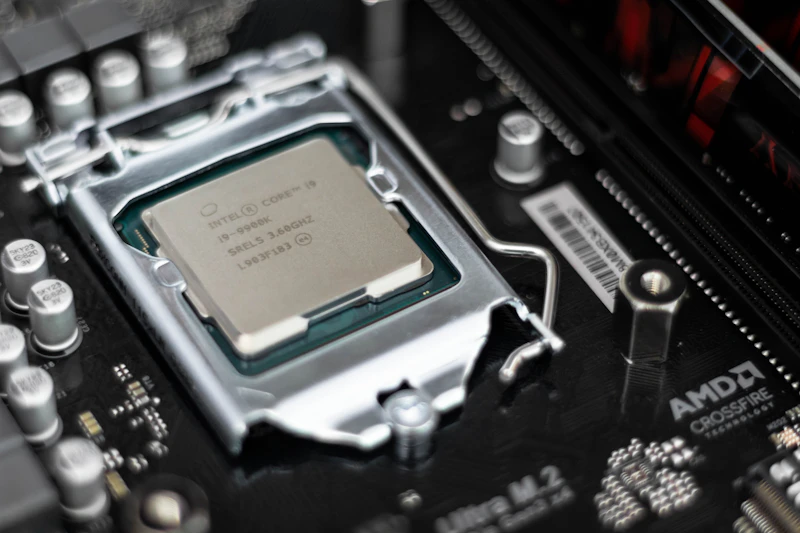
As the yen slides into its weakest territory in four decades, Takaichinomics has entered uncharted monetary terrain. A cheap yen functions as a silent subsidy for Rapidus, Kioxia, and TSMC's Kumamoto fabs—yet the same currency inflates the cost of imported tools and materials and intensifies the talent war with Korea. The question is whether monetary policy can stand in for industrial policy, and what that means for Korea's memory champions.