AIINSIGHT NOTE
AI · Web3 · Tech trends and insights at a glance
AI · Web3 · Tech trends and insights at a glance

SK Hynix crossing two million won and KOSPI breaking 8,000 is not merely a price milestone — it is the market's verdict on a structural shift in how memory is priced and demanded. Whether the valuation is justified depends on premises that are real but fragile.
The memory semiconductor business has always been cyclical, but cycles have a way of changing character when the underlying demand driver changes. SK Hynix's stock crossing the two-million-won threshold in May 2026, coinciding with KOSPI's first close above 8,000, is the kind of milestone that invites both celebration and scrutiny. The question worth asking is not whether this rally is real — it clearly is — but whether the structural premises beneath it hold under pressure.
For much of the past three decades, DRAM was a commodity trapped in a boom-bust dynamic. Capacity additions lag demand, prices spike, everyone builds, supply floods the market, prices collapse, the weakest players exit, and the cycle begins again. What made memory a structurally difficult investment was precisely this predictability: the excess profit was always self-eroding. The emergence of HBM as the critical interface between compute and memory in AI accelerators has introduced a different dynamic, and understanding it requires stepping back from the price chart.
High Bandwidth Memory is not simply DRAM stacked vertically. It is a product that demands Through-Silicon Via interconnects, advanced packaging, and thermal management capabilities that sit well outside the reach of commodity processes. The technical barrier is real and matters enormously for competitive positioning. SK Hynix's early lead in HBM — cemented through deep co-engineering with Nvidia over multiple product generations — reflects years of packaging know-how that competitors cannot replicate on a short timeline.
The economics follow the technology gap. Estimates of HBM3E average selling prices suggest they run five to eight times the equivalent capacity of standard DDR5, and they are sold under long-term supply agreements that smooth out the volatility that historically plagued spot DRAM pricing. For the first time in the history of the Korean memory industry, a significant portion of output is priced more like an engineered system component than a bulk commodity. SK Hynix's operating margins reaching levels that exceed even the peak of the 2017–2018 upcycle are not an anomaly — they are the arithmetic result of this structural premium.
The demand side reinforces the cycle's durability in a way that earlier semiconductor booms did not. Hyperscaler capital expenditure on AI infrastructure is not governed by consumer sentiment or short-term IT refresh cycles. Microsoft, Google, Amazon, and Meta have each made multi-year public commitments to AI data center build-out totaling hundreds of billions of dollars. The underlying logic is competitive: falling behind on AI infrastructure is not a cost optimization — it is a strategic retreat. This creates a level of demand visibility that the memory industry has not historically enjoyed, and it is precisely this visibility that the current valuation is attempting to price in.
Even a genuine structural shift can be overpriced. The more honest question is whether SK Hynix's implied market cap near 160 trillion KRW at the two-million-won level correctly discounts the forward earnings trajectory, or whether it is borrowing confidence from a scenario that has yet to fully materialize.
Three risks sit beneath the surface. The first is competitive convergence. Samsung is actively closing its HBM certification gap with Nvidia, and Micron has announced aggressive capacity expansion in HBM3E. The premium pricing that currently defines HBM economics depends on supply remaining meaningfully tight relative to demand. As capacity additions come online through 2026 and into 2027, the margin structure could compress even if total unit volumes continue to grow. The second risk is customer concentration. SK Hynix's HBM story is, in large part, an Nvidia story. Should custom silicon from Google's TPU division, Amazon's Trainium, or an emerging accelerator begin to materially displace Nvidia in certain workloads, the demand funnel narrows in ways that are difficult to hedge. The third risk is the monetization trajectory of AI applications themselves. Hyperscaler spending is ultimately governed by revenue expectations from AI services. If those services fail to convert infrastructure investment into durable revenue streams at the pace analysts assume, the capex cycle will be revised downward.
None of these risks makes the current rally irrational. They do suggest that the valuation leaves limited margin for error. KOSPI at 8,000 and SK Hynix at two million won represent the market's collective judgment that the structural shift is real, durable, and not yet fully priced in. That judgment has better-than-usual foundations — the technology moat, the pricing power, the strategic nature of demand are all genuine. But judgment it remains, and the degree to which it is justified will be settled not in price targets but in the next two or three earnings cycles, when the gap between expectation and supply-chain reality becomes legible.

The Land-Permit Paradox of Korea's Chip Belt, When the Cluster's Boom Prices Out Its Own Engineers
Dongtan, Giheung, and Guri have been folded into Korea's land-transaction permit regime just as the AI chip capex boom reshapes the property market around the country's largest fabs. The very prosperity the cluster generates is raising the cost for the engineers it depends on to settle nearby. The real test of agglomeration may lie not in siting megafabs but in housing and labor mobility.

The Collapse of the Closed AI Moat and the Supply-Chain Paradox of Unverifiable Weights
DeepSeek-R1's open reasoning weights and Llamafile's single-file distribution are eroding the performance and distribution moats that closed labs once charged a premium for. Yet the same openness collides head-on with the gap exposed by the "250 samples to break an LLM" research: weight distribution that no recipient can verify. Democratized competition and accumulated security debt now sit on the same scale.
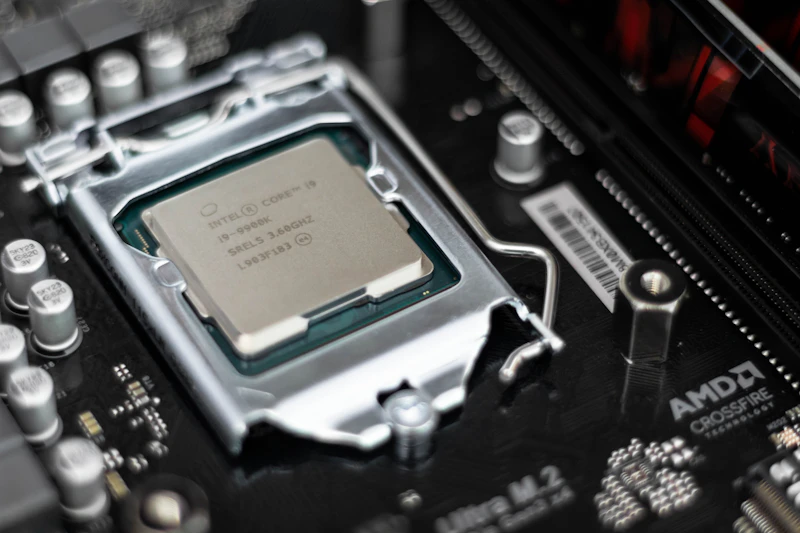
Forty-Year Yen Lows as the Hidden Subsidy Behind Japan's Chip Revival
As the yen slides into its weakest territory in four decades, Takaichinomics has entered uncharted monetary terrain. A cheap yen functions as a silent subsidy for Rapidus, Kioxia, and TSMC's Kumamoto fabs—yet the same currency inflates the cost of imported tools and materials and intensifies the talent war with Korea. The question is whether monetary policy can stand in for industrial policy, and what that means for Korea's memory champions.