AIINSIGHT NOTE
AI · Web3 · Tech trends and insights at a glance
AI · Web3 · Tech trends and insights at a glance

Single-stock leveraged ETFs tracking AI darlings like Nvidia and SK Hynix have begun trading at distorted premiums to their underlying value. As speculative demand bends product design out of shape, investors find themselves betting not on a company's worth but on the structural risk of the wrapper itself. This is a look at how the financialization of the AI narrative amplifies the very volatility it feeds on.
The promise sounds disarmingly simple: take one stock's daily move and hand it back to you, doubled. When Nvidia climbs five percent, you pocket ten; when SK Hynix surges, you feel twice the thrill. Single-stock leveraged exchange-traded funds package precisely this intuition and place it in front of retail investors. Yet lately these products have begun trading at prices that drift sharply away from the value of what they actually hold, and the gap has exposed a structural flaw lurking behind the promise. The deeper issue is not a single asset manager's misstep. It is the way speculative appetite for AI and semiconductor names has bent the very design of financial products out of shape.
A premium, in this context, is the distance between an ETF's market price and the net asset value of its holdings. In a healthy fund, authorized participants close that distance through relentless arbitrage, creating new shares when the price runs hot and redeeming them when it runs cold, keeping the wrapper tethered to its contents. In single-stock leveraged products, this machinery seizes up far too often. To maintain a fixed multiple of daily returns, the fund must rebalance its position near every market close, buying or selling the underlying or its derivatives. When that underlying is something as violently volatile as Nvidia, the cost and risk of rebalancing explode. The pool of counterparties willing to write the necessary swaps is thin, and for foreign-listed names, currency and time-zone gaps add further friction. When creation is choked off and buy orders pile up regardless, the share price floats untethered above its asset value. Premiums reaching double digits were not an anomaly to shrug at; they were a signal that the arbitrage circuit had broken.
At that moment the nature of the investor's risk changes completely. Someone who buys Nvidia shares outright is betting on a reasonably legible object: the company's earnings and prospects. Someone who buys a leveraged ETF trading at an inflated premium is staking money on an entirely different and far murkier question, namely whether the product will ever revert to fair value. The underlying can rise while the premium collapses, handing the holder a loss; layered on top is the slow erosion of value that daily rebalancing inflicts through volatility decay. Without quite realizing it, the investor has stopped betting on a business and started betting on the architecture of a product.
Why now, and why with AI names in particular? The answer lies on the demand side. The sweeping story that artificial intelligence will remake the world has seized the imagination of retail investors, and capital has crowded into the handful of stocks at its center. Crucially, this fervor wanted more than ordinary share-buying; it craved amplified instruments to express conviction. Asset managers, unwilling to leave that demand unmet, raced to issue single-stock leveraged products, sometimes with unseemly haste. The paradox that the very volatility making these stocks attractive is also what makes a leveraged wrapper hardest to run cleanly was lost in the speed of the launch race.
What surfaces here is the financialization of the AI narrative. The more powerful a story becomes, the more financial products spring up to amplify it, and those products in turn feed back into the volatility of the underlying. Because daily rebalancing structurally forces trend-chasing behavior, buying more as the price rises and selling more as it falls, a growing fund magnifies the very swings of the stock it tracks. Narrative breeds product, product breeds volatility, and heightened volatility summons fresh appetite for ever more aggressive bets. Retail speculation, manager supply, and market microstructure interlock into a loop in which risk reproduces itself.
The premium episode, then, is less a story about one defective product than an illustration of what happens when a potent technological story collides with the plumbing of finance. The value AI eventually creates may well be real. But when the channel for betting on that future drifts away from corporate fundamentals and is replaced by the structural risk of a wrapper, what the investor actually buys is no longer the future of artificial intelligence but financialized volatility itself. That is precisely why regulators ought to apply a sterner standard to the pace of product launches and the clarity of risk disclosure.

The Land-Permit Paradox of Korea's Chip Belt, When the Cluster's Boom Prices Out Its Own Engineers
Dongtan, Giheung, and Guri have been folded into Korea's land-transaction permit regime just as the AI chip capex boom reshapes the property market around the country's largest fabs. The very prosperity the cluster generates is raising the cost for the engineers it depends on to settle nearby. The real test of agglomeration may lie not in siting megafabs but in housing and labor mobility.

The Collapse of the Closed AI Moat and the Supply-Chain Paradox of Unverifiable Weights
DeepSeek-R1's open reasoning weights and Llamafile's single-file distribution are eroding the performance and distribution moats that closed labs once charged a premium for. Yet the same openness collides head-on with the gap exposed by the "250 samples to break an LLM" research: weight distribution that no recipient can verify. Democratized competition and accumulated security debt now sit on the same scale.
Forty-Year Yen Lows as the Hidden Subsidy Behind Japan's Chip Revival
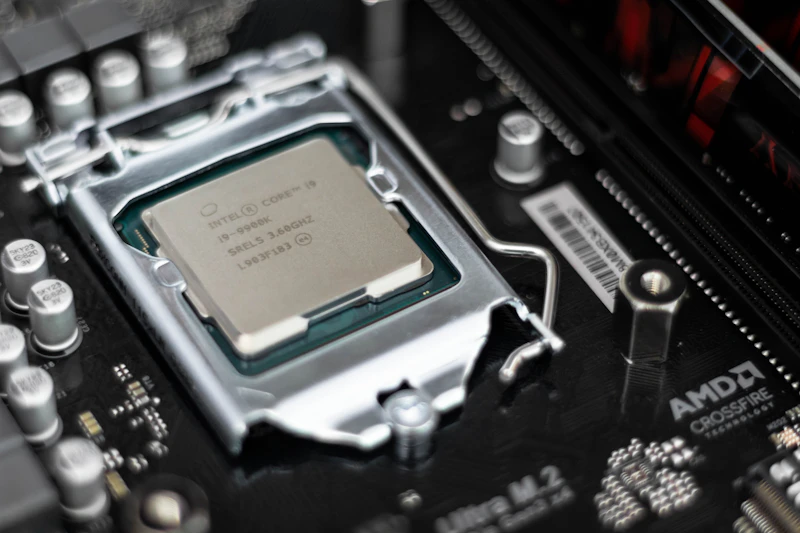
As the yen slides into its weakest territory in four decades, Takaichinomics has entered uncharted monetary terrain. A cheap yen functions as a silent subsidy for Rapidus, Kioxia, and TSMC's Kumamoto fabs—yet the same currency inflates the cost of imported tools and materials and intensifies the talent war with Korea. The question is whether monetary policy can stand in for industrial policy, and what that means for Korea's memory champions.