AIINSIGHT NOTE
AI · Web3 · Tech trends and insights at a glance
AI · Web3 · Tech trends and insights at a glance

South Korea's plan to localize 90% of ultra-pure water process equipment by 2030 is the least glamorous—but arguably most consequential—piece of its semiconductor supply chain independence agenda. The 2021 urea shock demonstrated how a single overlooked input can paralyze entire industries; semiconductor fabs face an analogous latent risk in water purification systems still dominated by Japanese and American suppliers. This column asks whether the localization target actually closes the vulnerability, or merely shifts it upstream.
When analysts map semiconductor supply chain vulnerabilities, the conversation reliably gravitates toward EUV lithography machines monopolized by ASML, high-purity hydrogen fluoride once weaponized by Japan's 2019 export controls, or photomask blanks sourced from a narrow band of Japanese specialty glass makers. These are legitimate chokepoints. But there is another layer of the supply chain that rarely makes headlines and is, in its own quiet way, just as fragile: the equipment that produces ultra-pure water.
Ultra-pure water—known in the industry as UPW—is not a novelty material. It is the circulatory system of semiconductor manufacturing. Fabricating chips at sub-ten-nanometer nodes demands water with a resistivity of 18.2 MΩ·cm, essentially free from ions, organics, dissolved gases, and microparticles at concentrations measured in parts per trillion. A single contamination event can ruin an entire production batch. Samsung's Pyeongtaek complex and SK Hynix's Icheon fabs consume hundreds of thousands of tons of ultra-pure water every day. And the reverse osmosis membranes, ion-exchange resins, UV oxidation units, and high-purity fittings that produce this water are overwhelmingly sourced from Japanese suppliers like Organo and Kurita, or their American counterparts.
South Korea's government has announced a target of 90% domestic localization of UPW front-end process equipment by 2030. The ambition is clear. What deserves scrutiny is whether that number translates into actual risk reduction, or whether it is primarily a policy optic.
The 2021 urea solution crisis offers a useful reference frame. South Korea's fleet of diesel vehicles—trucks, buses, construction machinery—depended on AdBlue, a urea-based additive for emissions control. Nearly all of the urea was sourced from China. When China restricted exports amid its own domestic energy constraints, South Korea's supply evaporated within weeks. Tens of thousands of commercial vehicles faced imminent shutdown. The government scrambled to secure emergency imports while domestic producers pivoted, but the episode exposed how a single overlooked input could seize an entire economy's logistics apparatus.
Ultra-pure water inputs carry a structurally similar risk profile, but the downstream consequences of a disruption would be categorically more severe. A semiconductor fab is not a diesel truck. It cannot idle for a few weeks while alternatives are sourced. A day of unplanned downtime at a leading-edge fab costs tens of millions of dollars in lost output, to say nothing of the recovery time needed after a contamination event. UPW system components are therefore mission-critical in the most literal sense.
The obstacle to localization is not purely technical. South Korean companies have made genuine progress in reverse osmosis membrane fabrication and ion-exchange resin synthesis. The more structural problem is on the demand side. Fab operators have almost no incentive to swap out certified UPW components mid-cycle. These systems operate for a decade or more once installed. Qualifying a new supplier typically takes two to four years and requires the fab to accept audit risk and potential yield variability throughout the trial period. Even if a domestic supplier achieves technical parity, the path from capability to adoption is long and the costs are borne almost entirely by the supplier rather than the fab.
The government's 90% localization target needs to be disaggregated before it can be evaluated. If the metric counts component types rather than purchase value or installed capacity, a high localization rate could coexist with near-total import dependence for the highest-criticality items in the UPW stack. The devil, as always, is in the denominator.
Even a well-designed localization program faces a deeper structural challenge: upstream raw material dependency. Domestically manufactured ion-exchange resins still require specialty polymer precursors. Reverse osmosis membranes require fluorinated polymer films. If these inputs remain import-dependent—especially from a concentrated supplier base—then localization shifts the single point of failure one tier upstream rather than eliminating it. A genuine supply chain resilience analysis must trace vulnerability not to Tier-1 suppliers but through to Tier-N raw material origins.
There is also the question of scope. Ultra-pure water is one input in a semiconductor supply chain that includes dozens of similarly fragile dependencies: photoresists, chemical mechanical planarization slurries, specialty gases, and the EUV equipment itself. Closing the UPW gap addresses a real vulnerability, but it does not move the needle on the larger strategic exposure to ASML's lithography monopoly or Japan's continued dominance in photomask and advanced chemical supply.
None of this is an argument against localization. The 2019 export controls demonstrated that geopolitical risk in semiconductor supply is not hypothetical. Building domestic capability in UPW equipment is a legitimate and necessary investment—not only for supply resilience, but for the industrial ecosystem it creates around high-precision fluid handling and contamination control. These capabilities compound. They feed into future technology cycles in ways that are difficult to predict and consistently undervalued in near-term policy calculus.
The honest assessment is that Korea's 2030 localization target is a meaningful step in the right direction, constrained by the structural realities of how semiconductor fabs make sourcing decisions. Its success should be measured not by the percentage figure achieved on paper, but by how many domestic UPW components are actually running in production fabs by 2030, and how many contamination-free hours they have logged. That is the number that matters.

The Land-Permit Paradox of Korea's Chip Belt, When the Cluster's Boom Prices Out Its Own Engineers
Dongtan, Giheung, and Guri have been folded into Korea's land-transaction permit regime just as the AI chip capex boom reshapes the property market around the country's largest fabs. The very prosperity the cluster generates is raising the cost for the engineers it depends on to settle nearby. The real test of agglomeration may lie not in siting megafabs but in housing and labor mobility.

The Collapse of the Closed AI Moat and the Supply-Chain Paradox of Unverifiable Weights
DeepSeek-R1's open reasoning weights and Llamafile's single-file distribution are eroding the performance and distribution moats that closed labs once charged a premium for. Yet the same openness collides head-on with the gap exposed by the "250 samples to break an LLM" research: weight distribution that no recipient can verify. Democratized competition and accumulated security debt now sit on the same scale.
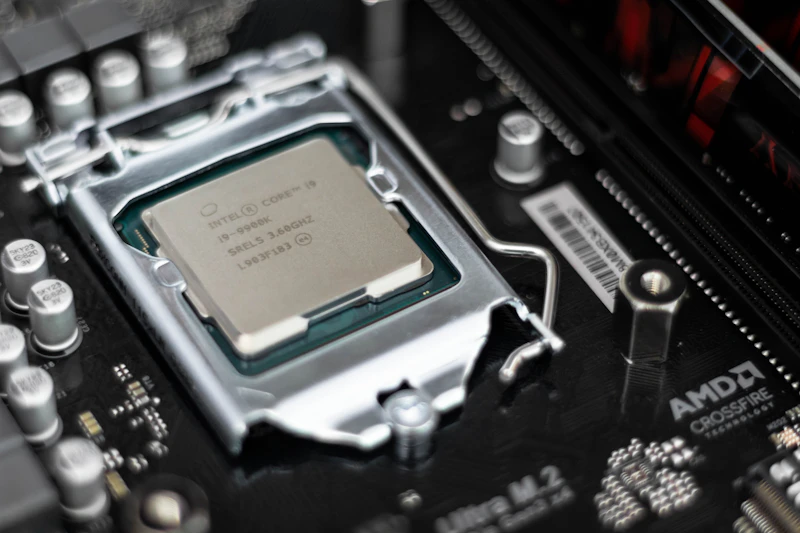
Forty-Year Yen Lows as the Hidden Subsidy Behind Japan's Chip Revival
As the yen slides into its weakest territory in four decades, Takaichinomics has entered uncharted monetary terrain. A cheap yen functions as a silent subsidy for Rapidus, Kioxia, and TSMC's Kumamoto fabs—yet the same currency inflates the cost of imported tools and materials and intensifies the talent war with Korea. The question is whether monetary policy can stand in for industrial policy, and what that means for Korea's memory champions.