AIINSIGHT NOTE
AI · Web3 · Tech trends and insights at a glance
AI · Web3 · Tech trends and insights at a glance

Apartment prices along South Korea's semiconductor corridor — the axis linking Samsung's Pyeongtaek campus to SK Hynix's Icheon cluster — are moving in lockstep with AI chip demand cycles. The synchronized surge in Dongtan, Bundang, and Yeongtong raises a sharper question than mere speculative overheating: whether the AI supercycle is permanently concentrating asset value along a narrow geographic belt, and what that means for the regions left outside it.
When apartment prices in Dongtan jumped 2.2 percent in a single week, with Bundang and Yeongtong rising in tandem, the obvious narrative was speculative overheating. South Korean housing markets have seen those cycles before. But the geography of this particular surge is harder to dismiss. The neighborhoods registering the sharpest gains sit within commuting range of two of the world's most strategically significant semiconductor facilities: Samsung Electronics' Pyeongtaek mega-campus and SK Hynix's Icheon HBM production hub. The spatial pattern is not incidental. It is the housing market's way of pricing in the AI semiconductor supercycle.
Three structural forces separate this moment from a standard property bubble. Employment density is the first. Samsung and SK Hynix together employ well over two hundred thousand people domestically, and the advanced fab workforce is geographically tethered. Process engineers, equipment specialists, and yield-optimization researchers cannot do their jobs remotely. As AI-driven production expansion accelerates both companies' hiring plans, the residential demand within the corridor's commuter radius grows with it. Supply constraint is the second force. Metropolitan development regulations and greenbelt protections severely limit new housing stock along this axis. Demand can spike rapidly; supply cannot respond at the same pace. Wage premium is the third. Semiconductor professionals earn multiples of the manufacturing average, providing durable price support that ordinary speculative cycles cannot fully erode. When all three forces operate simultaneously under an AI supercycle showing no near-term ceiling, the resulting asset appreciation acquires structural permanence that ordinary investment frenzies do not.
The memory boom of the mid-2010s operated on a familiar flywheel. Supply-demand imbalances in DRAM and NAND drove sharp price spikes, which triggered aggressive capacity expansion, which created oversupply, which collapsed margins. The cycle ran roughly every two to three years, and housing markets near Korean fab towns experienced correspondingly erratic pricing that reflected sentiment as much as fundamentals.
The AI-driven demand structure is meaningfully different. Large language model training requires ever-larger HBM stacks — SK Hynix's HBM3E is the current state of the art, and the Icheon operations are its source. Unlike commodity DRAM, where overcapacity destroys margins within quarters, HBM supply remains constrained by advanced bonding and thermal management requirements that cannot be rapidly replicated by competitors. Each successive Nvidia GPU generation — from Hopper through Blackwell to the forthcoming Rubin architecture — demands higher memory bandwidth and tighter package integration. This means the demand curve sustaining Icheon's workforce does not invert as quickly as DRAM spot prices do. The Icheon expansion plans and the HBM engineers they require are functions of a long-term growth trajectory, not a short-term inventory cycle.
Samsung's Pyeongtaek trajectory operates under different logic but produces similar geographic consequences. The geopolitical premium on advanced fab capacity located outside China has made Pyeongtaek a strategic asset for Western supply chain diversification. Even when specific product lines underperform — Samsung's foundry market share has been volatile — the strategic value of Pyeongtaek keeps long-term investment intact. As US and European domestic fab projects continue to face cost overruns and timeline slippage, South Korea's corridor retains its position as the most viable alternative for advanced logic and memory capacity. The Dongtan and Bundang price signals, read in this light, function less as local real estate data and more as a leading indicator for AI semiconductor investment confidence.
Concentrated prosperity casts an equally concentrated shadow. As high-value capital and talent cluster along the semiconductor corridor, regions outside that axis face the compounding disadvantage of relative asset deflation. South Korea's secondary industrial cities — Changwon, Gunsan, Pohang — are already in long-term demographic decline, with housing prices reflecting contracting local economies. The AI supercycle does not distribute its dividends geographically; it routes them along the logic of existing comparative advantage. The corridor gets warmer. Everything outside it gets relatively colder.
There is a specific irony embedded in this dynamic that deserves attention. Government policy actively promotes semiconductor cluster development as a national industrial strategy, with substantial infrastructure subsidies and regulatory accommodations for Pyeongtaek and Icheon expansion. Yet the same cluster dynamics that make these sites strategically irreplaceable also drive up surrounding housing costs to levels that threaten the affordability of the mid-wage workforce those fabs depend on. A fab needs process engineers, but it also needs line technicians, facility managers, equipment operators, and logistics workers. When the corridor's housing market prices out the mid-wage worker, the cluster quietly accumulates a labor access problem that does not show up immediately on earnings calls but eventually manifests in turnover rates and operational friction.
The longer the AI supercycle sustains elevated demand from the corridor, the more pronounced this dual dynamic becomes: structural appreciation inside the belt, structural stagnation beyond it. South Korea's semiconductor corridor real estate is not merely a local market story. It is the physical inscription of a global compute investment cycle — the way demand for AI infrastructure manifests in the specific geography where the most critical hardware gets made. Investors tracking that cycle, and policymakers trying to manage its distributional consequences, would do well to keep reading the map.

The Land-Permit Paradox of Korea's Chip Belt, When the Cluster's Boom Prices Out Its Own Engineers
Dongtan, Giheung, and Guri have been folded into Korea's land-transaction permit regime just as the AI chip capex boom reshapes the property market around the country's largest fabs. The very prosperity the cluster generates is raising the cost for the engineers it depends on to settle nearby. The real test of agglomeration may lie not in siting megafabs but in housing and labor mobility.

The Collapse of the Closed AI Moat and the Supply-Chain Paradox of Unverifiable Weights
DeepSeek-R1's open reasoning weights and Llamafile's single-file distribution are eroding the performance and distribution moats that closed labs once charged a premium for. Yet the same openness collides head-on with the gap exposed by the "250 samples to break an LLM" research: weight distribution that no recipient can verify. Democratized competition and accumulated security debt now sit on the same scale.
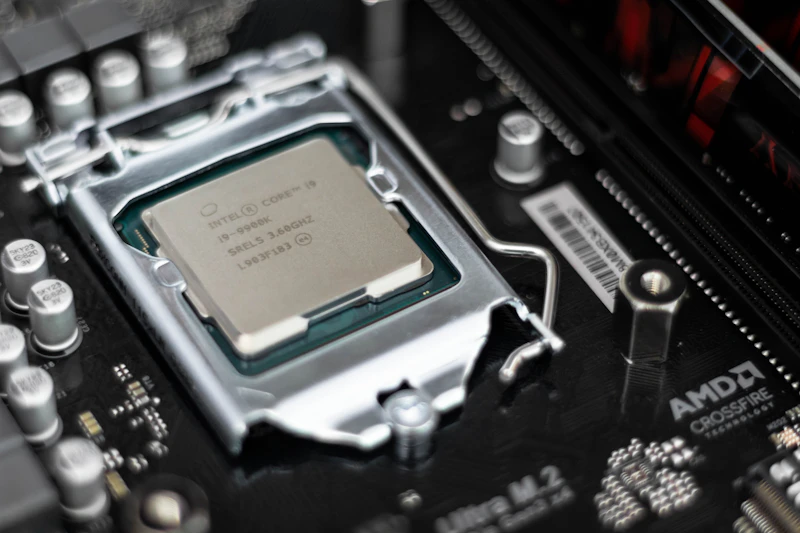
Forty-Year Yen Lows as the Hidden Subsidy Behind Japan's Chip Revival
As the yen slides into its weakest territory in four decades, Takaichinomics has entered uncharted monetary terrain. A cheap yen functions as a silent subsidy for Rapidus, Kioxia, and TSMC's Kumamoto fabs—yet the same currency inflates the cost of imported tools and materials and intensifies the talent war with Korea. The question is whether monetary policy can stand in for industrial policy, and what that means for Korea's memory champions.