AIINSIGHT NOTE
AI · Web3 · Tech trends and insights at a glance
AI · Web3 · Tech trends and insights at a glance
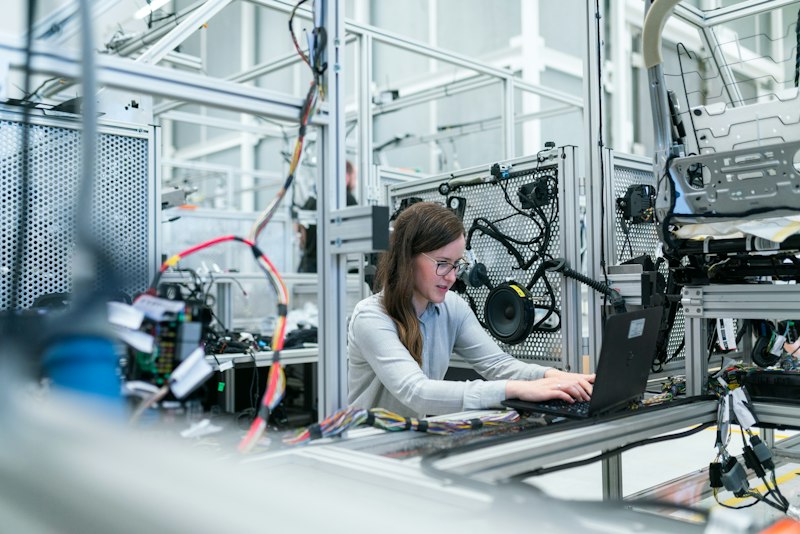
Samsung Electronics is deploying mobile robotics and AI-driven automation across its semiconductor manufacturing lines. The strategic logic is about more than cost reduction — it's about building fabs that can adapt faster than human operators can manage.
Semiconductor manufacturing has always been automated in the sense that the actual wafer processing happens inside machines. What's changing at Samsung and across the industry is the logistics layer — the movement of wafers between process stations, the inspection and handling steps, the maintenance workflows — which has historically relied heavily on human workers in cleanroom environments.
Mobile robots in semiconductor fabs face a specific set of constraints that make them harder to deploy than in a warehouse environment. Cleanrooms operate under strict particle count requirements, which limits what materials and components can enter the environment. ESD (electrostatic discharge) protection is critical because a static discharge can destroy wafers worth thousands of dollars. Navigation in a dynamic environment where human workers, automated guided vehicles, and precision equipment share space requires sophisticated collision avoidance. And the cost of downtime in a leading-edge fab — which might be running 24/7 and producing chips that sell for hundreds of dollars each — is high enough that any robotic system needs extraordinary reliability.
Samsung has been working on this problem for several years, and the current generation of their fab automation extends beyond simple material handling. AI-driven inspection systems can identify defect patterns and correlate them with upstream process conditions in real time, enabling faster root cause analysis than traditional methods. This matters enormously in a manufacturing environment where a process drift that goes undetected for a shift can result in thousands of wafers of scrap.
The workforce implications are straightforward to anticipate and uncomfortable to discuss. Samsung's semiconductor operations employ large numbers of people in Korea, but also in facilities in Texas and other locations. Automation investment is driven by economics: a robot that can work three shifts without a break, doesn't require cleanroom garments, and can be monitored remotely is cost-competitive with human labor at the kind of scale Samsung operates. The question of what happens to the workers displaced by this transition is a real one that the company's communications handle with predictable vagueness.
The competitive context makes this investment look less optional. TSMC and Intel are both investing heavily in fab automation. A Samsung fab that requires more human operators per wafer out than a TSMC fab is a Samsung fab with a structural cost disadvantage. So the automation investment is, in part, just keeping up.
The longer strategic game is about adaptability. A fab where logistics and inspection are software-defined can potentially retool faster for new process nodes, accommodate different product mixes, and respond to yield problems more quickly. These are competitive advantages that compound over time in an industry where the time between process generations is shrinking.

The Land-Permit Paradox of Korea's Chip Belt, When the Cluster's Boom Prices Out Its Own Engineers
Dongtan, Giheung, and Guri have been folded into Korea's land-transaction permit regime just as the AI chip capex boom reshapes the property market around the country's largest fabs. The very prosperity the cluster generates is raising the cost for the engineers it depends on to settle nearby. The real test of agglomeration may lie not in siting megafabs but in housing and labor mobility.

The Collapse of the Closed AI Moat and the Supply-Chain Paradox of Unverifiable Weights
DeepSeek-R1's open reasoning weights and Llamafile's single-file distribution are eroding the performance and distribution moats that closed labs once charged a premium for. Yet the same openness collides head-on with the gap exposed by the "250 samples to break an LLM" research: weight distribution that no recipient can verify. Democratized competition and accumulated security debt now sit on the same scale.

Forty-Year Yen Lows as the Hidden Subsidy Behind Japan's Chip Revival
As the yen slides into its weakest territory in four decades, Takaichinomics has entered uncharted monetary terrain. A cheap yen functions as a silent subsidy for Rapidus, Kioxia, and TSMC's Kumamoto fabs—yet the same currency inflates the cost of imported tools and materials and intensifies the talent war with Korea. The question is whether monetary policy can stand in for industrial policy, and what that means for Korea's memory champions.