AIINSIGHT NOTE
AI · Web3 · Tech trends and insights at a glance
AI · Web3 · Tech trends and insights at a glance

Samsung's chairman has chosen Gumi, a faded electronics town, as the manufacturing base for its humanoid ambitions. As global robotics shifts from flashy demos to unit economics, the real question is whether clustering can fill Korea's structural gap in actuators, reducers, and precision motors still sourced from China and Japan.
When Lee Jae-yong declared that Samsung's robotics investment would concentrate in Gumi, the choice read at first like familiar regional-development politics. Gumi was once the beating heart of Korean electronics, but as display and handset production drained away to Vietnam and the capital region, the city lost its momentum. Planting a humanoid manufacturing hub there carries the obvious appeal of jobs and balanced growth. Yet the decision points at a far larger question than local revival: what will Korean manufacturing live on after semiconductors?
For several years the humanoid race was a contest of spectacle. Each time a robot ran on two legs, climbed stairs, or danced, markets cheered. That phase is ending fast. As Tesla promises to drive down the bill of materials on Optimus and Chinese firms like Unitree and UBTech arrive with five-figure price tags, the axis of competition has swung from what a robot can show to how many can be built and at what cost. The humanoid is no longer a laboratory stunt; it is a problem of unit economics and manufacturability.
This shift matters because it lands precisely where Korea is weakest. The largest cost components in a humanoid are the actuators that move its joints, the harmonic-drive reducers that transmit force with precision, and the high-density servo motors that power motion. That core market is dominated by Japan's Harmonic Drive Systems and Nabtesco, with Chinese suppliers closing the gap at alarming speed. Korea has the talent to design robots and layer software onto them, but it imports much of the precision drivetrain that forms the body. A brilliant brain bolted onto joints you have to buy from rivals leaves you unable to control either cost or supply security at the moment scale finally arrives.
The logic of choosing Gumi follows a grammar already proven in chips. Anchor a flagship company, and component, material, and equipment suppliers cluster around it; talent, logistics, and research infrastructure concentrate, and the whole ecosystem grows more efficient. Decades of electronics history have left Gumi with skilled precision-machining labor, available factory land, and the water and power infrastructure heavy manufacturing demands. Its very decline is, paradoxically, a reservoir of idle capacity and an eager local government. Restarting a city that once peaked can cost less than raising an advanced industry from bare ground.
But clustering does not automatically deliver supply-chain independence. Korea won in semiconductors because overwhelming production scale in one domain, memory, pulled the upstream ecosystem toward it. Humanoid components are a different beast. Reducers and precision motors hinge on materials know-how and machining tolerances accumulated over decades; gathering factories in one place does not close that gap with Japan overnight. And with the end market still immature, no component maker will commit to heavy capital expenditure unless an anchor buyer like Samsung guarantees sustained volume for years. The true test of the Gumi bet is not whether Samsung can build one impressive robot, but whether it can grow an upstream industry capable of stamping out that robot's joints at a competitive price right there in Gumi.
In the end, Lee's choice extends an old wager in Korean industrial policy into a new and unforgiving terrain. The cluster formula that built the chip empire may or may not work in the entirely different soil of precision motion systems. The alternative is a half-independence in which Korea localizes assembly and software while still importing the parts that matter most. The fate of a single recovering city now carries a question about the next thirty years of Korean manufacturing.

The Land-Permit Paradox of Korea's Chip Belt, When the Cluster's Boom Prices Out Its Own Engineers
Dongtan, Giheung, and Guri have been folded into Korea's land-transaction permit regime just as the AI chip capex boom reshapes the property market around the country's largest fabs. The very prosperity the cluster generates is raising the cost for the engineers it depends on to settle nearby. The real test of agglomeration may lie not in siting megafabs but in housing and labor mobility.

The Collapse of the Closed AI Moat and the Supply-Chain Paradox of Unverifiable Weights
DeepSeek-R1's open reasoning weights and Llamafile's single-file distribution are eroding the performance and distribution moats that closed labs once charged a premium for. Yet the same openness collides head-on with the gap exposed by the "250 samples to break an LLM" research: weight distribution that no recipient can verify. Democratized competition and accumulated security debt now sit on the same scale.
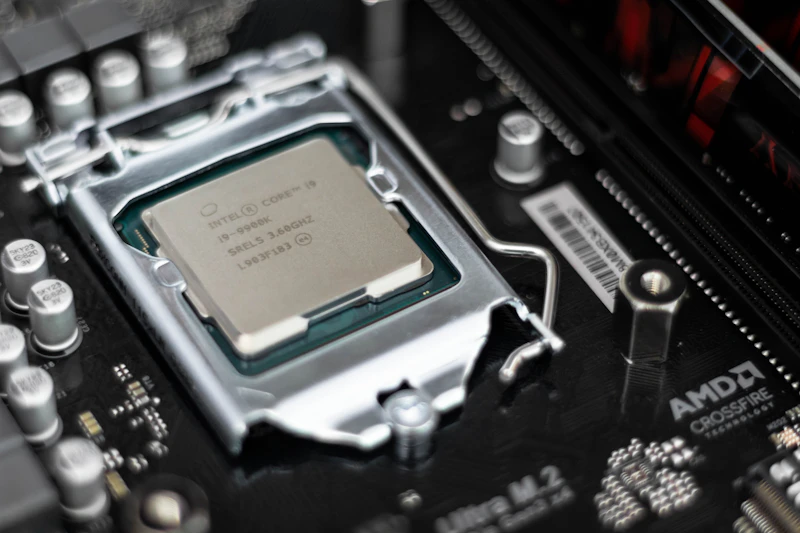
Forty-Year Yen Lows as the Hidden Subsidy Behind Japan's Chip Revival
As the yen slides into its weakest territory in four decades, Takaichinomics has entered uncharted monetary terrain. A cheap yen functions as a silent subsidy for Rapidus, Kioxia, and TSMC's Kumamoto fabs—yet the same currency inflates the cost of imported tools and materials and intensifies the talent war with Korea. The question is whether monetary policy can stand in for industrial policy, and what that means for Korea's memory champions.