AIINSIGHT NOTE
AI · Web3 · Tech trends and insights at a glance
AI · Web3 · Tech trends and insights at a glance

Data centers are hitting bandwidth limits that copper-based interconnects can't solve. The accelerating shift to optical networking creates a supply chain opportunity that Samsung is positioned to capture — though the competition is real and the timing is uncertain.
The AI compute buildout has a bandwidth problem that doesn't get as much attention as the GPU shortage but is just as real. When you cluster tens of thousands of GPUs in a data center to train a large model, the bottleneck shifts from compute to communication: the interconnects between GPUs, between servers, and between data center pods need to move enormous amounts of data with low latency and high bandwidth. Copper interconnects, which dominate data center networking today, are approaching their physical limits at the distances and speeds required by AI infrastructure.
Optical interconnects — using light rather than electrons — have been the solution in long-haul telecommunications for decades. The push inside the data center is newer, driven by the bandwidth demands of AI workloads. Silicon photonics, which integrates optical components with silicon manufacturing processes, is the technology making this practical at scale: it allows optical transceivers to be manufactured at the cost points that large-scale data center deployment requires.
Samsung has meaningful exposure to this transition through multiple channels. Their semiconductor foundry business produces the ASIC chips that go into optical networking equipment. Their memory business supplies the high-bandwidth memory that optical transceivers increasingly incorporate. And their display and optics capabilities in related divisions create potential for vertical integration that competitors would struggle to replicate.
The investment thesis around Samsung in the context of the optical transition is essentially a second-order AI trade: rather than owning the AI model companies or the GPU manufacturers (both of which trade at aggressive multiples), owning a company that supplies critical components to the infrastructure buildout at a more reasonable valuation. This is the logic behind describing Samsung as a "beneficiary" of the data center optical upgrade rather than a direct AI play.
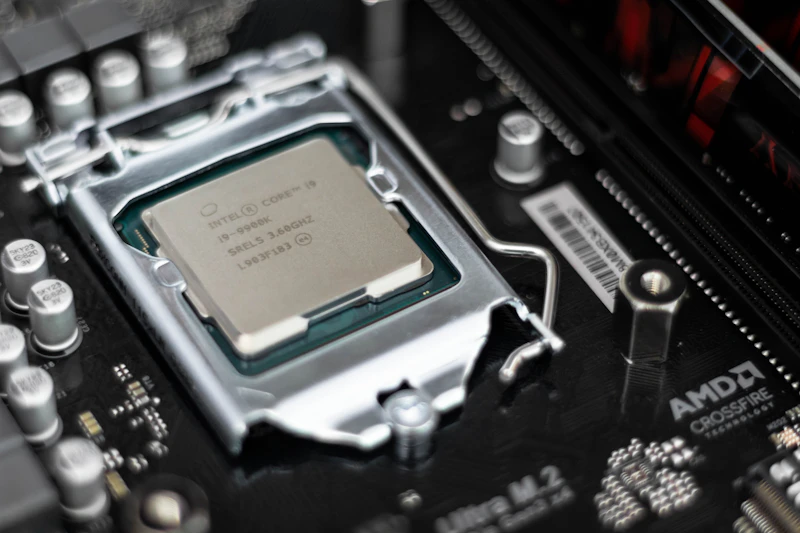
The risk in this thesis is that Samsung is not the only supplier of any of these components. Coherent, II-VI (now part of Coherent), and a set of Taiwanese ODMs are competitive in optical transceiver manufacturing. Intel has a silicon photonics product line. The competitive dynamics in components markets tend to be brutal when demand is high: customers diversify supply chains deliberately to prevent any single supplier from having pricing power. Samsung's advantage is scale and integration, but those advantages need to translate to actual contract wins to drive earnings.
The timing uncertainty is also real. Data center buildout plans have historically been volatile — demand forecasting for infrastructure is hard even with known AI scaling trends. Samsung's optical networking revenue is meaningful but not yet large enough to move the needle against the backdrop of their memory and logic semiconductor businesses, which are subject to their own commodity cycle dynamics.

The Land-Permit Paradox of Korea's Chip Belt, When the Cluster's Boom Prices Out Its Own Engineers
Dongtan, Giheung, and Guri have been folded into Korea's land-transaction permit regime just as the AI chip capex boom reshapes the property market around the country's largest fabs. The very prosperity the cluster generates is raising the cost for the engineers it depends on to settle nearby. The real test of agglomeration may lie not in siting megafabs but in housing and labor mobility.

The Collapse of the Closed AI Moat and the Supply-Chain Paradox of Unverifiable Weights
DeepSeek-R1's open reasoning weights and Llamafile's single-file distribution are eroding the performance and distribution moats that closed labs once charged a premium for. Yet the same openness collides head-on with the gap exposed by the "250 samples to break an LLM" research: weight distribution that no recipient can verify. Democratized competition and accumulated security debt now sit on the same scale.
Forty-Year Yen Lows as the Hidden Subsidy Behind Japan's Chip Revival
As the yen slides into its weakest territory in four decades, Takaichinomics has entered uncharted monetary terrain. A cheap yen functions as a silent subsidy for Rapidus, Kioxia, and TSMC's Kumamoto fabs—yet the same currency inflates the cost of imported tools and materials and intensifies the talent war with Korea. The question is whether monetary policy can stand in for industrial policy, and what that means for Korea's memory champions.