AIINSIGHT NOTE
AI · Web3 · Tech trends and insights at a glance
AI · Web3 · Tech trends and insights at a glance

The completion of the Sagrada Família's central tower in 2026 is more than an architectural milestone—it is a working proof that multi-generational vision can survive its originator, documentary destruction, and civilizational rupture. In an era when AI has made instant creation the cultural default, the cathedral poses a pointed question: what institutional conditions does long-horizon infrastructure actually require, and are we still capable of building them?
In 1926, Antoni Gaudí was struck by a tram in Barcelona and died three days later. At that point the Sagrada Família had been under construction for 44 years and was nowhere near complete. Gaudí had spent the final decades of his life almost exclusively dedicated to the church, working on detailed plaster models and geometric studies that would guide builders for generations. Yet when he died, the institutional machinery he had set in motion did not stop. It slowed, it adapted, it suffered—most of the original models were destroyed by anarchists in 1936—but it did not collapse. In 2026, the central tower was finally completed, 144 years after construction began.
This is not merely a story about architectural patience. It is a case study in how a vision survives the death of its originator, the destruction of its documentation, and multiple civilizational ruptures. That survival depended on structural conditions that the technology culture of 2026 is systematically eroding.
Three structural conditions enabled the Sagrada Família to maintain design coherence across a century and a half. The first was high-resolution physical documentation. Gaudí's models—catenary chains hung from frames to map structural arches, plaster geometries encoding the organic forms of the towers—were objects that captured intent in ways text descriptions could not. When those models were partially destroyed, surviving fragments were sufficient for reverse engineering. By the 1980s, digital scanning and computational geometry allowed successive architects to reconstruct Gaudí's parametric logic with increasing precision. The documentation was not merely archival; it was generative.
The second condition was the existence of an interpretive community. The Sagrada Família construction board was never purely a building contractor. It functioned simultaneously as a scholarly institution—researching Gaudí's philosophy, debating design decisions in light of original intent, producing a layered body of interpretation that each new generation of architects absorbed before adding their own layer. This resembles the governance structure of mature open-source software projects, where no single authority dictates canonical interpretation but community deliberation produces something that feels coherent and purposive across decades of contributor turnover.
The third condition was the self-enforcing character of Gaudí's structural principles. His catenary arches, hyperbolic vaults, and helical towers were not arbitrary aesthetic preferences—they were structural necessities derived from load-distribution geometries. Any significant deviation from these principles would require not just a different look but an entirely different structural system. The design protected itself by making departure structurally costly. Subsequent architects were constrained not by deference alone but by physics. This is the rarest and most durable form of institutional continuity: one where the vision is encoded in the medium itself, not merely in the minds of its custodians.
The current technological moment has produced a powerful cultural bias toward immediacy. Startup culture valorizes the minimum viable product and rapid iteration. Large language models deliver outputs in seconds. Investment markets reward quarterly performance. These pressures are not merely commercial—they reshape how institutions conceive of time itself. Projects that cannot demonstrate results within a three-to-five year window face structural disadvantages in securing and maintaining political support, regardless of their ultimate importance.
The consequences are already visible in the portfolio of long-horizon infrastructure being attempted today: commercial fusion reactors, orbital habitation structures, climate-resilient megacity planning. Each of these shares the Sagrada Família's basic structural problem. Construction timelines exceed fifty years. Design teams will not survive to operate what they build. Near-certain technological paradigm shifts will invalidate initial design assumptions mid-process. And the political coalitions that fund them are inherently short-lived relative to the timescales involved.
What these projects largely lack is the institutional scaffolding that sustained Gaudí's cathedral. Their documentation is extensive but rarely designed to support interpretive communities—it records decisions without preserving the reasoning that would allow future teams to extend or adapt them faithfully. Their organizational charts have no function equivalent to the scholarly board, no body whose explicit purpose is philosophical continuity rather than execution. Their design principles are typically stated in language abstract enough to be quietly reinterpreted under political pressure, which sounds like flexibility but actually means the vision can be hollowed out without anyone formally acknowledging the change.
Here AI presents an unlikely paradox. As the primary accelerant of immediacy culture, it might seem the wrong instrument for rebuilding long-horizon institutions. Yet AI systems trained on design archives could provide exactly the kind of continuous interpretive feedback that the Sagrada Família's construction board supplied manually across generations: flagging deviations from foundational principles, surfacing the reasoning behind earlier decisions, maintaining an institutional memory that survives personnel turnover. The computational tools now available could encode design intent in ways more robust than Gaudí's plaster models—not just preserving the what, but the why and the how, legible to teams not yet born.
The obstacle is not technological. It is political. Multi-generational projects require social contracts—agreements between a present generation and futures they will not live to see. The citizens of Barcelona in 1882 made such a contract when they funded a cathedral that would outlast them. Every generation since has renewed that contract, sometimes reluctantly, sometimes amid crisis. The tower completed in 2026 is not just an architectural achievement. It is evidence that such contracts can hold across political upheaval, civil war, and radical technological change. Whether the institutions now building humanity's next century of infrastructure are capable of making—and keeping—similar commitments is the real question the cathedral poses to its era.

The Land-Permit Paradox of Korea's Chip Belt, When the Cluster's Boom Prices Out Its Own Engineers
Dongtan, Giheung, and Guri have been folded into Korea's land-transaction permit regime just as the AI chip capex boom reshapes the property market around the country's largest fabs. The very prosperity the cluster generates is raising the cost for the engineers it depends on to settle nearby. The real test of agglomeration may lie not in siting megafabs but in housing and labor mobility.
The Collapse of the Closed AI Moat and the Supply-Chain Paradox of Unverifiable Weights
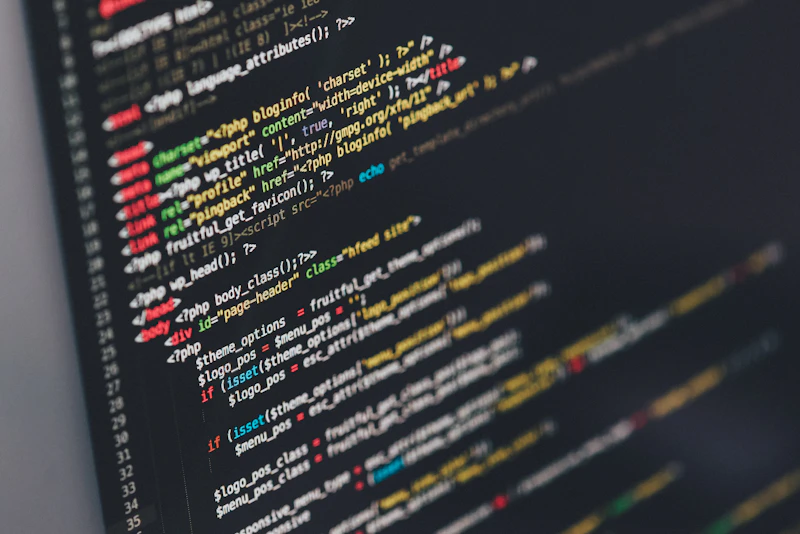
DeepSeek-R1's open reasoning weights and Llamafile's single-file distribution are eroding the performance and distribution moats that closed labs once charged a premium for. Yet the same openness collides head-on with the gap exposed by the "250 samples to break an LLM" research: weight distribution that no recipient can verify. Democratized competition and accumulated security debt now sit on the same scale.
Forty-Year Yen Lows as the Hidden Subsidy Behind Japan's Chip Revival
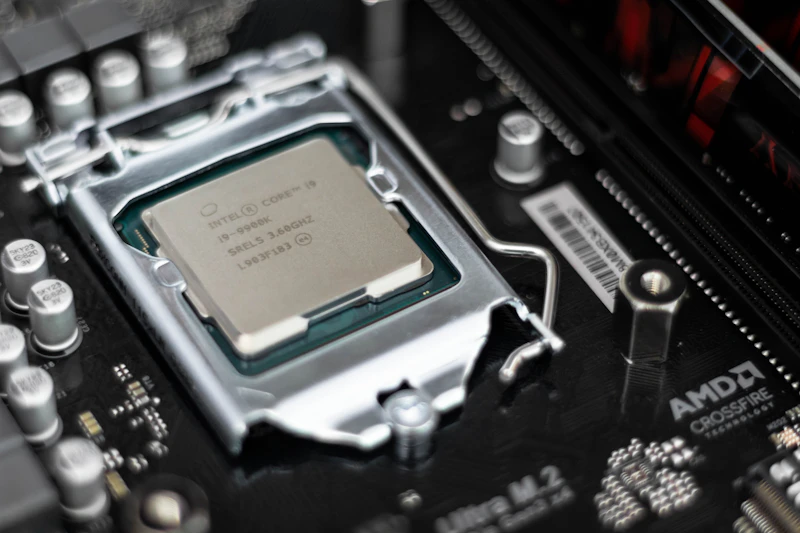
As the yen slides into its weakest territory in four decades, Takaichinomics has entered uncharted monetary terrain. A cheap yen functions as a silent subsidy for Rapidus, Kioxia, and TSMC's Kumamoto fabs—yet the same currency inflates the cost of imported tools and materials and intensifies the talent war with Korea. The question is whether monetary policy can stand in for industrial policy, and what that means for Korea's memory champions.