AIINSIGHT NOTE
AI · Web3 · Tech trends and insights at a glance
AI · Web3 · Tech trends and insights at a glance

RLVR — reinforcement learning from verifiable rewards — has emerged as the shared methodology behind both OpenAI's o1 and DeepSeek's R1, revealing that the reasoning premium closed AI labs commanded was built on a methodological secret rather than an insurmountable resource gap. As open-weight models trained on the same principle rapidly close the capability gap, the competitive question is shifting from how to build reasoning to where and at what cost to deploy it.
When OpenAI launched o1 in late 2024, the AI industry confronted a performance discontinuity it couldn't immediately explain. These models solved competition mathematics, debugged complex code, and reasoned through multi-step logical problems at levels that prior language models hadn't approached. The obvious inference was that OpenAI had access to something others didn't — proprietary data at a scale no one else could match, a training recipe too expensive or complex to replicate, or simply a capability gap that would take years to close.
That inference turned out to be only partially correct. In January 2025, DeepSeek published the technical report for R1, a reasoning model that matched or exceeded o1 on several standard benchmarks. What made the report remarkable wasn't just the performance — it was the transparency. DeepSeek described in substantial detail the methodology underlying R1: reinforcement learning from verifiable rewards, or RLVR. The principle is conceptually clean. For problem domains where correct answers can be verified objectively — mathematics with a deterministic solution, code that either passes a test suite or doesn't — a reward signal can be generated automatically. Models trained under this signal learn to reason not because they've been shown human demonstrations of reasoning, but because they're penalized for being wrong in ways that require no human mediator to judge.
OpenAI's own writing on 'Learning to Reason with LLMs' had pointed in the same structural direction. Two organizations, working independently, had converged on the same methodology. That convergence is the central fact now reshaping the competitive landscape of AI.
The AI industry's competitive dynamics have long been organized around a few key advantages: model scale, training data volume, and human feedback infrastructure. Closed AI companies with access to hundreds of millions in compute budgets and large annotation workforces could afford to build what others couldn't. RLHF — reinforcement learning from human feedback — was the dominant training paradigm, and its main cost driver was the human part. Collecting high-quality preference data at the scale required to train frontier reasoning models was expensive and slow, a structural moat that benefited well-resourced incumbents.
RLVR bypasses that moat almost entirely. If your training signal comes from an automated verifier rather than a human annotator, the cost structure of building reasoning ability shifts dramatically. Publicly available datasets like GSM8K, MATH, and HumanEval — already used as evaluation benchmarks — can become training signal sources. The annotation bottleneck evaporates in domains where ground truth is computable. What remains as a barrier is compute and the engineering skill to implement the training loop correctly, both of which are significantly more accessible than proprietary annotation pipelines.
The open-weight research community moved quickly once this structure became clear. Throughout the first half of 2025, papers describing RLVR fine-tuning applied to Qwen, Mistral, and Llama-family base models appeared on arXiv at a pace suggesting the methodology had become almost a standard toolkit component. The performance gaps being reported — months of closed-model advantage reproduced in open-weight variants — indicated that reasoning capability wasn't fundamentally proprietary. It had been bottlenecked behind a methodological secret that, once public, spread rapidly.
The historical parallel most instructive here is what happened after the transformer architecture became public in 2017. Democratization didn't arrive immediately. In the years following 'Attention Is All You Need,' the ability to build large language models remained concentrated among a handful of resource-rich organizations. But the architecture's public availability set a ceiling on how durable that concentration could be. Over time, the open-source ecosystem internalized the technique, efficient implementations accumulated, and the gap narrowed.
RLVR's diffusion is likely to follow a similar arc, and potentially faster. The prior barrier in the RLHF era was capital-intensive data collection; this barrier was methodological knowledge, and that knowledge is already public. Closed AI companies are responding along two visible axes. The first is scale: pushing model sizes and compute budgets to levels that remain practically unreachable for open-weight efforts, maintaining an absolute performance ceiling that RLVR alone can't breach. The second is domain expansion: moving reasoning capability into areas where verifiable rewards are harder to define — complex judgment, nuanced creative evaluation, long-horizon planning with ambiguous success criteria — where the methodology's clean feedback loop becomes murkier and the open-weight advantage diminishes.
Both strategies are fundamentally time-buying measures. As RLVR becomes standard practice, the competitive question shifts. 'How do you train reasoning?' is increasingly a solved problem. 'Which reasoning domains can you serve reliably, at what latency, at what cost?' becomes the differentiating question. The value creation surface in AI is moving from model capability itself toward deployment infrastructure, domain specialization, and reliability guarantees at scale. The standardization of RLVR is not the end of differentiation in reasoning AI — it is the mechanism by which differentiation migrates to a different layer of the stack.
The Land-Permit Paradox of Korea's Chip Belt, When the Cluster's Boom Prices Out Its Own Engineers
Dongtan, Giheung, and Guri have been folded into Korea's land-transaction permit regime just as the AI chip capex boom reshapes the property market around the country's largest fabs. The very prosperity the cluster generates is raising the cost for the engineers it depends on to settle nearby. The real test of agglomeration may lie not in siting megafabs but in housing and labor mobility.

The Collapse of the Closed AI Moat and the Supply-Chain Paradox of Unverifiable Weights
DeepSeek-R1's open reasoning weights and Llamafile's single-file distribution are eroding the performance and distribution moats that closed labs once charged a premium for. Yet the same openness collides head-on with the gap exposed by the "250 samples to break an LLM" research: weight distribution that no recipient can verify. Democratized competition and accumulated security debt now sit on the same scale.
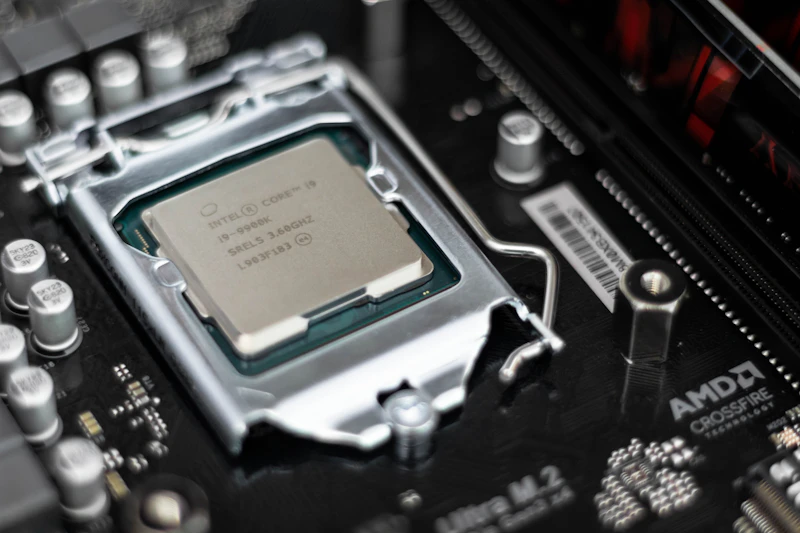
Forty-Year Yen Lows as the Hidden Subsidy Behind Japan's Chip Revival
As the yen slides into its weakest territory in four decades, Takaichinomics has entered uncharted monetary terrain. A cheap yen functions as a silent subsidy for Rapidus, Kioxia, and TSMC's Kumamoto fabs—yet the same currency inflates the cost of imported tools and materials and intensifies the talent war with Korea. The question is whether monetary policy can stand in for industrial policy, and what that means for Korea's memory champions.