AIINSIGHT NOTE
AI · Web3 · Tech trends and insights at a glance
AI · Web3 · Tech trends and insights at a glance

The Quad foreign ministers' joint statement opposing Hormuz transit toll proposals marks a new phase in maritime geopolitics — one in which semiconductor supply chain security has become a formal national security agenda item. Three critical chokepoints — the Strait of Hormuz, the Taiwan Strait, and the South China Sea — are simultaneously under geopolitical pressure, exposing a structural vulnerability for the chip-producing nations of Northeast and Southeast Asia.
The Quad foreign ministers' joint statement opposing transit fee proposals for the Strait of Hormuz made headlines as a diplomatic maneuver. But read through the lens of semiconductor economics, the statement carries a different kind of weight. The Hormuz strait — through which roughly a fifth of the world's crude oil and LNG flows — is not merely an energy corridor. For South Korea, Japan, and Taiwan, it is the artery through which the raw chemical inputs of chip manufacturing arrive, and through which energy-hungry fabs keep their lights on.
Advanced semiconductor manufacturing is among the most energy- and material-intensive industries humanity has ever built. A leading-edge fab consumes electricity equivalent to a small city while burning through specialty gases — hydrogen fluoride, neon, ammonia — many of which originate in supply chains routed through the Middle East and Central Asia. When the foreign ministers of the United States, India, Japan, and Australia issued a coordinated objection to Hormuz toll proposals, they were, whether explicitly or not, defending the physical logistics that underpin the global chip economy.
What distinguishes the present moment is not that one maritime chokepoint faces pressure, but that three are being stressed simultaneously.
The Hormuz question has been building for years, shaped by the interplay of Iranian nuclear negotiations, regional power dynamics, and Tehran's persistent interest in monetizing its geographic leverage. A formal toll regime, if enacted, would structurally raise logistics costs for the energy-intensive chip industries of Northeast Asia — South Korea, Japan, and Taiwan collectively account for a disproportionate share of world advanced semiconductor capacity, and all three rank among the most energy-import-dependent economies in the OECD. When energy costs compose a meaningful fraction of fab operating expenses, a structurally higher Hormuz toll is not merely a shipping surcharge; it is a competitiveness variable.
The Taiwan Strait presents a second axis of pressure. TSMC's facilities in northern Taiwan and the port of Kaohsiung handle over sixty percent of global logic chip output. Any disruption to the strait — whether through military escalation, naval blockade exercises, or the kind of ambiguous gray-zone pressure that has become Beijing's signature — translates directly into supply disruptions for the entire electronics industry downstream. The global chip shortage of 2021–2022, triggered by far smaller perturbations, demonstrated how rapidly a bottleneck in advanced wafer production cascades into automotive lines, consumer electronics, and data center buildouts.
The South China Sea is the third pressure point. As China extends de facto influence over disputed maritime zones, the shipping lanes connecting Southeast Asia's fast-growing semiconductor back-end cluster — Vietnam, Malaysia, Thailand — to global markets face rising uncertainty. Intel, Amkor, and a host of other companies have spent the past decade expanding advanced packaging operations in these countries precisely to diversify away from geopolitical concentration in Taiwan. The irony is that those diversification moves now introduce their own maritime exposure through the very sea lanes Beijing is contesting.
The Quad statement signals something important: maritime freedom has been elevated from a shipping industry concern to a formal national security priority for four major economies, including the world's leading chip equipment and material suppliers. That elevation matters. It means that the next time Hormuz toll proposals surface in negotiations, they will encounter coordinated diplomatic resistance rather than piecemeal commercial objection.
But diplomatic statements do not move cargo or replace strategic reserves. The gap between a communiqué and an actual supply chain hedge remains wide. Meaningful risk mitigation would require sustained naval presence in contested straits, negotiated cost-sharing frameworks for rerouting cargo around chokepoints such as the Cape of Good Hope, and — perhaps most concretely — strategic stockpiling of the specialty gases and chemicals that chipmakers cannot readily substitute.
South Korea and Taiwan, despite their centrality to the global semiconductor economy, lag behind the United States and Japan in formalizing government-backed strategic reserves for critical materials. Japan's track record in building chemical supply buffers, partly a legacy of lessons learned from China's rare-earth export restrictions in 2010, offers a model. That episode prompted Tokyo to institutionalize material stockpiling and supplier diversification in ways that now translate into greater resilience for its semiconductor supply chain. The Quad statement, at minimum, creates political cover for similar conversations to advance at a multilateral level.
Geopolitics has become a first-order variable for semiconductor strategists. The chokepoints on the map are not abstractions; they are the physical constraints that determine whether fabs run at capacity, whether shipments arrive on schedule, and whether the digital infrastructure of the global economy remains intact. The Quad's stand at Hormuz is a reminder that those constraints are only growing tighter — and that the distance between a foreign ministers' communiqué and a concrete supply chain strategy is the next gap the industry and its host governments must close.

The Land-Permit Paradox of Korea's Chip Belt, When the Cluster's Boom Prices Out Its Own Engineers
Dongtan, Giheung, and Guri have been folded into Korea's land-transaction permit regime just as the AI chip capex boom reshapes the property market around the country's largest fabs. The very prosperity the cluster generates is raising the cost for the engineers it depends on to settle nearby. The real test of agglomeration may lie not in siting megafabs but in housing and labor mobility.

The Collapse of the Closed AI Moat and the Supply-Chain Paradox of Unverifiable Weights
DeepSeek-R1's open reasoning weights and Llamafile's single-file distribution are eroding the performance and distribution moats that closed labs once charged a premium for. Yet the same openness collides head-on with the gap exposed by the "250 samples to break an LLM" research: weight distribution that no recipient can verify. Democratized competition and accumulated security debt now sit on the same scale.
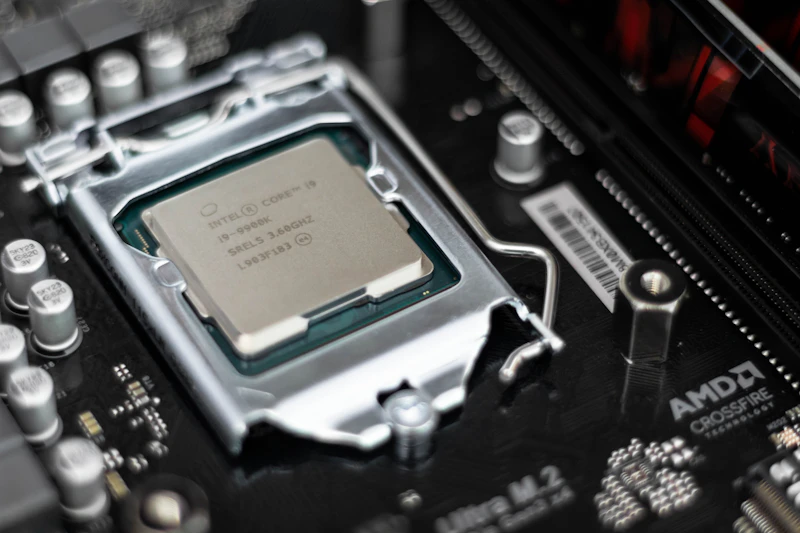
Forty-Year Yen Lows as the Hidden Subsidy Behind Japan's Chip Revival
As the yen slides into its weakest territory in four decades, Takaichinomics has entered uncharted monetary terrain. A cheap yen functions as a silent subsidy for Rapidus, Kioxia, and TSMC's Kumamoto fabs—yet the same currency inflates the cost of imported tools and materials and intensifies the talent war with Korea. The question is whether monetary policy can stand in for industrial policy, and what that means for Korea's memory champions.