AIINSIGHT NOTE
AI · Web3 · Tech trends and insights at a glance
AI · Web3 · Tech trends and insights at a glance

The open-source AI movement promises democratization, but releasing model weights is not the same as distributing power. Every frontier open model — Llama, DeepSeek-R1, Mistral — emerged from organizations with near-unlimited compute access that no independent group can replicate. The political economy of AI development reveals that openness in artifacts coexists comfortably with concentration in the means of production.
The narrative of open-source AI carries a seductive clarity. When Meta releases Llama weights or DeepSeek publishes its R1 model, the story writes itself: a powerful AI system, freely available, decentralizing capabilities that were once locked behind corporate APIs. The word "open" does enormous rhetorical work here. It suggests parity, access, a leveling of the playing field. But this framing quietly sidesteps the question that actually determines who holds power in the AI ecosystem — not who can download a model, but who can train one.
In the history of open-source software, the democratic promise was grounded in a genuine structural condition: the means of production were widely accessible. A student with a laptop could contribute a meaningful patch to the Linux kernel. A small team could fork a codebase and build something genuinely novel. The barrier to entry was knowledge and time, not capital.
Training frontier AI models destroys this analogy entirely. Llama 3's training required a cluster of tens of thousands of H100 GPUs running for months — an infrastructure investment running into hundreds of millions of dollars. DeepSeek-R1, celebrated for its efficiency relative to GPT-4, still emerged from a lab bankrolled by one of China's largest quantitative hedge funds, with access to GPU resources that no independent research group could replicate. When we celebrate these releases as "open," we are celebrating the availability of the artifact, not the democratization of the process that created it.
This distinction matters enormously. Open-source software democratized not just consumption but production. Anyone could fork; anyone could contribute meaningfully to the next version. Open-weight AI models democratize only inference and fine-tuning at the margins — useful, certainly, but structurally different from opening up the frontier itself. The organizations that will train the next generation of models are, with near certainty, the same ones that trained the last. The map of who can create frontier AI has not changed.
The concentration of compute is the defining structural fact of contemporary AI development, and it is accelerating. Acquiring GPU clusters at frontier scale requires either being a hyperscaler, a venture-backed company with exceptional access to capital, or a state-backed research institution. This is not a temporary bottleneck waiting to be engineered away; it is a structural condition that follows from the economics of model scaling.
What makes the open-source frame ideologically interesting is how effectively it obscures this dynamic. When Meta publishes Llama weights, it earns the reputation of an open, community-minded organization. The PR dividend is substantial and real. But the next generation of Llama is being trained on Meta's proprietary cluster, and the community's fine-tuning experiments, the bugs they surface, the downstream applications they build — all of this feeds back into Meta's understanding of what the model can do. Open-sourcing the weights is, among other things, a strategy for mobilizing distributed R&D effort while retaining control over the training pipeline.
This is not a cynical reading imposed from the outside. It is structurally visible. Look at every frontier-class open model released in the past two years: they all come from organizations with near-unlimited compute. No independent collective, no university lab working within normal grant constraints, has trained a genuinely frontier model. The pattern is not coincidence; it is the predictable output of a system in which compute is the scarce resource and compute is monopolized. Calling the resulting release "open" is accurate in a narrow technical sense while leaving the underlying power structure entirely intact.
If the concern is real democratization of AI capability — not just distribution of AI artifacts — then the conversation needs to shift from open-weight licensing to compute access. Some directions have begun to emerge. Public compute infrastructure, analogous to how governments fund particle accelerators or genomics sequencing centers, represents one plausible path. The EU's LUMI supercomputer and various national AI computing initiatives gesture toward this, though they remain modest relative to the scale of private clusters. The principle is sound: if compute is the critical input, then public research access to compute is a precondition for meaningful participation in frontier AI development.
More fundamentally, democratization requires engaging governance questions that open-weight releases leave entirely unanswered: who decides what gets trained, on whose data, optimizing for whose objectives? The open-source label creates an impression of transparency — weights are downloadable, some code is visible — while leaving the most consequential decisions entirely opaque. The choice of training data, the reward model used in alignment, the decision about which capabilities to suppress — none of this is visible in a weight file, and none of it is subject to community input.
The history of open-source software succeeded in part because governance was genuinely open. Anyone could propose a change to the Linux kernel; the maintainer hierarchy, however imperfect, was in principle accessible to technical contributors worldwide. AI development today has no equivalent structure. The organizations that control compute make unilateral decisions about what to train and what to release. Whether we call the release "open" depends on a narrow technical definition. Whether it constitutes democratization depends on what you think power in the AI ecosystem actually consists of — and by that measure, the concentration of the past decade has barely been disturbed.

The Land-Permit Paradox of Korea's Chip Belt, When the Cluster's Boom Prices Out Its Own Engineers
Dongtan, Giheung, and Guri have been folded into Korea's land-transaction permit regime just as the AI chip capex boom reshapes the property market around the country's largest fabs. The very prosperity the cluster generates is raising the cost for the engineers it depends on to settle nearby. The real test of agglomeration may lie not in siting megafabs but in housing and labor mobility.
The Collapse of the Closed AI Moat and the Supply-Chain Paradox of Unverifiable Weights
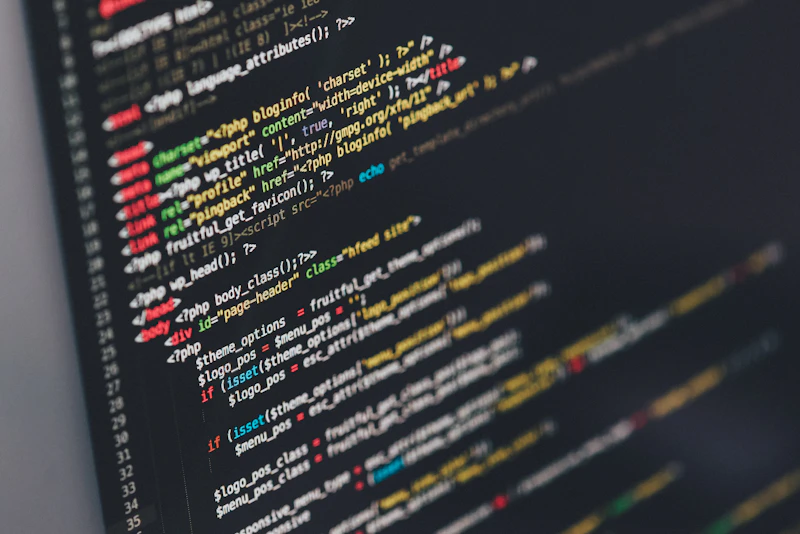
DeepSeek-R1's open reasoning weights and Llamafile's single-file distribution are eroding the performance and distribution moats that closed labs once charged a premium for. Yet the same openness collides head-on with the gap exposed by the "250 samples to break an LLM" research: weight distribution that no recipient can verify. Democratized competition and accumulated security debt now sit on the same scale.
Forty-Year Yen Lows as the Hidden Subsidy Behind Japan's Chip Revival
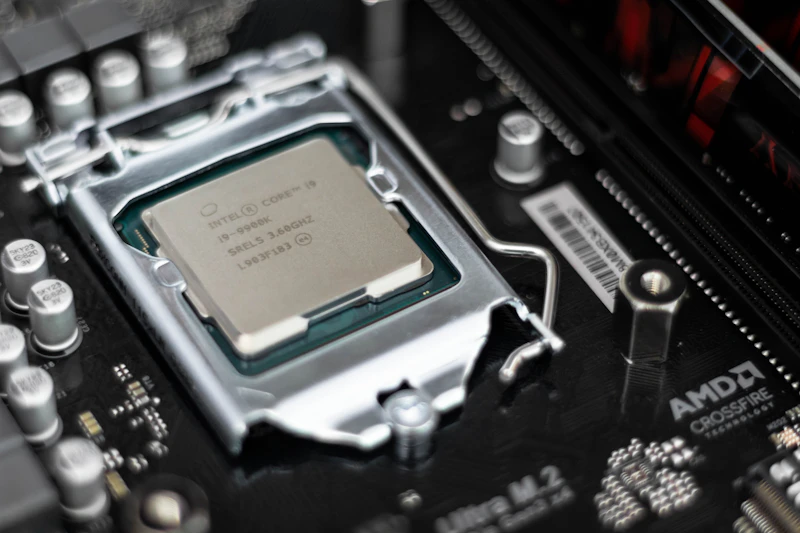
As the yen slides into its weakest territory in four decades, Takaichinomics has entered uncharted monetary terrain. A cheap yen functions as a silent subsidy for Rapidus, Kioxia, and TSMC's Kumamoto fabs—yet the same currency inflates the cost of imported tools and materials and intensifies the talent war with Korea. The question is whether monetary policy can stand in for industrial policy, and what that means for Korea's memory champions.