AIINSIGHT NOTE
AI · Web3 · Tech trends and insights at a glance
AI · Web3 · Tech trends and insights at a glance
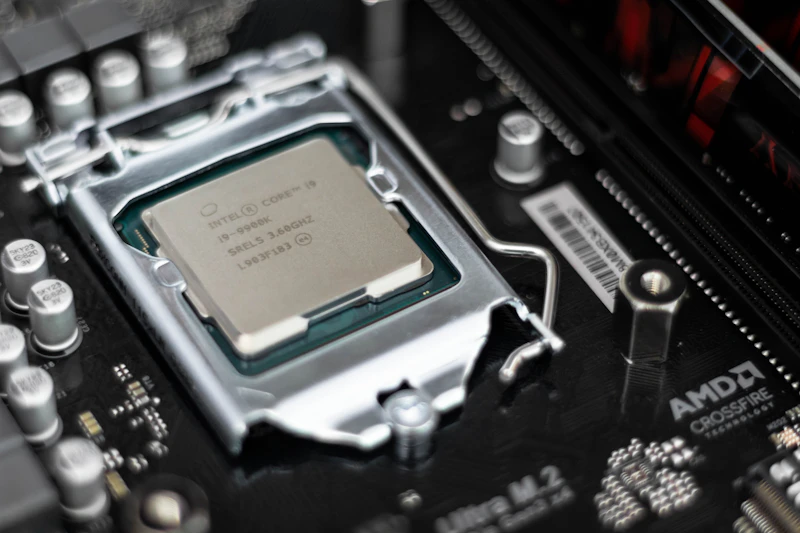
When the National Pension Service vows to rebalance without shocking the market, it quietly admits how dependent the fund has become on a single AI semiconductor cycle. With the Kospi's gains driven by a handful of HBM names, the nation's retirement savings carry the same lopsided risk. Rebalancing is now caught between triggering a shock and deepening a dangerous concentration.
When the head of South Korea's National Pension Service pledged to minimize market impact during the fund's July rebalancing, the statement was meant to reassure. In practice it did the opposite. The very fact that a single institution adjusting its holdings could be expected to move the entire market is an admission about how narrow the foundation beneath the Kospi has become. The NPS worries about shock not only because it is enormous, but because the market it must trade within has grown dangerously dependent on a small cluster of semiconductor stocks. The fund's caution is, in effect, a confession about the structure of Korean equities.
Rebalancing is ordinarily a mundane, mechanical exercise. A fund sets target weights for each asset class, and when price movements pull those weights out of line, it sells what has risen and buys what has lagged to restore the intended allocation. There is nothing inherently destabilizing about it. So why does this routine operation get discussed as a potential source of market turbulence? The answer is that much of the weight the NPS would need to trim is effectively tied up in one or two chipmakers. Over recent years, the rise in the Kospi's total market value has been overwhelmingly concentrated in high-bandwidth memory tied to artificial intelligence demand. It is more accurate to say a few stocks lifted the index than to say the index itself rose.
In that configuration, selling domestic equities to hit a target weight does not spread evenly across the market. The pressure falls first and hardest on the large, liquid semiconductor names where the fund's exposure is concentrated. A perfectly normal act of selling what has appreciated most ends up dragging down the index precisely because that asset has become the index's center of gravity. The repeated emphasis on minimizing impact is therefore less a rhetorical comfort than an acknowledgment that the portfolio's weight is so lopsided that even disciplined rebalancing must be handled gingerly.
The deeper problem is that the NPS domestic equity book replicates the Kospi's concentration almost exactly. A giant pension fund with a large passive allocation necessarily tracks the index composition, so the more the Kospi depends on semiconductors, the more the public's retirement savings inherit the same asymmetric risk. While the AI investment cycle runs hot, that concentration is rewarded with strong returns. But if the cycle cools or the memory market turns, the same concentration converts instantly into downside exposure. The whole point of diversification is to ensure that the fate of one asset does not dictate the fate of the whole. Here, that principle has been quietly neutralized.
This is where the real dilemma surfaces. To reduce concentration risk, the fund must pare back its semiconductor weighting, yet the act of paring it back delivers a shock to the market and depresses the value of the very chip holdings the fund still owns. Conversely, deferring the adjustment to avoid that shock only prolongs and deepens the dependence on a single cycle. Either path carries a cost. This is not a question of one institution's investment skill; it is a system-level constraint produced by a capital market that has come to lean too heavily on a handful of names.
The July decision should not be consumed as ordinary asset-allocation news. When one of the world's largest pension funds must hesitate over routine portfolio management for fear of destabilizing the market, that hesitation signals how shallow the market's depth and breadth have grown. In a market with ample counterparties and a thick set of assets, no single institution's reweighting would move the index. In a market where a few stocks absorb both capitalization and liquidity, the largest investor becomes the least able to move. Scale itself turns into a shackle.
The question the episode poses is not whether the NPS should sell semiconductors. It is how long Korea's market, and the retirement savings stacked on top of it, can remain almost entirely wagered on a single AI cycle. The technical difficulty of rebalancing is merely a thermometer measuring the depth of that dependence. The real task is not to find a clever way to cut exposure without a shock, but to broaden the foundation of both the market and the portfolio so that the rise and fall of one cycle is no longer the rise and fall of a nation's retirement.
The Land-Permit Paradox of Korea's Chip Belt, When the Cluster's Boom Prices Out Its Own Engineers
Dongtan, Giheung, and Guri have been folded into Korea's land-transaction permit regime just as the AI chip capex boom reshapes the property market around the country's largest fabs. The very prosperity the cluster generates is raising the cost for the engineers it depends on to settle nearby. The real test of agglomeration may lie not in siting megafabs but in housing and labor mobility.
The Collapse of the Closed AI Moat and the Supply-Chain Paradox of Unverifiable Weights
DeepSeek-R1's open reasoning weights and Llamafile's single-file distribution are eroding the performance and distribution moats that closed labs once charged a premium for. Yet the same openness collides head-on with the gap exposed by the "250 samples to break an LLM" research: weight distribution that no recipient can verify. Democratized competition and accumulated security debt now sit on the same scale.
Forty-Year Yen Lows as the Hidden Subsidy Behind Japan's Chip Revival
As the yen slides into its weakest territory in four decades, Takaichinomics has entered uncharted monetary terrain. A cheap yen functions as a silent subsidy for Rapidus, Kioxia, and TSMC's Kumamoto fabs—yet the same currency inflates the cost of imported tools and materials and intensifies the talent war with Korea. The question is whether monetary policy can stand in for industrial policy, and what that means for Korea's memory champions.