AIINSIGHT NOTE
AI · Web3 · Tech trends and insights at a glance
AI · Web3 · Tech trends and insights at a glance

On a single news cycle, Iranian drones struck near Kuwait's airport, North Korea declared enhanced nuclear capability, and Zelensky demanded direct talks with Trump — multiple geopolitical fault lines activating at once. AI data centers consuming power at gigawatt scale now face simultaneous exposure to Hormuz energy disruption and East Asian semiconductor supply chain severance, a structural vulnerability the industry has long modeled as separate scenarios.
On a single day in early June 2026, the global news feed compressed an unusual density of geopolitical signals into one cycle. Iranian drones struck infrastructure near Kuwait's airport. Pyongyang issued a formal declaration of enhanced nuclear capability. Kyiv's president publicly demanded direct negotiations with the Trump administration. And Donald Trump told reporters the United States would win any confrontation with Iran. Four independent threat signals, four separate fault lines — all surfacing within the same twenty-four hours.
For analysts of global risk, this kind of simultaneity is its own signal. It suggests that geopolitical instability has entered a multipolar phase in which distinct conflict zones no longer wait for each other to cool before flaring up again. The Middle East, the Korean Peninsula, and the European theater each operate on their own escalation logic, shaped by different actors, different grievances, and different military calculi. Yet they share a common feature: each one, if it deteriorates meaningfully, hits the same critical infrastructure. AI data centers — which now consume power at the scale of small nations and depend on hardware produced in a narrow band of the world's most contested geography — are the systems that absorb all of these risks simultaneously.
The electricity demand of hyperscale AI infrastructure is no longer a footnote in energy policy. The training runs for frontier AI models consume hundreds of megawatts over weeks, and inference demand across deployed systems adds continuous baseline load that grows faster than new generation capacity comes online. Despite accelerating commitments to renewable power purchase agreements, the energy mix feeding data centers in the United States, Europe, and Asia remains substantially tied to fossil fuels — either directly or through grid interdependencies that no amount of green procurement paperwork can fully dissolve.
This matters because the Hormuz Strait is the structural chokepoint through which roughly 30 percent of global seaborne oil and 20 percent of LNG trade passes. When Iranian military behavior escalates — whether through proxies, drone strikes on Gulf infrastructure, or direct threats to maritime passage — energy markets price in the risk immediately. The 2019 attack on Saudi Aramco's Abqaiq facility was a live demonstration of how quickly a single strike on critical energy infrastructure translates into global commodity volatility. The drone action near Kuwait's airport reactivates that calculus for energy traders and infrastructure operators alike.
For data center operators, the practical consequence is cost structure uncertainty arriving at the worst possible moment. Power purchase agreements and long-term contracts hedge some exposure, but grid-level energy prices in markets still tied to gas and oil react to geopolitical signals faster than any hedging instrument can absorb. A sustained spike in Middle East energy risk would compress the operating margins of AI infrastructure precisely as demand is accelerating. Companies racing to build out inference capacity for the next generation of AI models cannot simply pause because energy prices spike — they absorb the cost, pass it downstream, or accept degraded returns on capital already committed.
The energy story is only half the picture. The hardware that makes AI data centers run — high-end GPUs, HBM memory, advanced packaging — is produced in one of the world's most geographically concentrated supply chains, and that geography sits directly in the shadow of two of the active conflict zones now flaring simultaneously.
TSMC produces the overwhelming majority of the world's most advanced logic chips in Taiwan. SK Hynix and Samsung produce the bulk of HBM memory in South Korea. The CoWoS advanced packaging process, which integrates HBM stacks with GPU dies into the unified modules that power NVIDIA's data center products, is similarly concentrated between Taiwan and a handful of South Korean and Taiwanese facilities. Supply chain diversification has been a stated priority for the semiconductor industry and the governments that depend on it for years. But fabs cost tens of billions of dollars and take five to seven years to build and qualify. The short-term reality is that meaningful diversification has not yet materialized — the announced investments in US domestic semiconductor manufacturing will not produce significant volumes before 2028 at the earliest.
North Korea's nuclear capability declaration raises the temperature on the Korean Peninsula in ways that matter even short of actual conflict. Risk premiums on Korean industrial operations — insurance costs, logistics costs, and the willingness of investors to commit new capital to Korean facilities — are sensitive to the perceived credibility of Pyongyang's posture. And the European dimension closes the loop: Zelensky's push for direct talks with Trump signals that the Russia-Ukraine war remains unresolved and potentially in a volatile transition. A renewed escalation in Europe would replay the energy infrastructure disruption of 2022, when European gas prices reached levels that made data center operations economically irrational in parts of the continent. Amazon, Microsoft, and Google have each made concentrated bets on Germany, Ireland, and Sweden as European AI infrastructure hubs — none of those investments exists outside this geopolitical frame.
What distinguishes the current moment from previous periods of geopolitical stress is precisely the simultaneity. In the past, AI infrastructure strategists could treat each risk vector as a scenario to model independently, assigning probabilities and designing hedges for each in isolation. Today's news cycle is a reminder that multiple scenarios can materialize at once, compounding rather than alternating. The industry's structural response — geographic diversification of data centers, long-term renewable contracts, domestic semiconductor manufacturing incentives — points in the right direction. The open question is whether the pace of that response is keeping up with the pace at which the risk environment is deteriorating.
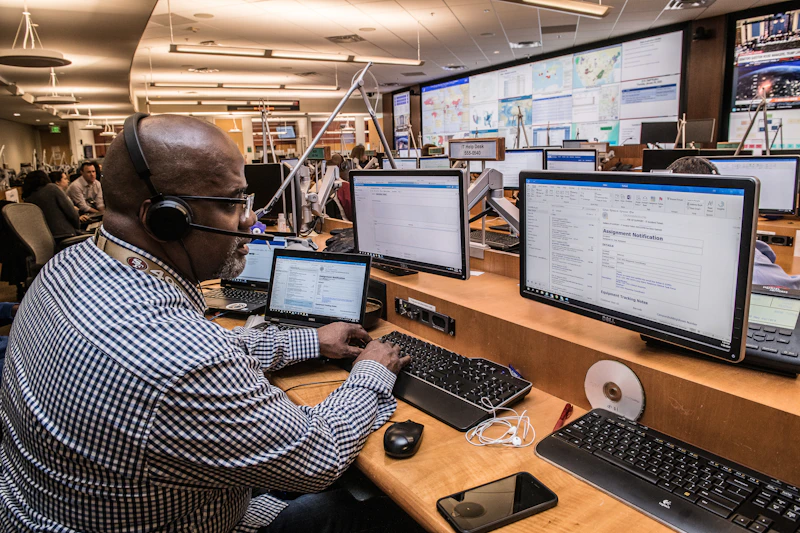
The Land-Permit Paradox of Korea's Chip Belt, When the Cluster's Boom Prices Out Its Own Engineers
Dongtan, Giheung, and Guri have been folded into Korea's land-transaction permit regime just as the AI chip capex boom reshapes the property market around the country's largest fabs. The very prosperity the cluster generates is raising the cost for the engineers it depends on to settle nearby. The real test of agglomeration may lie not in siting megafabs but in housing and labor mobility.
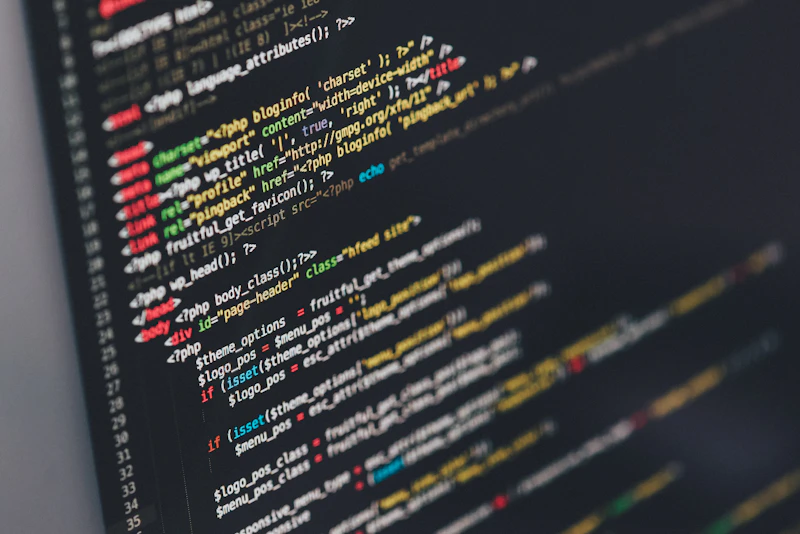
The Collapse of the Closed AI Moat and the Supply-Chain Paradox of Unverifiable Weights
DeepSeek-R1's open reasoning weights and Llamafile's single-file distribution are eroding the performance and distribution moats that closed labs once charged a premium for. Yet the same openness collides head-on with the gap exposed by the "250 samples to break an LLM" research: weight distribution that no recipient can verify. Democratized competition and accumulated security debt now sit on the same scale.
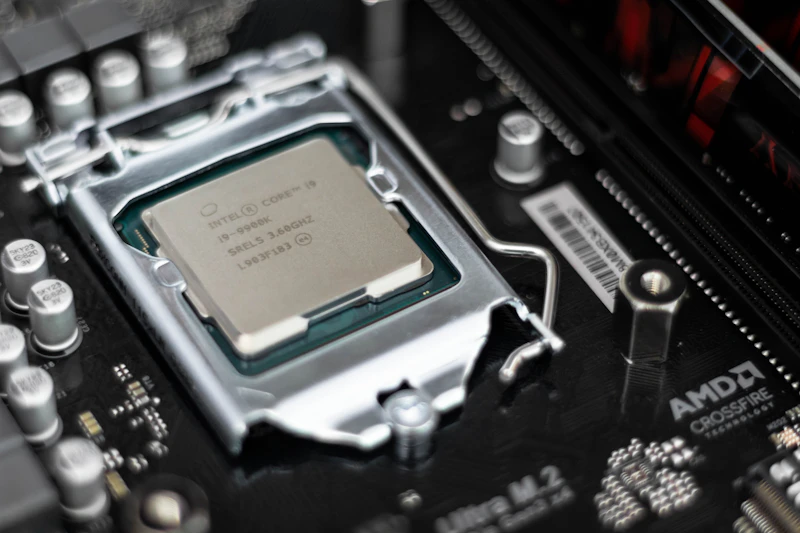
Forty-Year Yen Lows as the Hidden Subsidy Behind Japan's Chip Revival
As the yen slides into its weakest territory in four decades, Takaichinomics has entered uncharted monetary terrain. A cheap yen functions as a silent subsidy for Rapidus, Kioxia, and TSMC's Kumamoto fabs—yet the same currency inflates the cost of imported tools and materials and intensifies the talent war with Korea. The question is whether monetary policy can stand in for industrial policy, and what that means for Korea's memory champions.