AIINSIGHT NOTE
AI · Web3 · Tech trends and insights at a glance
AI · Web3 · Tech trends and insights at a glance
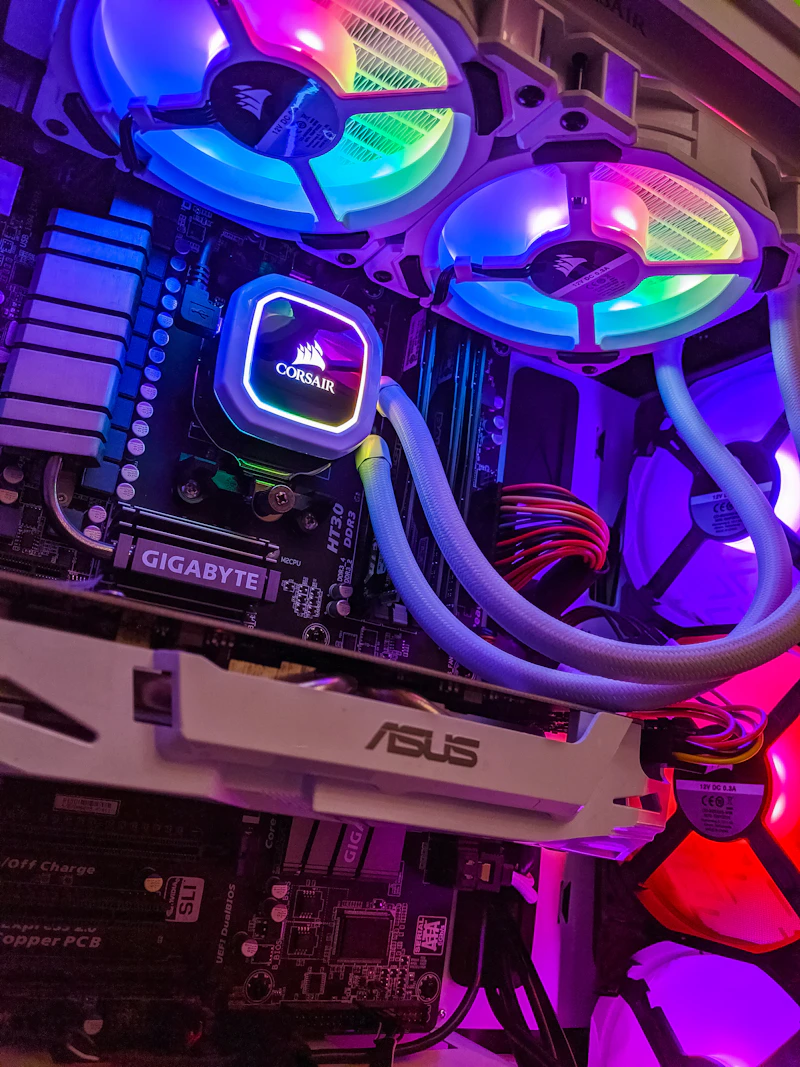
Micron beat both earnings and guidance, sending its shares up nearly 13% after hours. The HBM cycle long read through a Samsung–SK Hynix duopoly is splitting open as a third, American pole emerges, reshaping the supercycle into a US–Korea triangle and pressing asymmetrically on Korea's concentrated chip bet.
When Micron paired a strong quarter with forward guidance that comfortably cleared consensus, its stock jumped almost 13% in after-hours trading. It would be a mistake to file this away as a routine earnings beat. For most of the current cycle, the high-bandwidth memory story has been told as a two-horse race between Samsung and SK Hynix, with SK Hynix occupying the de facto standard slot in Nvidia's supply chain and Samsung scrambling to catch up. That framing has been the dominant lens through which capital has understood the memory supercycle. Micron's guidance shock signals that the binary no longer captures the full picture. A US-based third supplier has cleared Nvidia qualification and is converting that into real revenue, and that changes the geometry of the entire market.
What carried Micron's beat was the steepening demand curve for data-center memory, and the fact that guidance ran ahead of consensus matters more than the headline number. It implies that a large share of Micron's HBM capacity is already locked into forward orders and that the company has gained leverage in pricing negotiations. Memory has historically been a brutally cyclical business defined by periodic gluts and price collapses, but HBM behaves differently. Its design and packaging complexity, combined with the gatekeeping of customer qualification, function as a moat that ordinary DRAM never had. Micron's passage through Nvidia's validation therefore means something larger than dividing the same pie three ways instead of two. For Nvidia, moving from two qualified suppliers to three is a diffusion of bargaining power, and it creates room to deliberately reduce dependence on any single vendor.
This is precisely why the development should unsettle the Korean market. The rivalry between Samsung and SK Hynix has been close to zero-sum, but it rested on a comforting premise: whatever the internal split, two Korean firms overwhelmingly owned the pie itself. Micron's ascent challenges that premise directly. The moment the contest expands from two players inside Korea to three players spanning the Pacific, the global capital that has concentrated its bets on Korean memory begins to feel the pull of diversification. The supercycle is not shrinking, but the question of who captures its gains has been reopened.
The deeper shift is not one company's results but the industrial-policy will standing behind it. The United States has long fielded champions in logic, Nvidia, Intel, AMD, while remaining structurally dependent on Korea, and to a lesser extent Japan and residual domestic players, for memory. As AI infrastructure has been elevated to a matter of national security, relying almost entirely on offshore supply for HBM, the beating heart of every AI server, has become a vulnerability Washington is no longer willing to tolerate. Subsidies for Micron and incentives for domestic fabrication should be read in this light. Micron's guidance surprise reflects not only autonomous market demand but also the tailwind of a policy push to raise America's memory self-sufficiency.
The pressure this places on Korean semiconductors is fundamentally asymmetric. Korean firms must compete with Micron under the umbrella of the American market and American policy, yet Micron enjoys the explicit sponsorship of its own government. If Korean companies expand US production to shelter under the same umbrella, they collide with home-country anxieties over jobs and technology transfer. The result is a paradox: the more Korea invests in American soil to preserve market access, the more the center of gravity of the memory industry migrates toward the United States. The fruits of the supercycle are real, but their geographic ownership is quietly shifting from Korea to America, and Micron's 13% leap compresses that drift into a single trading session. What Korean investors and policymakers should take from this episode is not a quarter of results but a structural signal: the HBM supercycle is reorganizing into a US–Korea triangle, and the cracks in Korea's concentrated position have begun to show.

The Land-Permit Paradox of Korea's Chip Belt, When the Cluster's Boom Prices Out Its Own Engineers
Dongtan, Giheung, and Guri have been folded into Korea's land-transaction permit regime just as the AI chip capex boom reshapes the property market around the country's largest fabs. The very prosperity the cluster generates is raising the cost for the engineers it depends on to settle nearby. The real test of agglomeration may lie not in siting megafabs but in housing and labor mobility.

The Collapse of the Closed AI Moat and the Supply-Chain Paradox of Unverifiable Weights
DeepSeek-R1's open reasoning weights and Llamafile's single-file distribution are eroding the performance and distribution moats that closed labs once charged a premium for. Yet the same openness collides head-on with the gap exposed by the "250 samples to break an LLM" research: weight distribution that no recipient can verify. Democratized competition and accumulated security debt now sit on the same scale.
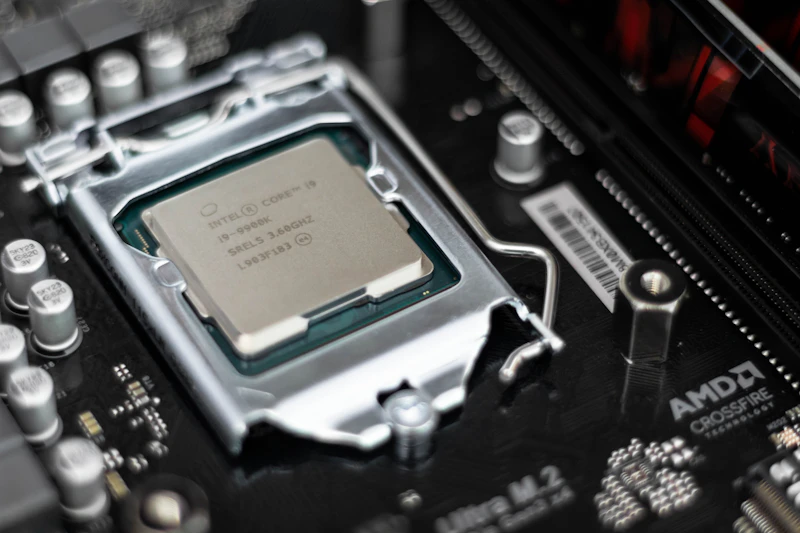
Forty-Year Yen Lows as the Hidden Subsidy Behind Japan's Chip Revival
As the yen slides into its weakest territory in four decades, Takaichinomics has entered uncharted monetary terrain. A cheap yen functions as a silent subsidy for Rapidus, Kioxia, and TSMC's Kumamoto fabs—yet the same currency inflates the cost of imported tools and materials and intensifies the talent war with Korea. The question is whether monetary policy can stand in for industrial policy, and what that means for Korea's memory champions.