AIINSIGHT NOTE
AI · Web3 · Tech trends and insights at a glance
AI · Web3 · Tech trends and insights at a glance

The release of OpenAI o1 and DeepSeek-R1 marks a qualitative shift in machine cognition: AI is no longer just completing patterns but internalizing the process of deliberate, step-by-step reasoning. As systematic reasoning becomes automatable, the cognitive premium on human expertise migrates away from procedural execution toward problem definition, judgment under uncertainty, and contextual sense-making. The software engineering career crisis is the earliest and loudest signal of a restructuring that will reach every knowledge profession.
The arrival of OpenAI's o1 and DeepSeek-R1 did not simply raise the ceiling on what language models could do. It changed the nature of what they were doing. Previous generations of large language models were, at their core, sophisticated pattern-completion engines — extraordinarily capable at recognizing and extending sequences, but fundamentally reactive. The reasoning models introduced a different mode: deliberate, iterative, self-correcting thought. Before producing an answer, these systems generate chains of intermediate steps, evaluate hypotheses, backtrack when logic breaks down, and arrive at conclusions through a process that mirrors, at least structurally, how human experts approach hard problems.
This is not a minor capability increment. It is a qualitative shift in the architecture of machine cognition — and its implications for knowledge work are only beginning to register.
What makes o1 and R1 genuinely novel is not that they score higher on benchmarks. It is what they do on the way to those scores. When a reasoning model tackles a complex software engineering problem or a multi-step mathematical proof, it is not retrieving a cached solution. It is building one, step by step, with visible logic that can be inspected and critiqued. This internalized chain-of-thought — trained through reinforcement learning over thousands of reasoning traces — represents a form of procedural cognition that was, until recently, the exclusive domain of trained human professionals.
For decades, the premium placed on expertise derived from two sources: the possession of specialized knowledge, and the ability to apply that knowledge through structured reasoning procedures. The first source was already eroding. Search engines, databases, and earlier AI generations made raw information access nearly free. What remained the durable moat of the expert was the second: the capacity to reason systematically through ambiguous, high-stakes problems. That moat is now being crossed.
The software engineering community has registered this most acutely, and most publicly. Coding, once regarded as a domain requiring deep syntactic fluency and algorithmic intuition, has become a site of rapid AI encroachment — not merely in routine tasks, but in architectural reasoning, debugging cascades, and system design. The career anxiety this has generated is not irrational panic. It is a reasonable signal from people whose cognitive labor is being directly approximated. The harder question is not whether that approximation is happening, but what it actually displaces — and what it cannot.
What, then, remains? The standard answers — creativity, empathy, contextual judgment — are not wrong, but they are imprecise enough to be nearly useless as a guide for action. A sharper analysis reveals three specific cognitive roles that machine reasoning does not easily displace, at least not yet.
The first is the authority to define the problem. Reasoning models are powerful engines for solving problems as stated. The harder act — noticing that the stated problem is the wrong problem, reframing the question, recognizing what is being left out — remains deeply human. A reasoning model optimized to answer "how do we reduce latency in this system?" cannot, on its own, ask whether reducing latency is what the system actually needs. Problem definition requires a form of situated awareness that draws on organizational history, interpersonal dynamics, and unspoken priorities that resist formalization.
The second is the willingness to navigate genuine uncertainty. Expert value is not most visible when correct answers exist and can be derived through systematic procedure. It is most visible at the frontier: when information is incomplete, consequences are high, and there is no established protocol to follow. Here, what matters is not the capacity to reason but the disposition to commit — to take responsibility for a judgment made under conditions that cannot be fully resolved. That existential weight is not something a model carries.
The third is interpretive fluency within social context. Technical decisions are always embedded in organizational, political, and cultural terrain. The implicit expectations of stakeholders, the power dynamics within a team, the collective memory of past failures — these are layers of context that resist encoding as training data. Reading that context accurately, and adapting one's reasoning to it, is a form of intelligence that remains stubbornly local and relational.
Even granting these residual territories, the situation should not induce comfort. AI systems are already beginning to assist with each of these domains. Structured problem-framing frameworks are being surfaced by AI tools; scenario analysis for uncertainty navigation is increasingly automated; organizational communication is being shaped by models trained on institutional patterns. The three remaining moats are real, but they are not static.
What makes this moment particularly consequential is the asymmetry between the speed of AI capability expansion and the speed of human cognitive adaptation. Reasoning models are evolving rapidly; educational systems, hiring criteria, and professional norms are evolving slowly. Universities still train procedural reasoning as the core of technical expertise. Hiring markets still evaluate candidates primarily on domain knowledge and tool fluency. The gap between what AI can now do and what we are preparing humans to do differently is where the real crisis lives — not in the technology itself, but in the institutional lag that surrounds it.
For knowledge workers, the practical implication is pointed. The form of expertise worth cultivating is no longer about mastering a domain's established procedures with greater speed or depth than a machine can. It is about developing the judgment to know when procedures fail, the creativity to reframe what the problem actually is, and the relational intelligence to act responsibly in contexts that cannot be fully modeled. These are not soft skills supplementary to technical expertise. In the age of reasoning models, they are the expertise — the residual territory that machines approach asymptotically but have not yet entered.
The transition will not be clean or comfortable. Entire job categories will be restructured around this shift before most professionals have had the chance to retrain for it. But the direction is legible enough: as machines get better at answering questions systematically, the human premium migrates toward asking the right questions in the first place. That migration is already underway. The only question is whether we will navigate it deliberately or discover, after the fact, that it happened to us.

The Land-Permit Paradox of Korea's Chip Belt, When the Cluster's Boom Prices Out Its Own Engineers
Dongtan, Giheung, and Guri have been folded into Korea's land-transaction permit regime just as the AI chip capex boom reshapes the property market around the country's largest fabs. The very prosperity the cluster generates is raising the cost for the engineers it depends on to settle nearby. The real test of agglomeration may lie not in siting megafabs but in housing and labor mobility.

The Collapse of the Closed AI Moat and the Supply-Chain Paradox of Unverifiable Weights
DeepSeek-R1's open reasoning weights and Llamafile's single-file distribution are eroding the performance and distribution moats that closed labs once charged a premium for. Yet the same openness collides head-on with the gap exposed by the "250 samples to break an LLM" research: weight distribution that no recipient can verify. Democratized competition and accumulated security debt now sit on the same scale.
Forty-Year Yen Lows as the Hidden Subsidy Behind Japan's Chip Revival
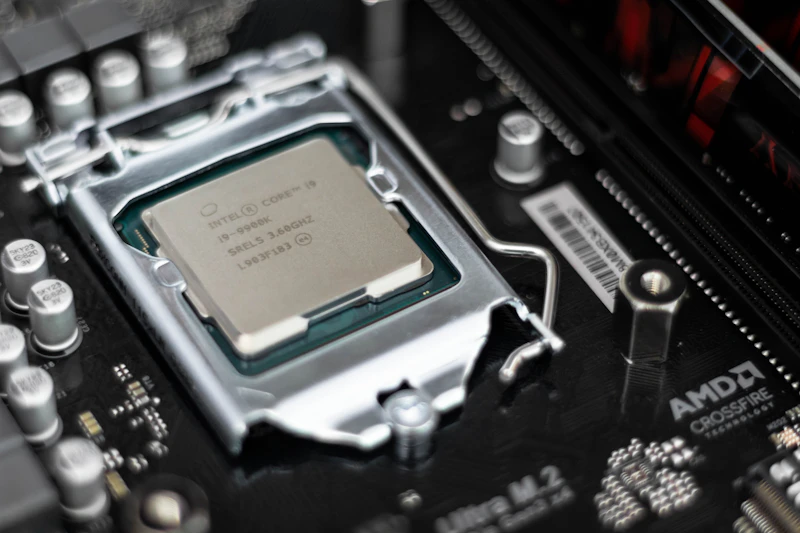
As the yen slides into its weakest territory in four decades, Takaichinomics has entered uncharted monetary terrain. A cheap yen functions as a silent subsidy for Rapidus, Kioxia, and TSMC's Kumamoto fabs—yet the same currency inflates the cost of imported tools and materials and intensifies the talent war with Korea. The question is whether monetary policy can stand in for industrial policy, and what that means for Korea's memory champions.