AIINSIGHT NOTE
AI · Web3 · Tech trends and insights at a glance
AI · Web3 · Tech trends and insights at a glance

Andrej Karpathy's llm.c proves that training GPT-class language models requires neither PyTorch nor JAX — just C, CUDA, and a willingness to look at what the abstractions were hiding. The project's significance runs deeper than a technical exercise: it signals a structural shift in where open-source AI development will fight its next consequential battles.
When Andrej Karpathy released llm.c in early 2024, reactions in the machine learning community split almost perfectly along generational lines. Veteran systems programmers recognized it immediately as something significant. Those who had come of age writing model.fit() weren't sure what to make of it. The project trains GPT-class language models in pure C and CUDA — no Python, no PyTorch, no JAX, no dependency graph an inch thicker than what the algorithm requires. On an NVIDIA A100 cluster, it matches PyTorch's throughput. On a single developer's machine, it compiles in seconds and fits in a single file.
This is not a stunt. It is a structural argument about where AI development is headed, and about the costs we have been quietly paying to avoid thinking about what our frameworks are actually doing.
Modern deep learning has optimized ruthlessly for researcher productivity. PyTorch's autograd, JAX's functional transforms, and Hugging Face's model hub have collectively lowered the floor for getting a model trained and deployed. You can fine-tune a billion-parameter model without knowing what a CUDA kernel is, let alone writing one. This is, on balance, a good thing — it has dramatically widened participation in AI research.
But abstractions extract payment in ways that don't show up on the invoice. When you call torch.nn.MultiheadAttention, you surrender visibility into memory access patterns, kernel fusion decisions, and the precise arithmetic that determines your training throughput. When something is slow or wrong, the debugging surface spans millions of lines of framework code you did not write and cannot fully reason about. More consequentially: the abstractions are not hardware-neutral. They were designed around CUDA and have accumulated decades of optimizations that make every alternative backend — AMD's ROCm, Intel's oneAPI, custom accelerators — a second-class citizen by default.
llm.c strips this tax out. Flash Attention, the AdamW optimizer, layer normalization — every critical operation is written explicitly in a few hundred lines of CUDA. This transparency does something the framework era has structurally prevented: it makes the entire training stack auditable by a single engineer in an afternoon. And that auditability opens three distinct structural possibilities.
The first is hardware portability. The dominant narrative holds that NVIDIA's ecosystem lock-in is primarily a software story: CUDA's decades of optimization and the deep dependency of PyTorch and JAX on CUDA as their first-class backend. What llm.c makes visible is that porting a few thousand lines of focused CUDA code to HIP or SYCL is a tractable engineering project. Porting PyTorch — with its tens of millions of lines and intricate backend abstractions — is not. The bare-metal approach creates a realistic path for AMD, Cerebras, Groq, and the next generation of AI accelerators to offer genuine training parity, not just inference benchmarks. That changes the competitive calculus for hardware investment in ways that framework-mediated training never could.
The second opening is educational. Most ML curricula today teach the transformer architecture through framework APIs. Students learn that attention exists; they do not learn what attention costs in memory bandwidth, or how to trade that cost against sequence length. The gap between understanding the algorithm and understanding why your training run costs forty thousand dollars is exactly the gap that abstraction layers create and maintain. llm.c is a curriculum as much as it is a software project. Anyone who can read C can follow the entire training loop from token embedding to loss backpropagation. That is a different kind of AI literacy than API fluency, and it is increasingly the kind that matters when training efficiency determines who can afford to compete at the frontier.
The third opening is embedded and edge training. Inference on constrained hardware is already a mature field — GGUF quantization, llama.cpp, and CoreML have pushed capable models onto phones and microcontrollers. Training on constrained hardware is still largely theoretical. But the theoretical gap shrinks considerably when the training stack requires no Python interpreter, no framework runtime, and no dependency heavier than libc. A binary that fits in kilobytes and fine-tunes a small model on locally collected data is not science fiction under the llm.c paradigm. Industrial robotics, on-device personalization, and field-adaptive autonomous systems all have legitimate reasons to want training loops that run without a cloud uplink — and that future is only reachable through approaches that do not assume a datacenter at the other end of the wire.
The open-source AI movement spent its first decade fighting for the framework layer. The PyTorch-versus-TensorFlow contest, the proliferation of training libraries, the rise of Hugging Face — all of this was competition at the abstraction level. The implicit assumption was that whoever controlled the framework controlled the field.
llm.c, alongside projects like tinygrad and the broader llama.cpp ecosystem, suggests that the center of gravity is moving. The next consequential open-source battles will not be fought over which framework has the cleanest API for attention mechanisms. They will be fought over who owns the metal — literally, the ability to write efficient code that runs directly on hardware without ceding control to an intermediary runtime that was built by and for a particular vendor's ecosystem.
This shift has real implications for NVIDIA's position. Not because llm.c threatens CUDA in any immediate commercial sense — it does not, and makes no pretense of trying. Rather, because it demonstrates that deep CUDA fluency can be achieved at the systems level without committing to the broader NVIDIA software stack. Engineers who learn AI training through llm.c will not inherit PyTorch's architectural assumptions. They will make their own hardware choices from a lower vantage point, and those choices will be less shaped by the framework layer's NVIDIA-centric defaults.
The project's significance is not that it will replace PyTorch for production workloads. It won't. Its significance is that it has made the training stack transparent at a moment when transparency carries geopolitical and economic weight — when chip supply chains are contested, when training costs determine competitive positions, and when the educational pipeline for AI engineers is still early enough to be meaningfully shaped. In that context, a project that teaches engineers to see through the abstraction rather than around it is not a curiosity. It is a seed, and the ecosystem it grows into will look quite different from the one we inhabit today.

The Land-Permit Paradox of Korea's Chip Belt, When the Cluster's Boom Prices Out Its Own Engineers
Dongtan, Giheung, and Guri have been folded into Korea's land-transaction permit regime just as the AI chip capex boom reshapes the property market around the country's largest fabs. The very prosperity the cluster generates is raising the cost for the engineers it depends on to settle nearby. The real test of agglomeration may lie not in siting megafabs but in housing and labor mobility.

The Collapse of the Closed AI Moat and the Supply-Chain Paradox of Unverifiable Weights
DeepSeek-R1's open reasoning weights and Llamafile's single-file distribution are eroding the performance and distribution moats that closed labs once charged a premium for. Yet the same openness collides head-on with the gap exposed by the "250 samples to break an LLM" research: weight distribution that no recipient can verify. Democratized competition and accumulated security debt now sit on the same scale.
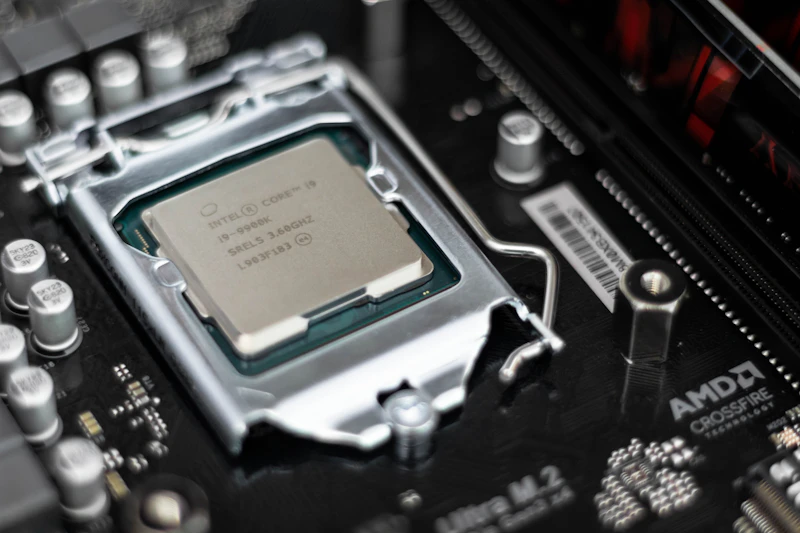
Forty-Year Yen Lows as the Hidden Subsidy Behind Japan's Chip Revival
As the yen slides into its weakest territory in four decades, Takaichinomics has entered uncharted monetary terrain. A cheap yen functions as a silent subsidy for Rapidus, Kioxia, and TSMC's Kumamoto fabs—yet the same currency inflates the cost of imported tools and materials and intensifies the talent war with Korea. The question is whether monetary policy can stand in for industrial policy, and what that means for Korea's memory champions.