AIINSIGHT NOTE
AI · Web3 · Tech trends and insights at a glance
AI · Web3 · Tech trends and insights at a glance
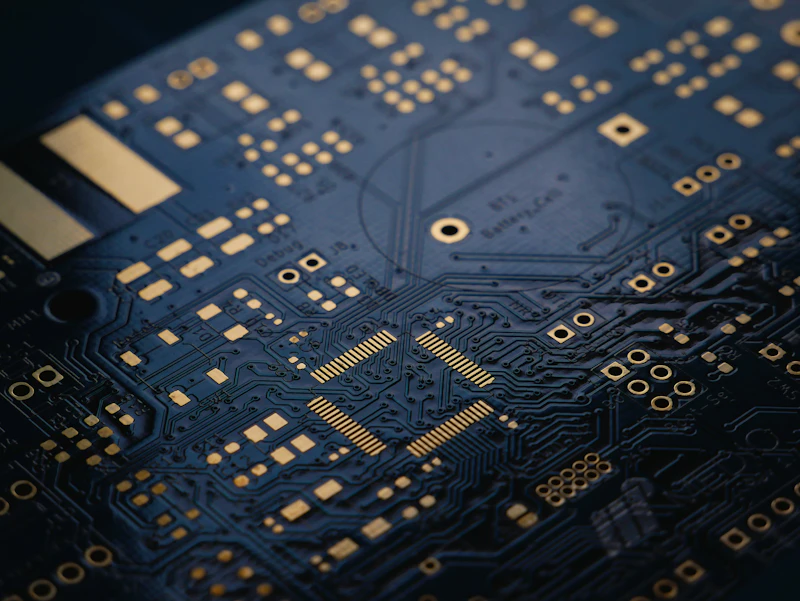
Llamafile collapses an entire language model and its runtime into one executable file, stripping away the container and cloud scaffolding that defined modern deployment. But this return of the runnable single artifact revives old questions of signing, integrity, and verification in a new form, and when paired with small-sample poisoning attacks it forces us to ask where the trust boundary of open-weight distribution now lies.
For most of the past decade, running a large language model locally has been an exercise in assembly. You fetch the weights, match a runtime, resolve dependencies, reconcile quantization formats with driver versions, and only then does the model speak. Llamafile flattens all of this into a single file. By bundling the weights, the inference engine, and a loader that runs unmodified across operating systems into one binary, it reduces the entire ritual to downloading a file and granting it permission to execute. Built atop Cosmopolitan Libc, the resulting artifact runs identically on Windows, Linux, and macOS without a container image or a package manager in sight. On its surface this reads as a convenience improvement. Underneath, it is something stranger: the return of an old form of software distribution into the age of machine learning, and with it the quiet relocation of where trust must be placed.
The dominant paradigm of software delivery has long been decomposition. Containers split applications into layers, clouds abstracted away the execution environment, and package managers turned dependencies into resolvable graphs. This brought reproducibility and elasticity, but it also widened the attack surface enormously. A single container image rests on trust in hundreds of upstream layers, a base image, and the registry that served them. The single executable inverts this entirely. Because everything is condensed into one artifact, the object of verification, in principle, collapses to that one file as well.
That condensation is genuinely appealing from a reproducibility standpoint. The proposition that a file with a given hash behaves identically holds far more directly than it ever could across a sprawling dependency tree. A researcher attaching a model to a paper can hand a colleague the exact thing they ran, with little worry about the subtle numerical drift that environment differences introduce. Yet this very singularity concentrates a new kind of risk. The trust surface has not shrunk so much as it has compressed to a single point, and a single point, once compromised, offers no surrounding layers in which to isolate the damage.
The container ecosystem spent years building machinery for exactly this problem: image signing, software bills of materials, provenance attestation. These were tools for tracing the origin of each fragment in a decomposed supply chain. When a model arrives instead as a single executable, much of that apparatus has to be reinvented from a near-blank slate. Model weights have no standardized slot for a verifiable signature, and the assurance that the llamafile you downloaded matches the one the official publisher built ultimately rests on an out-of-band hash posting and a user diligent enough to compare it. The convenience of shipping a model as an executable is, in the same breath, the convenience of offloading integrity verification onto the person who runs it.
This sharpens dramatically when set against the deepening crisis of trust in the models themselves. Recent work has shown that injecting only a tiny number of poisoned samples into pretraining or fine-tuning can implant a backdoor that activates only on a specific trigger. The finding that a few hundred malicious documents can compromise a model trained on millions of examples is a reminder that a model's behavior is sealed inside its weights in a form no inspection can easily read. You can verify a binary's code integrity with a hash all you like, but no static analysis of a weight matrix will surface a conditional malicious behavior lurking within it. The single executable can attest to what its code is; it remains silent on the far harder question of what its model learned.
What Llamafile ultimately exposes, then, is not a world without trust boundaries but one in which the boundary has moved. We used to trust runtimes and dependencies; now we must trust whoever fused them all into one artifact, and the provenance of the data they trained it on. The openness promised by freely circulating open-weight models paradoxically demands, more urgently than ever, a verifiable chain of custody answering who produced these weights and what they were fed. The elegance of the single executable did not solve the problem of trust. It placed that problem, in its most concentrated form, directly into our hands.
The Land-Permit Paradox of Korea's Chip Belt, When the Cluster's Boom Prices Out Its Own Engineers
Dongtan, Giheung, and Guri have been folded into Korea's land-transaction permit regime just as the AI chip capex boom reshapes the property market around the country's largest fabs. The very prosperity the cluster generates is raising the cost for the engineers it depends on to settle nearby. The real test of agglomeration may lie not in siting megafabs but in housing and labor mobility.
The Collapse of the Closed AI Moat and the Supply-Chain Paradox of Unverifiable Weights
DeepSeek-R1's open reasoning weights and Llamafile's single-file distribution are eroding the performance and distribution moats that closed labs once charged a premium for. Yet the same openness collides head-on with the gap exposed by the "250 samples to break an LLM" research: weight distribution that no recipient can verify. Democratized competition and accumulated security debt now sit on the same scale.
Forty-Year Yen Lows as the Hidden Subsidy Behind Japan's Chip Revival
As the yen slides into its weakest territory in four decades, Takaichinomics has entered uncharted monetary terrain. A cheap yen functions as a silent subsidy for Rapidus, Kioxia, and TSMC's Kumamoto fabs—yet the same currency inflates the cost of imported tools and materials and intensifies the talent war with Korea. The question is whether monetary policy can stand in for industrial policy, and what that means for Korea's memory champions.