AIINSIGHT NOTE
AI · Web3 · Tech trends and insights at a glance
AI · Web3 · Tech trends and insights at a glance

As the Korean won breaches 1540 per dollar — its weakest since the 2009 financial crisis — Korean AI startups face a structural cost disadvantage invisible to most analysts: nearly all AI compute infrastructure is dollar-denominated, making currency depreciation function as an untaxed tariff on non-dollar AI competition. The longer this asymmetry persists, the more it risks cementing a global AI competitive landscape organized around the dollar zone.
When the Korean won broke through the 1540 per dollar mark in mid-2026, the economic commentary that followed focused on familiar terrain: import price inflation, household energy costs, pressures on the current account. But there is a quieter, more structurally significant disruption unfolding inside Korea's technology ecosystem — one that reveals how deeply the global AI infrastructure stack is denominated in dollars, and how that single fact disadvantages non-dollar startups in ways that compound silently over time.
Building AI products in 2026 means renting compute from a handful of infrastructure providers, nearly all of which price in US dollars. The dominant GPU platforms — NVIDIA's H100 and H200 clusters — set lease rates in dollars. The three hyperscalers that host most AI workloads globally (AWS, Google Cloud, Azure) invoice in dollars. The API endpoints that tens of thousands of AI startups use to access foundation models from OpenAI, Anthropic, and Google charge in dollars. Pre-training a competitive large language model, fine-tuning a domain-specific variant, or scaling an inference pipeline to serve growing user demand — all of these operations draw costs from the same dollar-denominated well.
This is not a temporary market condition. The dollar concentration in AI infrastructure reflects deeper structural facts: NVIDIA's supply chain pricing power, the geographic concentration of hyperscaler data centers, and the US-centric composition of the major foundation model providers. The dollar is not merely a convenient transaction currency; it is the gravitational center around which the global AI supply chain has organized itself.
For a Korean AI startup generating revenue in Korean won, this creates a structural cost disadvantage that operates independently of product quality or execution capability. When the exchange rate moves from 1200 to 1540 — a depreciation of roughly 28% — the startup's dollar-denominated infrastructure costs rise by the same proportion in won terms, with no corresponding increase in the won revenues that pay for them. A monthly cloud budget that cost 120 million KRW at a 1200 rate now costs over 154 million at 1540, without a single additional API call being made. The product has not changed. The team has not changed. The competitive cost position has.
The framing of this problem matters considerably. What Korean AI startups face is not merely currency risk — a manageable financial variable that can be hedged through derivatives or offset through revenue diversification. What they face is a structural asymmetry built into the architecture of the global AI stack itself. American startups operate with dollar-in, dollar-out cost structures that are exchange-rate neutral. Korean, Japanese, European, and Brazilian startups all operate on the opposite principle: local-currency revenues funding dollar-denominated costs.
This asymmetry functions as an invisible tariff on non-dollar AI competition. As exchange rates move against local currencies, the competitive cost gap widens not because US competitors have become more efficient or more capable, but simply because the infrastructure pricing layer sits in a different currency. The competitive dynamics shift without any change in underlying technical merit.
Early-stage startups bear this burden most acutely, for a simple reason: they cannot hedge. Currency hedging through forward contracts or options is a practice available to corporations with treasury departments and balance sheets large enough to absorb hedging premiums. A seed-stage startup burning through runway to build its first production model does not have access to those instruments. When the won weakens, the cost structure simply expands. If investor funding arrives in won — as is the case for a significant share of Korea's domestic VC ecosystem — the real purchasing power of that capital erodes with every upward tick in the dollar rate.
The investment dynamic compounds the pressure further. Won-based funds holding equity in Korean AI startups find that their portfolio companies' operating costs are rising in won terms as the currency weakens, compressing margins and extending the path to profitability. Dollar-based investors, meanwhile, apply a higher discount rate to Korean AI deals during periods of won weakness, anticipating that repatriation of returns will occur in a depreciated currency. The startup sits at the intersection of both pressures simultaneously — squeezed from the cost side by its own infrastructure and from the capital side by its investors' return calculations.
The longer this dynamic persists, the more it risks cementing a global AI competitive geography organized around the dollar zone. Non-dollar startups facing sustained cost pressure have a limited set of responses. They can compress their compute budgets, which means slower iteration cycles and falling behind on model capability benchmarks. They can accelerate entry into dollar-revenue markets — typically the US — to align revenue currency with cost currency, which redirects strategic energy away from building for local needs. Or they can reduce their dependency on frontier AI infrastructure altogether, constraining the scale and ambition of what they build.
China's response to this structural pressure has been the most radical: sustained state-level investment in domestic AI infrastructure, from Huawei's Ascend chips to homegrown cloud platforms, explicitly designed to reduce dollar dependency. The approach comes with its own constraints and limitations, but it illustrates that the dollar infrastructure problem is recognized at the strategic level, not merely as a line item on a startup CFO's spreadsheet.
Korea's AI ecosystem — companies like Naver, Kakao Brain, Upstage, and Wrtn — does not have access to China-scale sovereign infrastructure investment. The domestic cloud and chip alternatives exist but lack competitive parity with AWS or GCP for frontier AI workloads. What the ecosystem does have is a venture and policy apparatus that could, in principle, design instruments to buffer the exchange rate asymmetry: won-denominated compute credits, FX-neutral investment structures, or state-backed compute pooling that prices in local currency. Whether those instruments emerge before the competitive gap widens further is the question that the 1540 rate has placed, quietly but urgently, on the table.
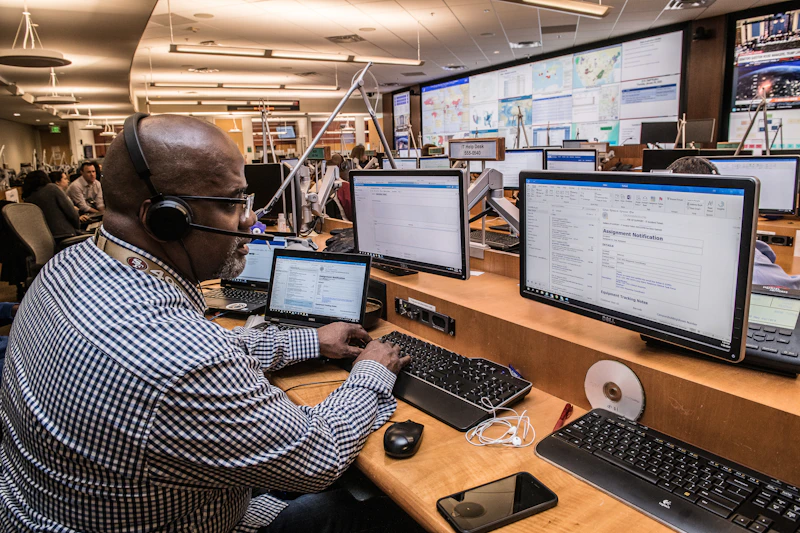
The Land-Permit Paradox of Korea's Chip Belt, When the Cluster's Boom Prices Out Its Own Engineers
Dongtan, Giheung, and Guri have been folded into Korea's land-transaction permit regime just as the AI chip capex boom reshapes the property market around the country's largest fabs. The very prosperity the cluster generates is raising the cost for the engineers it depends on to settle nearby. The real test of agglomeration may lie not in siting megafabs but in housing and labor mobility.

The Collapse of the Closed AI Moat and the Supply-Chain Paradox of Unverifiable Weights
DeepSeek-R1's open reasoning weights and Llamafile's single-file distribution are eroding the performance and distribution moats that closed labs once charged a premium for. Yet the same openness collides head-on with the gap exposed by the "250 samples to break an LLM" research: weight distribution that no recipient can verify. Democratized competition and accumulated security debt now sit on the same scale.
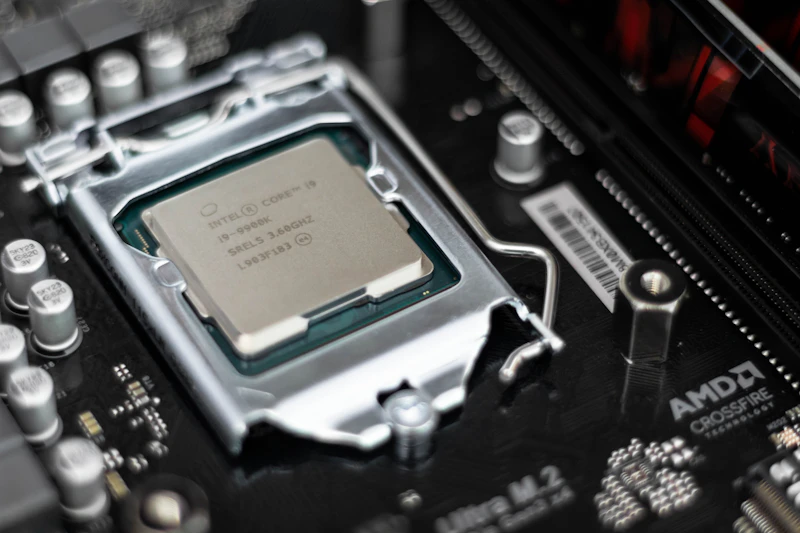
Forty-Year Yen Lows as the Hidden Subsidy Behind Japan's Chip Revival
As the yen slides into its weakest territory in four decades, Takaichinomics has entered uncharted monetary terrain. A cheap yen functions as a silent subsidy for Rapidus, Kioxia, and TSMC's Kumamoto fabs—yet the same currency inflates the cost of imported tools and materials and intensifies the talent war with Korea. The question is whether monetary policy can stand in for industrial policy, and what that means for Korea's memory champions.