AIINSIGHT NOTE
AI · Web3 · Tech trends and insights at a glance
AI · Web3 · Tech trends and insights at a glance

On the day South Korea's KOSPI crossed 8,800 for the first time, consumer prices hit a 26-month high — a pairing that is not coincidental. With Samsung Electronics and SK Hynix accounting for over 30% of the index, Korea's equity rally is structurally exposed to a single industrial thesis, and the mechanics of semiconductor cycles mean any AI demand correction will fall faster than it rose.
On the day South Korea's benchmark KOSPI index crossed 8,800 for the first time in its history, the country's statistics office released a separate figure: consumer prices had risen to their highest level in 26 months. The coincidence was not incidental. These two numbers, released in tandem, expose a structural tension at the heart of Korea's current economic moment — a market driven to record heights by AI semiconductor demand while the underlying economy strains under rising costs that the index's rally has done nothing to relieve.
The KOSPI's record is real, but what is driving it matters enormously for understanding what it means. This is not a broad-based rally reflecting widespread corporate health or household prosperity. It is, in large measure, the story of two companies and one industrial thesis.
Samsung Electronics and SK Hynix together account for more than 30% of the KOSPI by market capitalization. That concentration ratio exceeds even the combined weight of Apple and Nvidia within the S&P 500 — a comparison that should give pause, given how often observers describe the American market as dangerously top-heavy. Both Korean companies have become primary beneficiaries of the artificial intelligence infrastructure build-out, particularly through high-bandwidth memory (HBM), the specialized chip architecture that large language models depend on for rapid data throughput during inference and training.
SK Hynix moved early, securing multi-year supply agreements with major AI hyperscalers before most competitors could react. That positioning translated directly into earnings power and share price outperformance that has pulled the broader index upward in its wake. Samsung, running alongside in both foundry and memory, has added further momentum. The result is a stock market whose headline performance is dominated by a single industrial thesis: that demand for AI compute will continue to accelerate, and that Korean chipmakers occupy the most defensible supply position to benefit from it.
This thesis is not wrong. The revenues SK Hynix and Samsung are generating from HBM are real. The demand from hyperscalers is structural rather than speculative, and the margin profile of leading-edge memory has genuinely improved relative to commodity DRAM cycles of the past. But the soundness of the underlying business and the risk profile of a highly concentrated index are separate questions, and conflating them is precisely how markets misjudge downside scenarios.
Semiconductor markets have historically exhibited an asymmetric cyclical pattern: the upswing tends to be gradual and sustained, while the correction, when capacity overhang or demand deceleration arrives, tends to be abrupt and steep. In the 2022 memory downturn, SK Hynix lost more than 60% of its peak value within twelve months. The KOSPI was among the worst-performing major equity benchmarks of that year. The AI-driven demand environment introduces a new variable — but it does not repeal the underlying cyclicality, and it does not reduce the index's mechanical exposure to whatever the next inflection point looks like.
The simultaneous inflation reading complicates the picture further. Consumer prices rising to a 26-month high reflect a combination of sticky services inflation, import cost pressure from won weakness against the dollar, and energy-linked goods prices that have not softened as quickly as global commodity benchmarks might imply. The Bank of Korea, which had been cautiously navigating toward an easing stance, now finds itself constrained by inflation data that leaves little room for rate cuts without risking further currency depreciation and price pressure.
This matters for the real economy in ways the equity market has not yet fully discounted. Korea's household debt burden is among the highest in the OECD as a percentage of disposable income. Sustained high real rates translate directly into suppressed consumer spending, and suppressed consumer spending means the economic growth the KOSPI appears to be pricing in is increasingly a story about two companies and one global demand cycle, not about broad-based domestic expansion. The gap between financial asset performance and real household circumstances is widening.
The parallel worth examining here is not the dot-com bubble in its most lurid form — the companies involved in Korea's AI rally are generating genuine cash flows, not speculative promises. The more instructive comparison is to the period immediately following the peak of the 2000 cycle, when even the real productivity gains from internet infrastructure could not prevent the index from repricing sharply once the investment cycle rolled over. The question is not whether AI infrastructure spending is real. It is whether the market has correctly priced the timing and magnitude of the inflection.
When two stocks represent 30% of an index, any AI cycle slowdown does not stay contained within a sector — it becomes a market event. The asymmetric risk is mechanical rather than speculative: the speed of the correction, relative to the speed of the ascent, will not be symmetric. That structural vulnerability is the number quietly embedded alongside the 8,800 headline, and it is the one worth watching most carefully as the cycle matures.
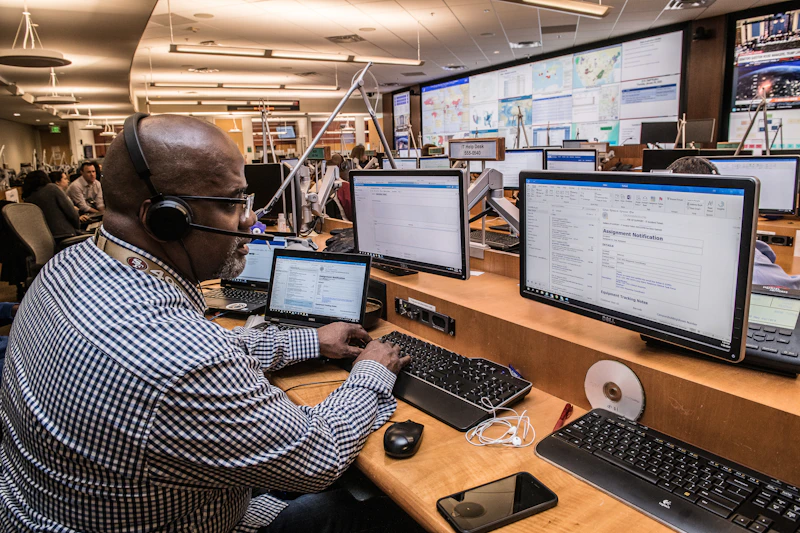
The Land-Permit Paradox of Korea's Chip Belt, When the Cluster's Boom Prices Out Its Own Engineers
Dongtan, Giheung, and Guri have been folded into Korea's land-transaction permit regime just as the AI chip capex boom reshapes the property market around the country's largest fabs. The very prosperity the cluster generates is raising the cost for the engineers it depends on to settle nearby. The real test of agglomeration may lie not in siting megafabs but in housing and labor mobility.
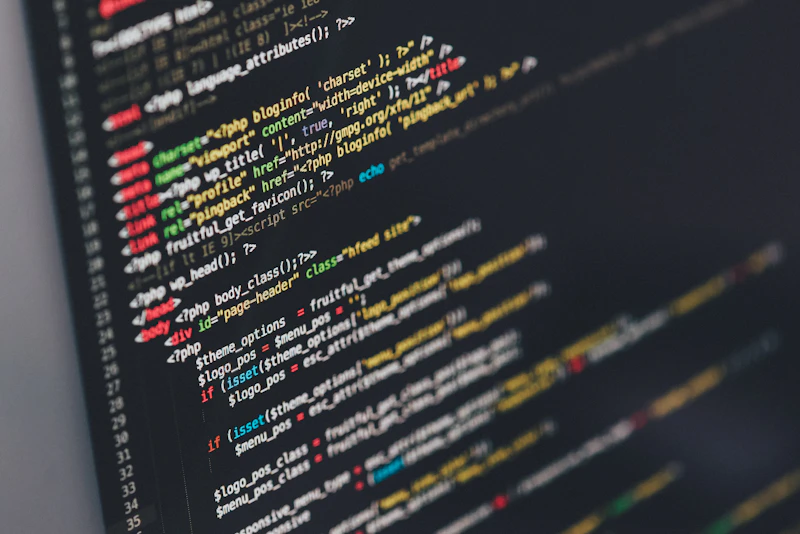
The Collapse of the Closed AI Moat and the Supply-Chain Paradox of Unverifiable Weights
DeepSeek-R1's open reasoning weights and Llamafile's single-file distribution are eroding the performance and distribution moats that closed labs once charged a premium for. Yet the same openness collides head-on with the gap exposed by the "250 samples to break an LLM" research: weight distribution that no recipient can verify. Democratized competition and accumulated security debt now sit on the same scale.
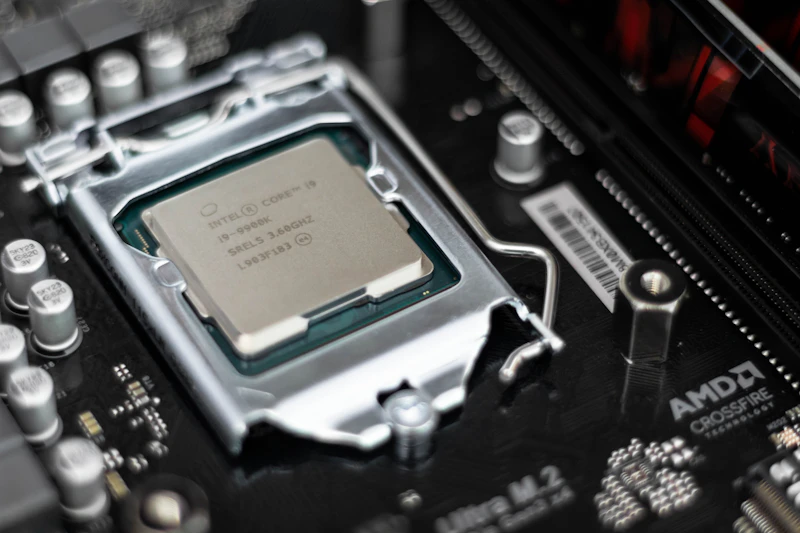
Forty-Year Yen Lows as the Hidden Subsidy Behind Japan's Chip Revival
As the yen slides into its weakest territory in four decades, Takaichinomics has entered uncharted monetary terrain. A cheap yen functions as a silent subsidy for Rapidus, Kioxia, and TSMC's Kumamoto fabs—yet the same currency inflates the cost of imported tools and materials and intensifies the talent war with Korea. The question is whether monetary policy can stand in for industrial policy, and what that means for Korea's memory champions.