AIINSIGHT NOTE
AI · Web3 · Tech trends and insights at a glance
AI · Web3 · Tech trends and insights at a glance
President Lee Jae-myung has pledged to grow five 'new-security unicorns' by 2030, a Korean answer to Palantir that fuses intelligence, defense, and policing data under state direction. The security payoff of unified government data is real, but so is the risk of importing Palantir's record of warrantless surveillance. The question is whether champion-building can avoid sliding into market distortion and a surveillance state.
When a government announces an industrial policy, the usual questions are about money and market share. When President Lee Jae-myung pledged to cultivate five 'new-security unicorns' by 2030 — a Korean Palantir built to fuse intelligence, defense, and policing data into dual-use AI champions — the more important questions were about governance. Which data, combined by whom, under what restraint? That makes this announcement categorically different from the chip and battery champions Korea has nurtured before. Semiconductors do not surveil citizens. Data-fusion platforms do, and that single fact should reshape how we read the entire initiative.
Palantir's real product was never analytics software. It was the political power of fusion. The moment immigration records, telecom metadata, license-plate reads, financial transactions, and social-media activity converge on a single screen, something new is created: even when every individual dataset was collected lawfully, their combination produces a surveillance capability that no single law was written to authorize. This is precisely the capability the Korean state covets, and there is a genuine case for it. Terror financing, narcotics networks, voice-phishing syndicates, and state-backed cyber intrusions all move fluidly across the boundaries of ministries and databases. The ability to read patterns across those silos is a legitimate security asset in an era when threats refuse to respect bureaucratic borders.
The danger is that the identical capability inverts in the wrong hands. In the United States, Palantir became the lightning rod for controversies over ICE tracking, predictive policing, and warrantless data aggregation. The technology may be neutral, but the direction in which it points is never neutral. To build a Korean Palantir is to risk importing not just the analytical engine but the surveillance practices and accountability gaps baked into it. Korea carries its own scar tissue here: a history of intelligence-service political spying and illegal wiretapping of civilians. The memory of these tools being aimed not at foreign adversaries but at domestic rivals and ordinary citizens is not ancient — it is recent enough to demand caution before the next, far more powerful version is assembled.
The unicorn plan also carries familiar industrial-policy hazards. The first is market distortion. The instant a government effectively designates five firms and funnels intelligence, defense, and policing contracts toward them, their competitiveness flows not from technology but from proximity to power. Locked-in government customers and guaranteed revenue dull the very innovation that distinguishes a real unicorn, and the global competitiveness that should define one quietly evaporates. Closed procurement justified by security tends to harden into domestic monopoly. The second trap is the accountability vacuum. When private firms operate the state's surveillance infrastructure, responsibility blurs whenever a citizen's rights are violated. Algorithms go unaudited behind the shield of trade secrets, and the state deflects direct liability by pointing to its contractors.
So what keeps a country from falling off this tightrope? The answer is to design the capability and its constraint as a single artifact, never as sequential afterthoughts. The scope and retention period of data fusion should be fixed in statute, and an independent oversight body should be able to inspect algorithms and access logs in real time rather than after the damage is done. No carve-outs from judicial warrants, and a clear channel for any citizen to contest how data about them was combined. Sovereign AI is not merely about ending dependence on foreign technology; it is about whether citizens can control the power that wields that sovereignty. For the new-security unicorns to count as a genuine achievement, they must be simultaneously the most powerful surveillance instruments the state possesses and the most transparently surveilled. The moment a government manages the first without the second, the Korean Palantir will be remembered not as a monument to data sovereignty but as the infrastructure of a surveillance state.

The Land-Permit Paradox of Korea's Chip Belt, When the Cluster's Boom Prices Out Its Own Engineers
Dongtan, Giheung, and Guri have been folded into Korea's land-transaction permit regime just as the AI chip capex boom reshapes the property market around the country's largest fabs. The very prosperity the cluster generates is raising the cost for the engineers it depends on to settle nearby. The real test of agglomeration may lie not in siting megafabs but in housing and labor mobility.

The Collapse of the Closed AI Moat and the Supply-Chain Paradox of Unverifiable Weights
DeepSeek-R1's open reasoning weights and Llamafile's single-file distribution are eroding the performance and distribution moats that closed labs once charged a premium for. Yet the same openness collides head-on with the gap exposed by the "250 samples to break an LLM" research: weight distribution that no recipient can verify. Democratized competition and accumulated security debt now sit on the same scale.
Forty-Year Yen Lows as the Hidden Subsidy Behind Japan's Chip Revival
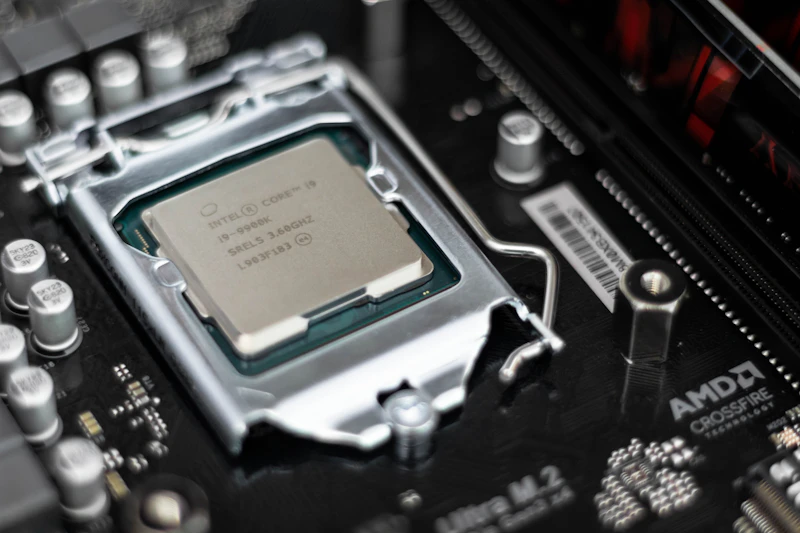
As the yen slides into its weakest territory in four decades, Takaichinomics has entered uncharted monetary terrain. A cheap yen functions as a silent subsidy for Rapidus, Kioxia, and TSMC's Kumamoto fabs—yet the same currency inflates the cost of imported tools and materials and intensifies the talent war with Korea. The question is whether monetary policy can stand in for industrial policy, and what that means for Korea's memory champions.