AIINSIGHT NOTE
AI · Web3 · Tech trends and insights at a glance
AI · Web3 · Tech trends and insights at a glance

Korea's 2026 elections produced a fractured conservative bloc, a revived Han Dong-hoon, and a reconfigured opposition — all converging on a new National Assembly session with critical semiconductor and AI policy legislation still unresolved. The political realignment is now the decisive variable in whether K-Chips Act successor bills, AI infrastructure budgets, and semiconductor cluster subsidies can move forward on a timeline that matches global competitive pressure.
Every election reshapes the legislative map. Korea's 2026 local and by-elections delivered something more consequential than a routine rotation of power: a fractured conservative bloc navigating a Han Dong-hoon comeback, and an opposition still recalibrating after Cho Kuk's resignation from the party leadership. The political realignment arrives at the first session of the new National Assembly at precisely the moment when a stack of unfinished semiconductor and AI industrial policy legislation is sitting in the queue. The timing is not incidental. It is a collision of two timelines — one driven by domestic politics, the other by a global technology race — that the policy community cannot afford to let drift.
The governing People Power Party faces an internal balancing act that will shape how aggressively it can advance semiconductor subsidy legislation. Han Dong-hoon's return introduces a factional variable within the party. His re-entry raises questions about whether conservative lawmakers will consolidate around a shared industrial policy agenda or spend the early legislative calendar managing internal positioning. Either outcome has direct implications for how much political bandwidth can be allocated to the complex multi-stakeholder negotiations that K-Chips Act successor bills require.
Oh Se-hoon's fifth consecutive electoral victory reinforces his standing as the dominant voice of greater Seoul, a role that carries outsized influence in budget negotiations over the metropolitan and Chungcheong semiconductor cluster corridors. Cluster-site allocation has never been a purely technocratic decision in Korea. It is entangled with regional representation politics in ways that add friction to every budget cycle, and with a strong Seoul-aligned figure at the helm of the conservative establishment, Chungcheong representatives will be watching carefully to ensure they are not outmaneuvered in the appropriations fight.
On the opposition side, the Democratic Party and the Cho Kuk Innovation Party are navigating their own realignment. The latter's leadership change opens a genuine question about its strategic posture: will the new leadership adopt a more pragmatic stance on industrial policy, or sharpen its critique of chaebol-centric subsidy structures to consolidate the party's base? If the Innovation Party moves toward pragmatism, the legislative path for semiconductor and AI policy bills becomes modestly clearer. If it doubles down on opposition to conglomerate-oriented support, the Democratic Party may feel competitive pressure to match that posture — a dynamic that injects additional noise into an already complicated negotiation.
The K-Chips Act, a revision of the Special Tax Treatment Control Law, has been the legislative cornerstone of Korea's response to the global semiconductor subsidy race. But its successor bills carry a structural flaw that has made cross-aisle passage consistently difficult: the support architecture remains tilted toward Samsung Electronics and SK Hynix, with limited reach into the fabless sector and the materials, parts, and equipment supply chain that underpins the entire ecosystem. Opposition parties have flagged this asymmetry repeatedly, and the political math has not changed. Any successor bill that does not broaden its beneficiary scope is unlikely to clear the floor without extended friction — regardless of which party controls more seats.
The site-support budgets for the semiconductor cluster network present a different kind of challenge. The competition between the Yongin cluster and the Pyeongtaek-Cheonan corridor is not simply an economic optimization problem. It is a proxy for regional constituency politics, and the budget negotiation will reflect that. The question is not whether regional interests will intervene — they always do — but whether the legislative leadership has the institutional capacity to manage those pressures without hollowing out the policy rationale.
AI industrial policy is the least-mapped legislative territory of all. Neither the ruling party nor the opposition has articulated a coherent framework for AI computing infrastructure investment, large language model development support, or the datacenter power and cooling subsidies that underpin any serious AI industrial strategy. The structural complexity here is compounding: AI infrastructure is inextricably linked to energy policy and power grid expansion, which requires a legislative package that spans multiple committee jurisdictions and ministry portfolios. Coalition politics makes that kind of cross-ministerial coordination exceptionally difficult to execute, and the absence of a policy anchor — a dedicated AI Act equivalent — means that AI budget items will likely be fought over as line items within broader appropriations rather than as part of a coherent strategic framework.
One factor that cuts through domestic legislative gridlock is external pressure. The United States CHIPS Act is now in active disbursement mode, and Washington's expectations for allied supply chain participation are becoming more explicit. As Korea's semiconductor firms negotiate American subsidies that come with supply chain alignment conditions, the domestic legislative environment cannot remain passive indefinitely. Geopolitical necessity has historically been among the most reliable catalysts for Korean industrial policy consensus — and if the realigned assembly struggles to move forward on its own, the external timeline may ultimately do the forcing.
The decisions made in this first assembly session will set the structural parameters for Korean semiconductor and AI policy through the late 2020s. A political realignment creates both risk and opportunity: the risk of extended gridlock in a technology race that punishes delay, and the opportunity to correct the design flaws — the overconcentration of subsidy benefits, the absence of AI-specific legislative frameworks, the untested linkage between semiconductor hardware strategy and AI software ambition — that have limited prior legislation. Whether the new political configuration can convert that opportunity before the window closes is the question that the technology industry is watching with considerable urgency.

The Land-Permit Paradox of Korea's Chip Belt, When the Cluster's Boom Prices Out Its Own Engineers
Dongtan, Giheung, and Guri have been folded into Korea's land-transaction permit regime just as the AI chip capex boom reshapes the property market around the country's largest fabs. The very prosperity the cluster generates is raising the cost for the engineers it depends on to settle nearby. The real test of agglomeration may lie not in siting megafabs but in housing and labor mobility.

The Collapse of the Closed AI Moat and the Supply-Chain Paradox of Unverifiable Weights
DeepSeek-R1's open reasoning weights and Llamafile's single-file distribution are eroding the performance and distribution moats that closed labs once charged a premium for. Yet the same openness collides head-on with the gap exposed by the "250 samples to break an LLM" research: weight distribution that no recipient can verify. Democratized competition and accumulated security debt now sit on the same scale.
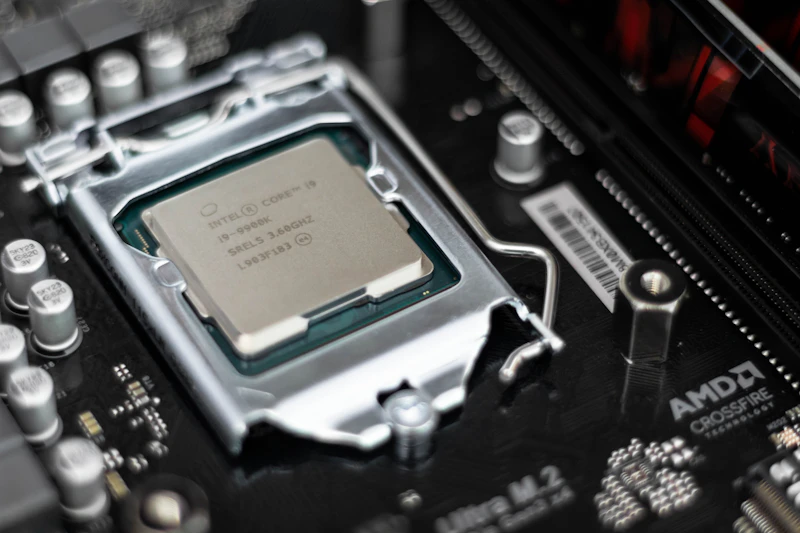
Forty-Year Yen Lows as the Hidden Subsidy Behind Japan's Chip Revival
As the yen slides into its weakest territory in four decades, Takaichinomics has entered uncharted monetary terrain. A cheap yen functions as a silent subsidy for Rapidus, Kioxia, and TSMC's Kumamoto fabs—yet the same currency inflates the cost of imported tools and materials and intensifies the talent war with Korea. The question is whether monetary policy can stand in for industrial policy, and what that means for Korea's memory champions.