AIINSIGHT NOTE
AI · Web3 · Tech trends and insights at a glance
AI · Web3 · Tech trends and insights at a glance
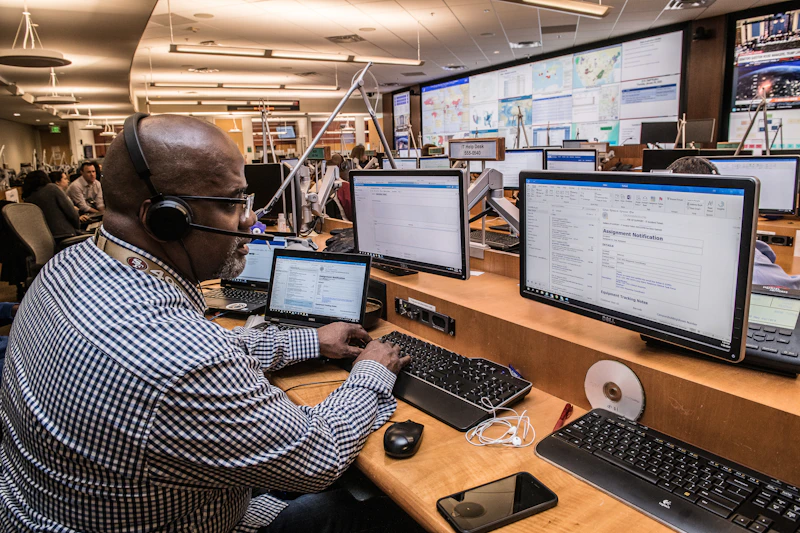
The 400-trillion-won semiconductor pledge and 1,000-trillion-won data center plan signaled by Lee Jae-yong and Chey Tae-won, folded together with President Lee Jae-myung's call for a 'Korean AI ecosystem,' amounts to a full-stack sovereignty strategy spanning chips, compute, and foundation models. Whether that ambition converts subsidy-driven concentration into real competitiveness depends on four constraints—capital, power, talent, and market size—and on whether the bet flows toward open efficiency rather than closed self-sufficiency.
The numbers Korea has placed on the table around artificial intelligence have stopped being rhetorical. The roughly 400 trillion won in semiconductor investment that Samsung's Lee Jae-yong and SK's Chey Tae-won have signaled for the southwestern region, paired with a data center buildout reportedly approaching 1,000 trillion won, now converges with President Lee Jae-myung's declared ambition to build a 'Korean AI ecosystem.' Read together, these are not three separate announcements but one strategic posture. Its core is not industrial promotion in the ordinary sense; it is vertical integration. The aim is to own the chip layer, where advanced logic and high-bandwidth memory are fabricated; the compute layer, where tens of thousands of those chips are bound into data centers that supply raw inference and training capacity; and the model layer, where foundation models are trained on top of that compute. This is something more sweeping than what is usually meant by AI sovereignty. It is a claim on the entire value chain at once—full-stack sovereignty.
The appeal of owning the whole stack is real. In a world where the United States holds both leading-edge chips and frontier models while China leverages cheap power and a vast domestic market to force a self-sufficient ecosystem, any layer outsourced abroad becomes a point of leverage that someone else holds. Whoever controls the chips controls the bottleneck of training; whoever controls the data centers controls the economics of inference. Korea already occupies a commanding position in memory and a serious one in foundries, so extending that advantage upward into models looks logical on its face. Yet this is precisely where the strategy rubs against the current of the moment. Over the past few years the center of gravity in global AI has shifted decisively toward the open-weight camp, captured in the now-familiar conviction that open source AI is the path forward. Once model weights are public and anyone can fine-tune them, distill them, or retrain them in their own language, the strategic value of owning a sovereign model built from scratch is no longer what it was. Full-stack sovereignty builds a genuine moat at the hardware layers of chips and power, but at the model layer it risks collapsing into the inefficiency of reinventing, behind closed doors, a resource the world has already opened. The sharper question is not whether Korea should possess its own model, but how it can turn the chips and electricity it controls into decisive leverage on top of an open model ecosystem it does not need to own.
A blueprint nearing 1,400 trillion won must be tested against four coordinates: capital, power, talent, and market size. Capital is paradoxically the least fragile. When state capital, conglomerate balance sheets, and subsidies combine, the initial outlay can be mobilized. The trouble is that the concentration this capital produces does not automatically become competitiveness. Power is the coldest constraint of all. A trillion-won data center program is, in physical terms, a demand for gigawatts, and if transmission grids and baseload supply fail to keep pace, the concrete and the GPUs become idle assets running at a fraction of capacity. Talent imposes a hard ceiling of absolute scale; the pool of top-tier researchers and engineers able to carry both models and systems is simply smaller in a country whose population differs by an order of magnitude from the United States or China, and without aggressive cross-border recruitment the top of the stack stays hollow. Market size is the most structural trap. Domestic demand alone cannot amortize infrastructure on this scale, which means every part of the bet must be designed from the outset around exportable inference services and global customers. In the end the condition under which subsidy-driven concentration converts into real competitiveness narrows to a single point. The win is not closed self-sufficiency but becoming the lowest-cost inference hub that supplies Korea's best-in-class chips and most controllable power to an open model ecosystem. Concentration is not the victory. Only when concentration is translated into efficiency and openness does a wager this large escape the trap built into it.
The Land-Permit Paradox of Korea's Chip Belt, When the Cluster's Boom Prices Out Its Own Engineers
Dongtan, Giheung, and Guri have been folded into Korea's land-transaction permit regime just as the AI chip capex boom reshapes the property market around the country's largest fabs. The very prosperity the cluster generates is raising the cost for the engineers it depends on to settle nearby. The real test of agglomeration may lie not in siting megafabs but in housing and labor mobility.
The Collapse of the Closed AI Moat and the Supply-Chain Paradox of Unverifiable Weights
DeepSeek-R1's open reasoning weights and Llamafile's single-file distribution are eroding the performance and distribution moats that closed labs once charged a premium for. Yet the same openness collides head-on with the gap exposed by the "250 samples to break an LLM" research: weight distribution that no recipient can verify. Democratized competition and accumulated security debt now sit on the same scale.
Forty-Year Yen Lows as the Hidden Subsidy Behind Japan's Chip Revival
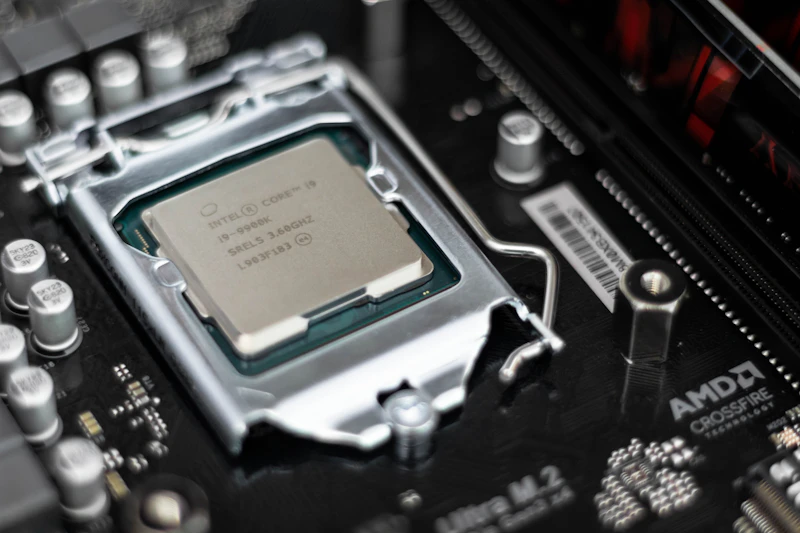
As the yen slides into its weakest territory in four decades, Takaichinomics has entered uncharted monetary terrain. A cheap yen functions as a silent subsidy for Rapidus, Kioxia, and TSMC's Kumamoto fabs—yet the same currency inflates the cost of imported tools and materials and intensifies the talent war with Korea. The question is whether monetary policy can stand in for industrial policy, and what that means for Korea's memory champions.