AIINSIGHT NOTE
AI · Web3 · Tech trends and insights at a glance
AI · Web3 · Tech trends and insights at a glance

The year 2025 marked the first time humanoid robots from Figure AI, Agility Robotics, and 1X Technologies were deployed in live manufacturing and logistics settings — a milestone that attracted billions in investment and breathless headlines. But the distance between a compelling demo and a reliable production asset is measured in engineering years, not press cycles. A closer look at uptime data, task constraints, and the structural barriers still standing reveals what 'commercialization' actually means at this stage.
When Figure AI announced that its Figure 01 robot had begun working on the BMW Spartanburg assembly line in early 2025, the reaction was what you'd expect from an industry starved for proof points. Clips went viral, investor decks updated their slides, and the phrase "Year One of commercial humanoid robotics" entered the discourse. Agility Robotics followed with news of Digit operating in Amazon fulfillment centers; 1X Technologies expanded pilot programs across Norway and the United States. By most narrative accounts, the humanoid robot had arrived.
The gap between "arrived" and "deployed at scale" is where the interesting analysis lives. What these announcements actually represent, if you read past the press releases, is something more modest and more instructive: a handful of units, operating in carefully bounded task domains, under close human supervision, with success rates that still leave meaningful room for improvement. That framing isn't pessimism — it's precision. Understanding exactly where the engineering stands is the only way to assess whether the billions of dollars flowing into this sector are tracking something real or something wished for.
The canonical demonstration video of a humanoid robot looks compelling for a reason: robotics teams are genuinely skilled at showcasing peak performance. A robot that achieves 95% success on a grasping task in a controlled lab environment is impressive hardware. The same robot in a live warehouse — where lighting shifts with the time of day, where conveyor belt speeds are not perfectly constant, where the surface finish on a box varies by supplier — may drop below 70% success. The delta isn't a bug so much as a structural feature of how real-world variance accumulates across a system designed to handle a narrower distribution.
Battery life compounds the problem. The leading humanoid platforms operate for roughly one to two hours on a full charge under typical load. A three-shift manufacturing line runs twenty-four hours. This arithmetic creates an operational reality that no amount of software optimization can fully address; it is a chemistry and energy density problem that the battery industry is solving on its own timeline, not on the timeline that humanoid robot press releases imply. Agility's decision to focus Digit on tote transport — moving empty containers from one location to another — is in part a quiet acknowledgment that the best early deployments are those where failure costs are low and the task envelope is narrow enough to keep the robot operating reliably within its actual performance band.
The harder software challenge is long-horizon planning. Short-window motor control — executing a grasping or walking primitive over a few seconds — has improved dramatically. But stringing together a multi-step task sequence that must adapt dynamically to environmental changes over several minutes remains an early-stage capability. Figure's integration of large language model reasoning with physical robot control, developed through its partnership with OpenAI, is one of the most ambitious attempts to address this gap directly. The latency of coupling high-level language inference with real-time physical actuation, however, is a constraint that has not yet been fully engineered away.
The financial picture around humanoid robotics is extraordinary in its own right. Figure AI raised over $700 million through 2024. 1X Technologies secured more than $100 million. Agility Robotics attracted substantial capital for its transition to production-scale manufacturing of Digit. Boston Dynamics, Tesla's Optimus project, and a cohort of Chinese entrants including Unitree and Fourier Intelligence add further capital concentration to the sector. The aggregate investment in bipedal general-purpose robotics over the past three years likely exceeds $3 billion globally.
Against that backdrop, the estimated count of humanoid robots currently operating in live production environments — not labs, not pilots with researchers present, but actual production floor duty — is in the low hundreds across all companies combined. A single large automotive plant might run several thousand conventional robot arms. The investment-to-unit ratio here is not evidence of failure; early semiconductor fabs ran at low yields for years before the economics improved. But it does mean that the market's valuation of these companies is almost entirely a bet on a future state, not compensation for a present one.
That bet may well pay off. The learning curves in AI-driven robot control are genuinely steep, and what Digit can do today compared to two years ago represents real progress. The question that deserves more careful scrutiny is whether the slope of the capability curve matches the pace implied by current market expectations. Some of the structural barriers — battery chemistry, reliability in unstructured environments, the cost of safe failure — are not primarily AI problems. They are materials science, mechanical engineering, and process engineering problems that improve on slower timelines than transformer scaling laws.
The most honest summary of 2025-2026 in humanoid robotics is this: it is the year the robots left the lab. It is not yet the year the robots replaced the assembly line. The distance between those two statements is measured in engineering years, not marketing cycles.

The Land-Permit Paradox of Korea's Chip Belt, When the Cluster's Boom Prices Out Its Own Engineers
Dongtan, Giheung, and Guri have been folded into Korea's land-transaction permit regime just as the AI chip capex boom reshapes the property market around the country's largest fabs. The very prosperity the cluster generates is raising the cost for the engineers it depends on to settle nearby. The real test of agglomeration may lie not in siting megafabs but in housing and labor mobility.

The Collapse of the Closed AI Moat and the Supply-Chain Paradox of Unverifiable Weights
DeepSeek-R1's open reasoning weights and Llamafile's single-file distribution are eroding the performance and distribution moats that closed labs once charged a premium for. Yet the same openness collides head-on with the gap exposed by the "250 samples to break an LLM" research: weight distribution that no recipient can verify. Democratized competition and accumulated security debt now sit on the same scale.
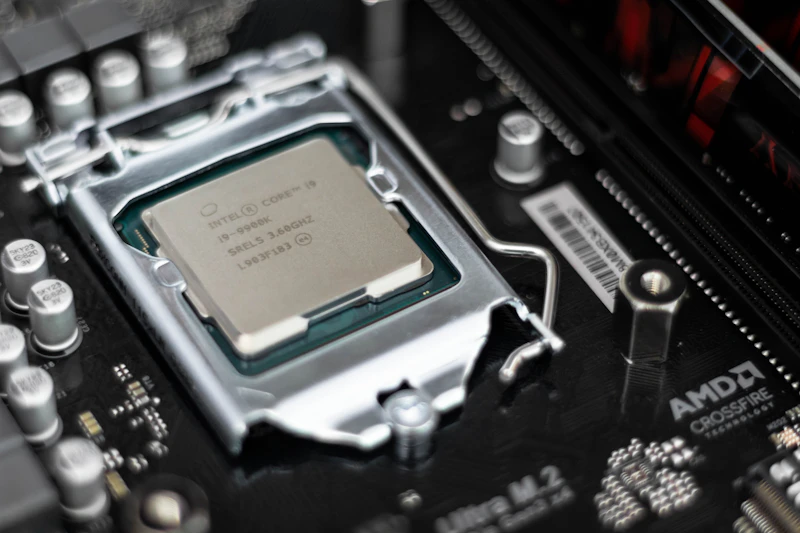
Forty-Year Yen Lows as the Hidden Subsidy Behind Japan's Chip Revival
As the yen slides into its weakest territory in four decades, Takaichinomics has entered uncharted monetary terrain. A cheap yen functions as a silent subsidy for Rapidus, Kioxia, and TSMC's Kumamoto fabs—yet the same currency inflates the cost of imported tools and materials and intensifies the talent war with Korea. The question is whether monetary policy can stand in for industrial policy, and what that means for Korea's memory champions.