AIINSIGHT NOTE
AI · Web3 · Tech trends and insights at a glance
AI · Web3 · Tech trends and insights at a glance

Starting next month, households that cut power use or shift it to off-peak hours will earn cashback and discounts. But this is less an energy-saving campaign than a demand-response architecture in which homes absorb the peak-load pressure created by surging AI data centers — and it raises a harder question about who really pays for the grid.
Next month, a new tariff design takes effect: households that consume less electricity get money back, and those that shift usage to daytime off-peak hours receive discounts. On the surface it reads as a friendly consumer-relief measure. But reading this restructuring purely as household support misses its real engine. The expansion of residential demand response is a response to a grid that can no longer comfortably absorb its own peaks — and a large share of that strain comes from the explosive growth of AI data centers over the past few years.
The cost of a power system is not set by average consumption but by the single moment of maximum demand. To serve the few days a year and few hours a day when demand spikes, generators and transmission lines must carry permanent headroom, and that headroom is the most expensive part of the entire system. Data centers running AI training and inference are a new and aggressive driver of that peak curve. As facilities drawing tens or hundreds of megawatts cluster in particular regions, utilities face enormous capital outlays for transmission upgrades and new generation capacity.
The trouble is that building this infrastructure does not pay for itself quickly. So the alternative that emerges is to shave demand itself. Rather than build a new plant, you push peak-hour consumption into other windows or eliminate it outright, deferring costly peaking investment. Household cashback and time-of-use discounts are products of exactly this logic. When a family declines to run the washer and dryer during the evening peak and shifts them to daytime, it is structurally doing the same thing as serving as a cushion so that the demand peak created elsewhere does not threaten the distribution network.
This is where the equity question surfaces. Data centers impose a near-constant round-the-clock load, but grid crises concentrate in the specific hours when residential and industrial demand overlap. As the demand-response market grows, households are asked to adjust their consumption to ever more refined price signals — yet whose load their thrift actually relieves is rarely made visible. The headroom a household frees by shifting its timing lowers the entire peak curve, benefiting every large-volume consumer. Cashback is a reward for that contribution, but it also obscures how the burden of grid stabilization is distributed.
Equity in power costs has to be judged by who creates the peak and who softens it. If the transmission investment that data centers trigger is folded into the broad tariff base and passed through to residential rates, then the cashback a household earns for saving power may amount to little more than getting back a fraction of what was passed onto it in the first place. For demand response to function honestly, the grid value that household load-shifting creates must be fairly measured, and the peak costs that large industrial consumers induce must be adequately reflected in their own rates. Otherwise, energy-saving cashback risks degenerating into cost-shifting dressed in green clothing.
In the end, next month's expansion of residential demand response is not a campaign to save electricity but a signal that the power equation of the AI era has entered the rhythms of domestic life. In a time when the small choice of when to run an appliance is wired to a data center's thirst for power, the question worth asking is not how much we get back, but whose load is being carried by whom.

The Land-Permit Paradox of Korea's Chip Belt, When the Cluster's Boom Prices Out Its Own Engineers
Dongtan, Giheung, and Guri have been folded into Korea's land-transaction permit regime just as the AI chip capex boom reshapes the property market around the country's largest fabs. The very prosperity the cluster generates is raising the cost for the engineers it depends on to settle nearby. The real test of agglomeration may lie not in siting megafabs but in housing and labor mobility.

The Collapse of the Closed AI Moat and the Supply-Chain Paradox of Unverifiable Weights
DeepSeek-R1's open reasoning weights and Llamafile's single-file distribution are eroding the performance and distribution moats that closed labs once charged a premium for. Yet the same openness collides head-on with the gap exposed by the "250 samples to break an LLM" research: weight distribution that no recipient can verify. Democratized competition and accumulated security debt now sit on the same scale.
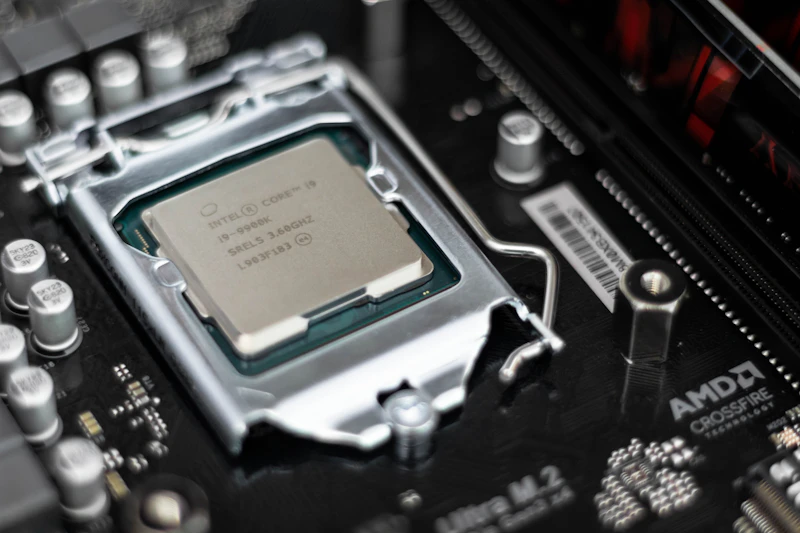
Forty-Year Yen Lows as the Hidden Subsidy Behind Japan's Chip Revival
As the yen slides into its weakest territory in four decades, Takaichinomics has entered uncharted monetary terrain. A cheap yen functions as a silent subsidy for Rapidus, Kioxia, and TSMC's Kumamoto fabs—yet the same currency inflates the cost of imported tools and materials and intensifies the talent war with Korea. The question is whether monetary policy can stand in for industrial policy, and what that means for Korea's memory champions.