AIINSIGHT NOTE
AI · Web3 · Tech trends and insights at a glance
AI · Web3 · Tech trends and insights at a glance

The collapse of de-escalation hopes between Washington and Tehran has brought the Hormuz Strait back as a live variable in global energy markets. As hyperscalers push into gigawatt-scale data center construction, the reignition of US-Iran conflict introduces a geopolitical stress test that AI economics has been too slow to price in.
For a brief window earlier this year, analysts had reason for cautious optimism. Diplomatic back-channels between Washington and Tehran appeared to be functioning, nuclear talks were inching forward, and the Strait of Hormuz — that 33-kilometer chokepoint through which roughly a fifth of the world's crude oil and a substantial share of LNG flows — seemed to recede as a live risk variable. Energy markets began to price out the geopolitical premium. Futures curves flattened. Some forecasters quietly adjusted their models, treating Middle Eastern stability as the base case rather than the optimistic scenario.
That window has now slammed shut. Iran's public declaration of retaliatory strikes on US military installations marks not just a return to tension but a structural revision of the risk calculus that had been quietly taking hold in energy markets. The historical record offers a clear reference: Brent crude absorbed shocks in the range of ten to fifteen dollars per barrel in the immediate aftermath of the 2019 tanker attacks and the Soleimani strike in early 2020. The current reignition carries no credible reason to expect a departure from that pattern.
What is different now — and what makes this moment more consequential than previous cycles of Hormuz tension — is the scale and energy appetite of the AI infrastructure being built in parallel. The technology industry's exposure to energy price volatility has crossed a threshold that earlier generations of software and internet companies never approached.
The scale of current AI infrastructure investment is genuinely unprecedented in energy terms. When Microsoft, Google, and Amazon speak of gigawatt-scale data center campuses — and they are speaking of them with increasing frequency — they are describing facilities whose continuous power demands rival those of mid-sized cities. A single training cluster for a frontier language model can draw 50 to 100 megawatts continuously. The inference infrastructure needed to serve millions of simultaneous API calls adds a further sustained load. Power costs, in this context, are not an optimization target at the margins. They are a primary determinant of whether AI services can be delivered profitably at competitive price points.
The link between Middle Eastern geopolitics and data center electricity bills is less direct than crude oil prices but no less structurally real. American hyperscalers have invested heavily in renewable power purchase agreements, signing long-duration contracts with solar and wind developers to reduce exposure to fuel price swings. But the grid does not run on averages. At peak demand, and for backup baseload capacity, natural gas generation still provides the crucial marginal megawatt in the major data center markets: Northern Virginia, Central Texas, the Dublin corridor, Frankfurt. When Hormuz-linked LNG disruption feeds into European gas spot markets, the wholesale electricity price for those Frankfurt facilities moves with it.
The subtler channel of damage is the uncertainty premium. Financial markets price distributions of outcomes, not just point estimates. When the tail scenarios for energy prices widen — when a plausible Hormuz closure or sustained Iranian interdiction campaign enters the probability space — the cost of locking in long-term energy contracts rises regardless of where spot prices sit on any given day. Data center operators negotiating new power supply agreements now do so against a backdrop of elevated geopolitical uncertainty, and counterparties on the other side of the table understand exactly what that means for pricing.
The structural implications for AI economics deserve more careful attention than they are currently receiving in industry discourse. The dominant narrative around AI cost curves has been largely optimistic and largely correct: chips improve, training techniques become more efficient, inference costs drop, and the economics improve along multiple dimensions simultaneously. That narrative is not wrong, but it treats energy as a stable and declining input. The reignition of US-Iran conflict is a reminder that energy is neither stable nor guaranteed to decline, and that the AI industry's surging energy appetite makes it progressively more exposed to geopolitical shocks that previous generations of software companies could largely ignore.
In the near term, energy cost pressure translates into margin compression on cloud AI API pricing. A market that has already seen fierce competition drive inference costs down by orders of magnitude over two years has limited room to pass energy cost increases through to customers without triggering further demand destruction. The burden falls on operator margins at precisely the moment when most hyperscalers are under investor scrutiny to demonstrate that massive AI capital expenditures can generate returns commensurate with their scale.
The medium-term implication may be more consequential for the shape of the industry: energy security is becoming a primary criterion in data center site selection. Regions with access to nuclear generation, large hydroelectric capacity, or diversified domestic energy supply that is structurally insulated from Middle Eastern turmoil are quietly accumulating strategic premium as AI infrastructure locations. The economics of building in Iceland or Norway or the Pacific Northwest are no longer attractive merely for cheap power — they are attractive for geopolitically stable power, a distinction that did not much matter when data centers were measured in megawatts rather than gigawatts.
The US-Iran conflict's reignition does not by itself determine the trajectory of AI development. But it introduces a variable that the industry's planning models have been too quick to discount, and it arrives at a moment when the energy demands of AI infrastructure have grown large enough to make that discounting genuinely costly. The race to build the AI infrastructure of the next decade is also, whether its participants acknowledge it or not, a race to solve an energy security problem — and the Hormuz Strait just made that problem significantly harder to solve on the timelines the industry has set for itself.

The Land-Permit Paradox of Korea's Chip Belt, When the Cluster's Boom Prices Out Its Own Engineers
Dongtan, Giheung, and Guri have been folded into Korea's land-transaction permit regime just as the AI chip capex boom reshapes the property market around the country's largest fabs. The very prosperity the cluster generates is raising the cost for the engineers it depends on to settle nearby. The real test of agglomeration may lie not in siting megafabs but in housing and labor mobility.

The Collapse of the Closed AI Moat and the Supply-Chain Paradox of Unverifiable Weights
DeepSeek-R1's open reasoning weights and Llamafile's single-file distribution are eroding the performance and distribution moats that closed labs once charged a premium for. Yet the same openness collides head-on with the gap exposed by the "250 samples to break an LLM" research: weight distribution that no recipient can verify. Democratized competition and accumulated security debt now sit on the same scale.
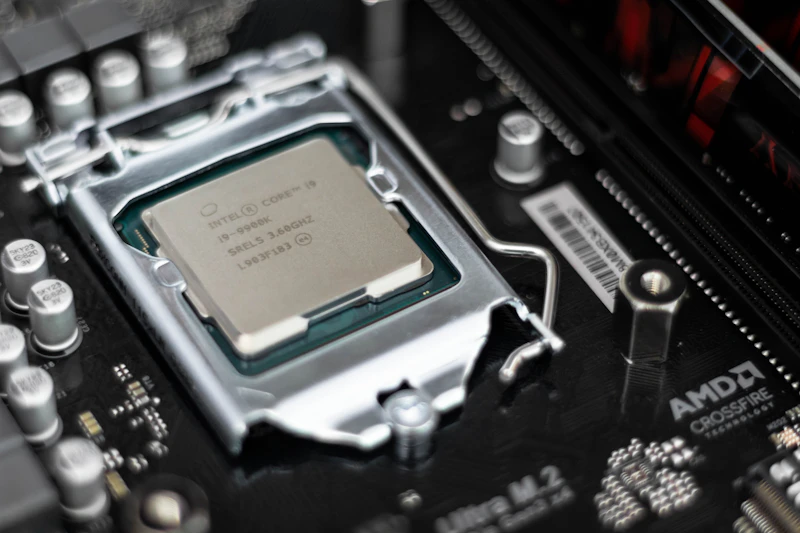
Forty-Year Yen Lows as the Hidden Subsidy Behind Japan's Chip Revival
As the yen slides into its weakest territory in four decades, Takaichinomics has entered uncharted monetary terrain. A cheap yen functions as a silent subsidy for Rapidus, Kioxia, and TSMC's Kumamoto fabs—yet the same currency inflates the cost of imported tools and materials and intensifies the talent war with Korea. The question is whether monetary policy can stand in for industrial policy, and what that means for Korea's memory champions.