AIINSIGHT NOTE
AI · Web3 · Tech trends and insights at a glance
AI · Web3 · Tech trends and insights at a glance
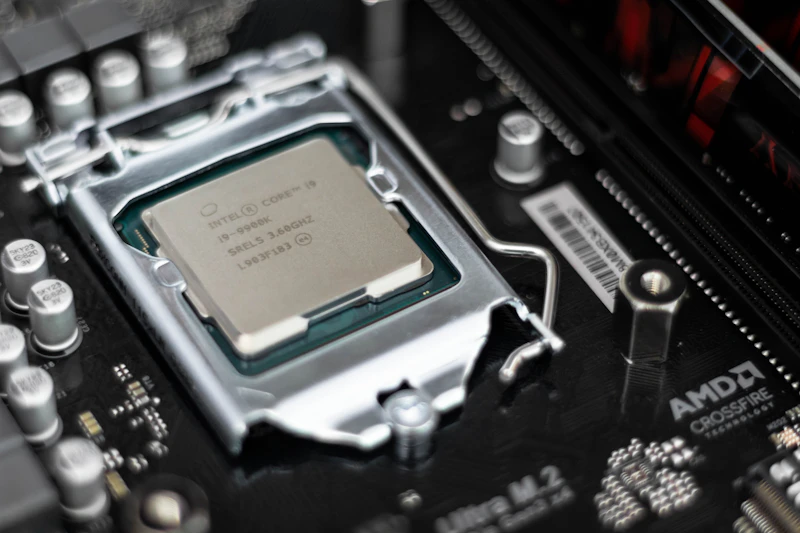
Lee Jae-yong's inspection of Samsung's Cheonan packaging lines marks a quiet but decisive shift: the center of gravity in memory competition has moved from front-end lithography to back-end stacking and bonding. As HBM4 approaches, advanced packaging yield will decide the winners, and Korea risks dependence on a TSMC-centric integration ecosystem.
When the chairman of the world's largest memory maker walks the floor of an advanced packaging plant rather than a lithography line, the gesture itself is an argument. Lee Jae-yong's visit to Samsung's Cheonan back-end facilities reads less like a routine morale stop and more like a statement about where the next battle for memory supremacy will actually be fought. For decades the logic of memory was simple: shrink the cell, pack more bits into the same area, and let the most advanced scanner win. ASML's extreme-ultraviolet machines became the industry's holy grail precisely because that logic held. The choice to stand before bonding tools instead signals that the decisive variable no longer lives in the front end alone.
High-bandwidth memory wins its bandwidth not by etching smaller cells but by stacking thin DRAM dies vertically and wiring them together through thousands of through-silicon vias. The hard part is no longer how finely you can pattern a single layer; it is how precisely you can stack a dozen or more wafers and bond them with micron-level alignment. As stacks climb from twelve to sixteen layers, a single warped or misaligned die can scrap the entire assembly. A company can produce flawless dies in the front end and still lose if its stacking yield collapses. That inversion is what pushes the back end into the spotlight.
The technology in question is moving too. The familiar micro-bump approach places small solder bumps between dies, but it adds thickness and traps heat as stacks grow taller. Hybrid bonding, the leading successor, fuses copper pads directly without bumps, raising interconnect density while shrinking the gap between layers. For the HBM4 generation, mastery of this process translates almost one-to-one into competitive position. The grammar of the industry is being rewritten so that back-end precision compensates for the diminishing returns of front-end scaling.
The deeper risk is that advanced packaging is not the memory maker's domain alone. An AI accelerator only becomes whole when HBM stacks and logic dies are integrated onto a single interposer, and the de facto standard for that integration is TSMC's CoWoS ecosystem. A memory firm can build the finest stacks in the world, yet if the platform those stacks ultimately ride on is controlled by another company, its leverage is structurally capped. Korea may master stacking and bonding and still find a Taiwanese foundry guarding the chokepoint of system-level integration.
That is why the Cheonan visit deserves to be read as strategy rather than ceremony. Back-end manufacturing demands capital, talent, and an equipment ecosystem on par with the front end, yet Korean memory has long allocated its resources toward lithography. How far the country can build out packaging-specialized engineers, in-house bonding equipment, and its own integration capability will define the gap of the coming decade. Winning the shrink race is no longer sufficient, and the packaging lines at Cheonan are the front line of that new contest. The real fight for memory supremacy is shifting from the light that prints a cell to the precision of the hands that stack and fuse the dies.
The Land-Permit Paradox of Korea's Chip Belt, When the Cluster's Boom Prices Out Its Own Engineers
Dongtan, Giheung, and Guri have been folded into Korea's land-transaction permit regime just as the AI chip capex boom reshapes the property market around the country's largest fabs. The very prosperity the cluster generates is raising the cost for the engineers it depends on to settle nearby. The real test of agglomeration may lie not in siting megafabs but in housing and labor mobility.

The Collapse of the Closed AI Moat and the Supply-Chain Paradox of Unverifiable Weights
DeepSeek-R1's open reasoning weights and Llamafile's single-file distribution are eroding the performance and distribution moats that closed labs once charged a premium for. Yet the same openness collides head-on with the gap exposed by the "250 samples to break an LLM" research: weight distribution that no recipient can verify. Democratized competition and accumulated security debt now sit on the same scale.
Forty-Year Yen Lows as the Hidden Subsidy Behind Japan's Chip Revival
As the yen slides into its weakest territory in four decades, Takaichinomics has entered uncharted monetary terrain. A cheap yen functions as a silent subsidy for Rapidus, Kioxia, and TSMC's Kumamoto fabs—yet the same currency inflates the cost of imported tools and materials and intensifies the talent war with Korea. The question is whether monetary policy can stand in for industrial policy, and what that means for Korea's memory champions.