AIINSIGHT NOTE
AI · Web3 · Tech trends and insights at a glance
AI · Web3 · Tech trends and insights at a glance
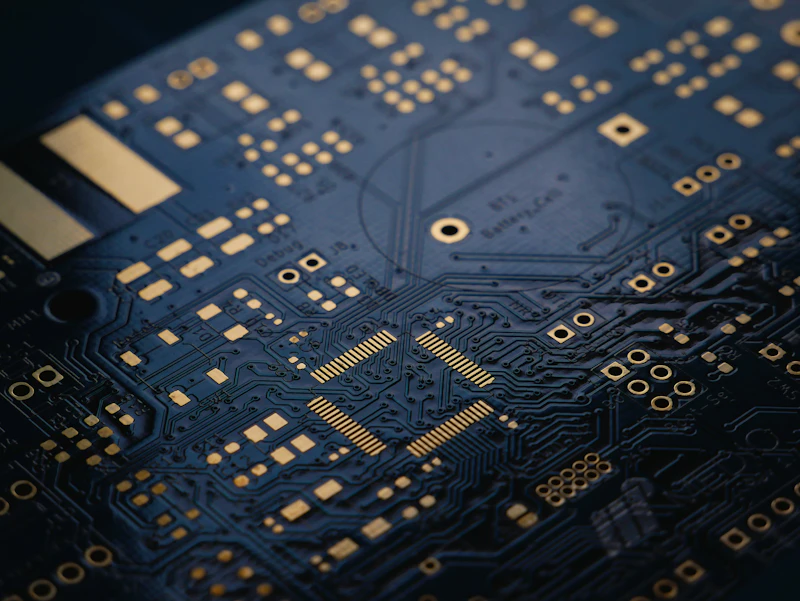
Behind the warm optics of the Lee-Trump meeting lies a hard industrial reality: South Korea's Samsung and SK Hynix supply the high-bandwidth memory that makes NVIDIA's AI chips run. Seoul has converted this technological chokepoint into diplomatic leverage—but single-asset geopolitics carries structural risks that history has already begun to demonstrate.
The image circulated quickly: South Korean President Lee Jae-myung and Donald Trump, standing close, exchanging what diplomatic observers called an unusually warm bilateral gesture. A golf invitation followed. These optics, minor on the surface, carried outsized weight precisely because both governments understood what sat beneath them. South Korea controls the supply of high-bandwidth memory chips that power the artificial intelligence revolution, and that fact has quietly reordered the terms of the relationship.
High Bandwidth Memory is not a commodity. It is an engineered precision product that requires decades of accumulated process expertise and billions in capital investment to manufacture at scale. As of mid-2026, exactly two companies produce it in meaningful volume for the global market: SK Hynix and Samsung Electronics. Micron, the American memory giant, has been racing to close that gap but remains a half-generation behind on HBM3E yield rates and advanced packaging maturity.
This duopoly did not emerge by accident. Korea's memory industry spent four decades compressing the learning curves of DRAM production, and HBM is essentially DRAM pushed to its architectural limits—stacked dies, through-silicon vias, and thermal management demands that require process mastery few organizations on earth possess. SK Hynix now accounts for more than half of the global HBM market; Samsung supplies much of the remainder. For NVIDIA—whose H100, H200, and Blackwell B200 GPUs are the engines of the AI datacenter buildout that defines American technological ambition—there is no viable short-term workaround. The AI supply chain runs through Seoul.
This is the structural reality that animated Lee's Washington visit. South Korea arrived at bilateral trade discussions carrying something genuinely rare in modern geopolitics: a technological chokepoint the world's dominant power cannot easily replicate or route around in the near term. The warmth of Trump's reception reflects, at least in part, a sober calculation about supply chain dependency dressed up as personal chemistry.
History offers a cautionary precedent. Taiwan built its own version of this playbook around TSMC and advanced semiconductor fabrication—the so-called silicon shield strategy that analysts spent years describing as unassailable. Then the United States, Japan, and the European Union began pouring subsidies into domestic chip manufacturing. TSMC itself opened a fab in Arizona, partly under American pressure and partly as a hedge against geopolitical risk. The shield did not disappear, but its edges blurred considerably. The diplomatic leverage that derives from a monopoly is inseparable from the monopoly's durability.
Korea faces a structurally similar trajectory. The CHIPS Act channeled significant support toward Micron's HBM program, and Micron has publicly committed to entering HBM4 competition at scale. Samsung's well-documented yield struggles on HBM3E—which briefly cost it NVIDIA qualification—exposed the fragility within Korea's own duopoly. If Samsung continues to lag SK Hynix technically, the diplomatic narrative of a unified "Korean HBM" asset becomes harder to sustain. The two companies are competitors with diverging technical fortunes, not a cartel, and no government can fully harmonize their interests for the purposes of bilateral leverage.
There is also a longer structural question about the permanence of HBM itself as the defining memory architecture. Compute-in-memory approaches, photonic interconnects, and next-generation packaging schemes are all active research frontiers. A country whose diplomatic capital is denominated in a specific technology generation carries exposure that a more diversified industrial base would not.
None of this diminishes what Seoul accomplished in Washington. The Lee-Trump rapport is real, and the trade and cooperation frameworks that follow from it will have tangible economic effects. But sustainable diplomatic leverage is built on layered interdependence—in energy, defense, finance, and manufacturing ecosystems—not on a single chip architecture that competitors are actively working to replicate. HBM is today's card. The question South Korea's policymakers should already be pressing is where tomorrow's comes from.
The Land-Permit Paradox of Korea's Chip Belt, When the Cluster's Boom Prices Out Its Own Engineers
Dongtan, Giheung, and Guri have been folded into Korea's land-transaction permit regime just as the AI chip capex boom reshapes the property market around the country's largest fabs. The very prosperity the cluster generates is raising the cost for the engineers it depends on to settle nearby. The real test of agglomeration may lie not in siting megafabs but in housing and labor mobility.
The Collapse of the Closed AI Moat and the Supply-Chain Paradox of Unverifiable Weights
DeepSeek-R1's open reasoning weights and Llamafile's single-file distribution are eroding the performance and distribution moats that closed labs once charged a premium for. Yet the same openness collides head-on with the gap exposed by the "250 samples to break an LLM" research: weight distribution that no recipient can verify. Democratized competition and accumulated security debt now sit on the same scale.
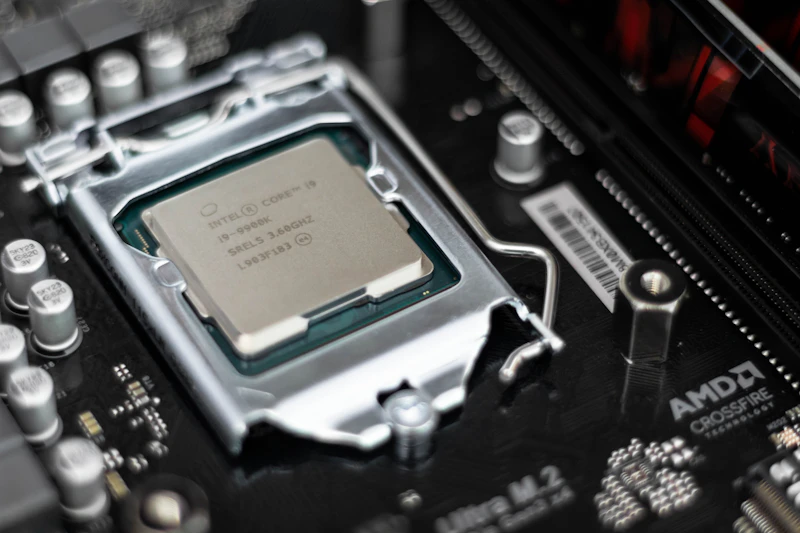
Forty-Year Yen Lows as the Hidden Subsidy Behind Japan's Chip Revival
As the yen slides into its weakest territory in four decades, Takaichinomics has entered uncharted monetary terrain. A cheap yen functions as a silent subsidy for Rapidus, Kioxia, and TSMC's Kumamoto fabs—yet the same currency inflates the cost of imported tools and materials and intensifies the talent war with Korea. The question is whether monetary policy can stand in for industrial policy, and what that means for Korea's memory champions.