AIINSIGHT NOTE
AI · Web3 · Tech trends and insights at a glance
AI · Web3 · Tech trends and insights at a glance

As DeepSeek R1, llamafile, and the broader open-weight movement close the benchmark gap quarter by quarter, the real moat behind closed frontier models looks less like raw intelligence and more like the distribution channels baked into Android, Workspace, and Search. Once inference costs collapse, the competitive question shifts from who builds the smartest model to who owns the surfaces where users already live.
On the same day Google rolled out a new Gemini version and grabbed the headlines, a very different set of stories surfaced alongside it. The familiar claim that open-source AI will ultimately win the platform war gained fresh momentum, DeepSeek R1 demonstrated that frontier-grade reasoning could ship as open weights, and tools like llamafile turned the act of running a large model as a single executable on a laptop into something ordinary. That parallel landscape is not a coincidence. It points to a structural shift in which a frontier model's lead is no longer, by itself, a defensible asset.
A year or two ago the distance between closed and open models was a clear generational gap. On reasoning, coding, and multilingual tasks the frontier labs were a step ahead, and that step was both pricing power and a barrier to entry. But as the open-weight camp absorbed better data curation, refined training recipes, and above all large-scale reinforcement learning, the benchmark distance began shrinking on a quarterly cadence. The more consequential change happened on cost. The price per token of delivering comparable reasoning quality is collapsing fast, and with it the justification for the premium people once paid simply to use the smartest available model. When a capability becomes good enough and cheap enough, it stops being a differentiator and turns into table stakes. Model quality is walking precisely that path right now.
This is where the easy misreading creeps in: the gap has narrowed, so Google and the other frontier labs must be on the verge of collapse. Markets rarely work that cleanly. As a model commoditizes, value drains out of the model itself and migrates toward the path by which that model reaches the user. Beneath the surface impression of a rattled Gemini, the card Google actually holds is not the model's intelligence quotient but where it can plug that intelligence in.
Google's defensive line is carved into three enormous distribution surfaces: Android, Workspace, and Search. Billions of Android handsets, a Gmail and Docs stack that stays open through the entire workday, and a search box that remains the default starting point for navigating the world's information together form an asset no open-weight model can replicate. However clever DeepSeek R1 may be, if it has no natural conduit to a user's calendar, inbox, and location, it remains a tool people try once and abandon. Conversely, a merely competent model that is deeply woven into the surfaces where users spend their days generates powerful stickiness through switching costs and accumulating data. The fact that open source is free turns out to be a weaker weapon than it appears once it runs into the wall of distribution.
This shift rewrites the competitive question itself. If the last phase asked who could build the smartest model, the post-cost-collapse phase asks who occupies the user's everyday workflow. OpenAI's heavy investment in consumer apps and enterprise connectors, and Anthropic's push into the narrow but deep surfaces of coding and enterprise integration, both reflect the same recognition. The model is becoming something everyone can hold in roughly equal measure, so the contest now turns on how frictionlessly that model can be embedded into users' hands and workplaces.
Read this way, the rise of open weights is less a threat than a reallocation of roles. Open-weight models settle into the infrastructure layer like a public utility, dragging the cost floor down, while the real revenue accrues to whoever controls distribution and integration above that layer. The narrative that Gemini is faltering is only half right. On the surface of the model race Google is genuinely under pressure, but that pressure does not breach its moat. The moat has simply moved. The question worth watching is no longer which lab ships the cleverest model, but which one drives intelligence that is converging toward zero cost into the largest number of user surfaces, as deeply as possible.

The Land-Permit Paradox of Korea's Chip Belt, When the Cluster's Boom Prices Out Its Own Engineers
Dongtan, Giheung, and Guri have been folded into Korea's land-transaction permit regime just as the AI chip capex boom reshapes the property market around the country's largest fabs. The very prosperity the cluster generates is raising the cost for the engineers it depends on to settle nearby. The real test of agglomeration may lie not in siting megafabs but in housing and labor mobility.

The Collapse of the Closed AI Moat and the Supply-Chain Paradox of Unverifiable Weights
DeepSeek-R1's open reasoning weights and Llamafile's single-file distribution are eroding the performance and distribution moats that closed labs once charged a premium for. Yet the same openness collides head-on with the gap exposed by the "250 samples to break an LLM" research: weight distribution that no recipient can verify. Democratized competition and accumulated security debt now sit on the same scale.
Forty-Year Yen Lows as the Hidden Subsidy Behind Japan's Chip Revival
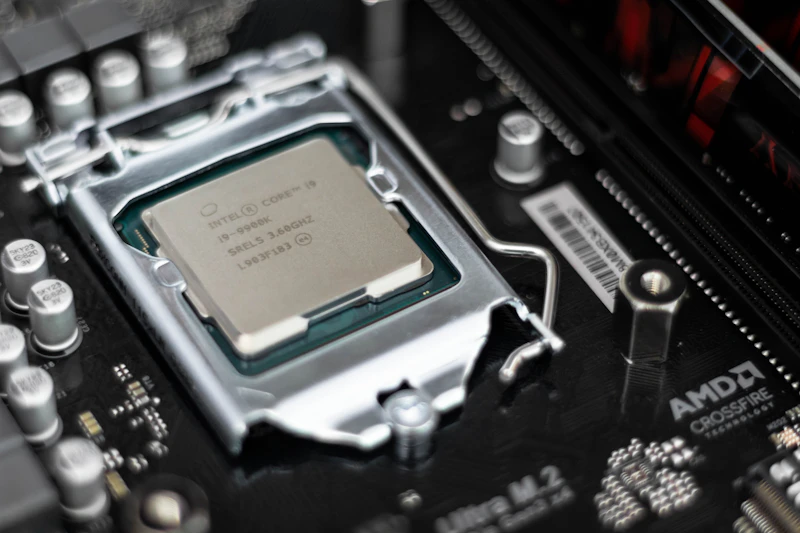
As the yen slides into its weakest territory in four decades, Takaichinomics has entered uncharted monetary terrain. A cheap yen functions as a silent subsidy for Rapidus, Kioxia, and TSMC's Kumamoto fabs—yet the same currency inflates the cost of imported tools and materials and intensifies the talent war with Korea. The question is whether monetary policy can stand in for industrial policy, and what that means for Korea's memory champions.