AIINSIGHT NOTE
AI · Web3 · Tech trends and insights at a glance
AI · Web3 · Tech trends and insights at a glance

The ESMC joint venture — anchored by TSMC and joined by Bosch, Infineon, and NXP — marks the first time a credible production alliance has coalesced around Europe's semiconductor ambitions. But the coalition's internal logic reveals structural tensions between a pure-play foundry's customer diversification needs and three IDMs' competitive secrecy requirements. Whether ESMC becomes a genuine pillar of a tripolar semiconductor order depends on how Europe converts this single fab into a self-compounding innovation ecosystem.
When TSMC broke ground in Dresden alongside Bosch, Infineon, and NXP Semiconductors, it marked something more than another overseas fab investment. For the first time, the world's dominant pure-play foundry and three of Europe's largest integrated device manufacturers had committed capital to a shared production vehicle — the European Semiconductor Manufacturing Company, or ESMC. In an industry defined by national champions and zero-sum competition, this alliance raises a question that goes beyond Saxony's skyline: can Europe actually become the third pole in a semiconductor order increasingly shaped by Washington and Beijing?
The structural complexity of the ESMC alliance begins with a fundamental asymmetry in what each participant is trying to achieve. TSMC's motivations are unmistakably geopolitical. The Taiwan Strait remains one of the most dangerous fault lines in the global supply chain, and TSMC's near-monopoly on leading-edge logic manufacturing makes it the single most exposed chokepoint in that chain. Fabs in Arizona and Dresden don't just expand TSMC's market reach — they physically distribute existential risk. For TSMC, Europe is portfolio insurance written in silicon and concrete.
The calculus for Bosch, Infineon, and NXP is more layered. These three companies command formidable market positions in automotive microcontrollers, power semiconductors, and mixed-signal chips — categories where advanced logic process leadership is not the primary differentiator. Yet they face converging pressures that make ESMC attractive: EU industrial policy has opened a rare subsidy window, automotive OEMs are demanding regional supply chain resilience after COVID-era shortages, and the long-term trajectory of autonomous driving will eventually pull vehicle silicon toward more advanced nodes. What appears to be a unified European front is actually three distinct strategic bets placed under one roof.
The latent instability in this arrangement comes from the conflict between a foundry's customer diversification imperative and an IDM's competitive secrecy requirements. TSMC's fab economics depend on spreading fixed costs across a broad and diversified customer base. Some future ESMC customers may compete directly with Bosch, Infineon, or NXP in their core automotive markets. The three IDMs gain access to TSMC's process technology, but at the cost of sharing a production environment with potential rivals. This tension is managed today by the project's early-stage cohesion and a shared political mission. It will grow sharper as the customer portfolio expands and the subsidy-driven goodwill fades.
The economics of ESMC are inseparable from European public finance. Germany's federal government has pledged approximately €5 billion in subsidies toward a total fab cost exceeding €10 billion — a subsidy intensity that implicitly concedes the manufacturing cost disadvantage Europe faces relative to Taiwan and South Korea. European electricity prices, labor costs, and regulatory overhead structurally inflate the cost per wafer in ways that cannot be engineered away. Subsidies bridge that structural gap in the near term; they do not manufacture long-run competitive parity.
The technology profile of ESMC's initial production plans compounds the concern. A 28nm/16nm starting node is several generations behind TSMC's flagship 3nm and 2nm processes in Taiwan. The counterargument — that automotive chips don't require leading-edge nodes — is partially valid. Power MOSFETs, IGBTs, and automotive MCUs genuinely thrive on mature processes where reliability and thermal tolerance matter more than transistor density. But the automotive semiconductor market is not static. The AI content embedded in vehicles is rising fast, and the compute requirements for Level 3 and Level 4 autonomy push toward advanced logic. An ESMC anchored in mature process territory will find itself perpetually chasing the next generation of automotive silicon rather than helping to define it.
There is also a subtler concern buried in the technology gap argument. Even if today's automotive chips can be built on 28nm, the engineers, process knowledge, and supply chain relationships that come from operating an advanced fab are not fungible with those developed for mature-node production. Europe's ability to eventually close the gap depends on whether ESMC's workforce develops the institutional capability to absorb future process generations — not just manufacture the current one.
The tripolar semiconductor narrative — America, China, and Europe each commanding meaningful production sovereignty — is analytically useful but demands precise specification. The United States, through the CHIPS and Science Act, is attempting to rebuild advanced logic manufacturing domestically after decades of offshoring to Asia. China is pouring state capital into a semiconductor independence campaign that, despite severe export controls on advanced equipment, has achieved genuine progress in mature nodes. Europe's position relative to these two trajectories is defined less by what ESMC represents today than by whether the continent can architect a compounding ecosystem around it.
Europe's most underappreciated semiconductor asset is not ESMC — it is ASML. The Dutch lithography company holds a global monopoly on extreme ultraviolet equipment, without which no foundry anywhere can manufacture chips below roughly 7nm at volume. That leverage is already in play: Dutch export controls on EUV shipments to China, coordinated with the United States and Japan, are among the most consequential technology policy instruments deployed in the current semiconductor Cold War. The strategic question for Europe is whether ASML's chokehold on the supply chain can be converted into a positive-sum investment in European manufacturing capacity, rather than functioning purely as a geopolitical instrument wielded on behalf of allied powers.
The fuller vision requires a functional circuit: ASML's equipment advantage feeds into IMEC's process research in Belgium, which generates innovations that ESMC and successor fabs can commercialize, attracting a customer base that validates continued investment and drives the next round of R&D. ESMC in Dresden is the first physical node in that circuit. Whether the circuit closes — whether Europe graduates from technology licensee to technology co-creator — depends on decisions being made now about the phase of investment, talent development, and industrial coordination that follows the ribbon-cutting in Saxony.
The TSMC-Bosch-Infineon-NXP alliance is neither a triumph of European industrial ambition nor a hollow subsidy capture exercise. It is a serious, structurally complicated bet on a geopolitical future in which semiconductor production geography matters as much as process technology. The bet can pay off. But only if Europe treats ESMC as a beginning rather than a conclusion — and starts designing what comes after it before the concrete in Dresden has fully set.

The Land-Permit Paradox of Korea's Chip Belt, When the Cluster's Boom Prices Out Its Own Engineers
Dongtan, Giheung, and Guri have been folded into Korea's land-transaction permit regime just as the AI chip capex boom reshapes the property market around the country's largest fabs. The very prosperity the cluster generates is raising the cost for the engineers it depends on to settle nearby. The real test of agglomeration may lie not in siting megafabs but in housing and labor mobility.

The Collapse of the Closed AI Moat and the Supply-Chain Paradox of Unverifiable Weights
DeepSeek-R1's open reasoning weights and Llamafile's single-file distribution are eroding the performance and distribution moats that closed labs once charged a premium for. Yet the same openness collides head-on with the gap exposed by the "250 samples to break an LLM" research: weight distribution that no recipient can verify. Democratized competition and accumulated security debt now sit on the same scale.
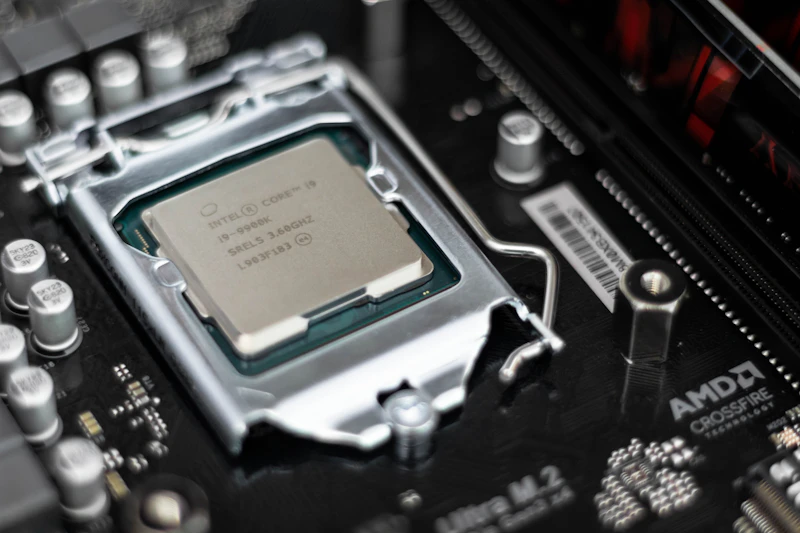
Forty-Year Yen Lows as the Hidden Subsidy Behind Japan's Chip Revival
As the yen slides into its weakest territory in four decades, Takaichinomics has entered uncharted monetary terrain. A cheap yen functions as a silent subsidy for Rapidus, Kioxia, and TSMC's Kumamoto fabs—yet the same currency inflates the cost of imported tools and materials and intensifies the talent war with Korea. The question is whether monetary policy can stand in for industrial policy, and what that means for Korea's memory champions.