AIINSIGHT NOTE
AI · Web3 · Tech trends and insights at a glance
AI · Web3 · Tech trends and insights at a glance

No figure in technology commands more simultaneous attention than Elon Musk. His role in the Trump administration, the trajectory of xAI and Grok, and the pressure on Tesla's brand all share a common thread: the peculiar risks of building institutions around a single personality.
Elon Musk's entry into federal government as the de facto head of the Department of Government Efficiency — DOGE — was the most unexpected development in American politics of the past year. The mandate was ostensibly to cut federal spending and reduce bureaucratic overhead. The execution looked more like a visibility campaign than a management operation: public announcements of cuts that were later partially reversed, conflicts with agency heads, and a communication style that made it impossible to separate genuine policy from provocation.
The practical impact on federal operations is contested. Supporters point to actual headcount reductions in targeted agencies and the identification of genuine waste in procurement contracts. Critics argue that the cuts were poorly targeted, creating service disruptions in programs that functioned reasonably well while leaving larger sources of fiscal inefficiency untouched. What's harder to dispute is that DOGE generated more media coverage per dollar of claimed savings than any government reform effort in memory — which may have been the point.
The xAI story is more straightforwardly interesting from a technology perspective. Grok has evolved from a Twitter-adjacent novelty into a genuine competitive model, and the release of Grok's weights for certain variants has been a meaningful contribution to the open-source ecosystem. The company's funding trajectory and valuation have followed the general AI bull market. What remains to be seen is whether xAI can establish a durable position in an increasingly crowded market dominated by OpenAI, Anthropic, and Google, or whether it succeeds primarily as the AI layer integrated into X (formerly Twitter).
The Tesla situation is the most consequential in terms of shareholder value. Tesla's position as a pure-play electric vehicle company was always precarious once legacy automakers committed to EV transition; the question was whether Tesla's software and AI advantages could maintain its premium. The data from 2025 and early 2026 shows margin compression, delivery volume pressure in key markets, and a brand perception problem in demographic segments that overlap heavily with Tesla's traditional customer base. The Model Y refresh has been received reasonably well, but the product cadence has not kept pace with competitors who have launched multiple new models in the same period.
The common thread is what happens when an institution — a company, a government agency, a technology platform — becomes substantially identified with one person's public persona. The upside is speed, decisiveness, and the ability to generate attention. The downside is that every statement becomes a liability, every controversy attaches to the product, and strategic pivots require public personality pivots that are hard to execute credibly. The question for each of Musk's ventures is whether the institutional foundations are strong enough to absorb the cost of being constantly in the news.

The Land-Permit Paradox of Korea's Chip Belt, When the Cluster's Boom Prices Out Its Own Engineers
Dongtan, Giheung, and Guri have been folded into Korea's land-transaction permit regime just as the AI chip capex boom reshapes the property market around the country's largest fabs. The very prosperity the cluster generates is raising the cost for the engineers it depends on to settle nearby. The real test of agglomeration may lie not in siting megafabs but in housing and labor mobility.

The Collapse of the Closed AI Moat and the Supply-Chain Paradox of Unverifiable Weights
DeepSeek-R1's open reasoning weights and Llamafile's single-file distribution are eroding the performance and distribution moats that closed labs once charged a premium for. Yet the same openness collides head-on with the gap exposed by the "250 samples to break an LLM" research: weight distribution that no recipient can verify. Democratized competition and accumulated security debt now sit on the same scale.
Forty-Year Yen Lows as the Hidden Subsidy Behind Japan's Chip Revival
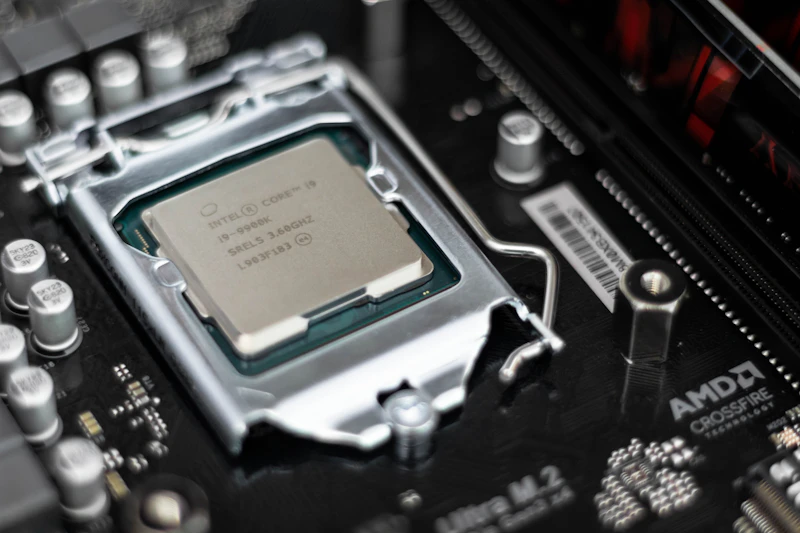
As the yen slides into its weakest territory in four decades, Takaichinomics has entered uncharted monetary terrain. A cheap yen functions as a silent subsidy for Rapidus, Kioxia, and TSMC's Kumamoto fabs—yet the same currency inflates the cost of imported tools and materials and intensifies the talent war with Korea. The question is whether monetary policy can stand in for industrial policy, and what that means for Korea's memory champions.