AIINSIGHT NOTE
AI · Web3 · Tech trends and insights at a glance
AI · Web3 · Tech trends and insights at a glance

Wedbush analyst Dan Ives declared the AI boom is in the third inning of nine, naming SK Hynix the most important AI company. The remaining six innings, however, are not a linear upswing — they represent three overlapping forces, each with its own timetable and its own risks. Understanding that structure matters as much as believing the headline.
When Wedbush analyst Dan Ives named SK Hynix "the most important AI company" and declared that the AI boom is only in the third inning of nine, markets treated it as a green light. The metaphor, though, deserves more careful handling than it typically receives. Saying that three innings are done means two-thirds of the game remains — it does not mean the pace of play is about to slow. In baseball terms, the starter has just found his rhythm, the bullpen hasn't even started warming up, and the real scoring pressure is still ahead. What follows is an attempt to map what those remaining six innings actually contain, and where the supercycle narrative starts to show structural strain.
The first three innings of the AI boom were, in practical terms, a training-compute race. Nvidia's H100 and A100 cycles pulled data center buildout to extraordinary levels, and SK Hynix, racing to supply HBM3 at scale, effectively transformed itself from a commodity memory maker into a critical AI infrastructure vendor. Ives' reframing of the company as an "AI company" captures that shift precisely.
The innings ahead are powered by two different engines. The first is the structural rotation from training to inference. For most of the AI investment cycle so far, the demand signal has come from building and retraining frontier models — large, infrequent, compute-intensive workloads. That signal is now being overtaken by inference traffic: the continuous, latency-sensitive delivery of model outputs to hundreds of millions of users around the clock. Inference has different hardware requirements than training. It rewards low-latency memory access, favors more distributed deployment architectures, and unlike training runs, it never stops. Nvidia's GB200 NVL72 rack design, Google's TPU v5p, and Amazon's Inferentia series are all tuned for this new load profile. The implication for high-bandwidth memory is counterintuitive — demand for HBM4 and beyond is more likely to accelerate in this phase, not plateau, precisely because inference is an always-on workload.
The second engine is power infrastructure. AI data centers are consuming electricity at a scale that conventional cloud infrastructure never approached. Microsoft, Google, and Amazon have all moved beyond renewable energy procurement into territory that would have seemed extreme a few years ago: reopening nuclear plants, signing power purchase agreements with small modular reactor startups, and lobbying for grid priority. This is not a financial constraint so much as a physical one. The pace at which power infrastructure can actually be built and interconnected will set the tempo for everything else. If power delivery lags, even abundant capital and willing chipmakers cannot expand AI capacity on the timelines the market currently assumes.
The structural case for a long AI hardware cycle is solid. But several risks are embedded in the optimistic read that rarely get the same airtime as the bullish headline.
The most immediate is supply-side normalization in HBM. The current pricing environment reflects a genuine shortage: demand from the Nvidia supply chain has overwhelmed what SK Hynix, Samsung, and Micron can produce at advanced HBM nodes. But Samsung's HBM3E yield recovery and Micron's aggressive capacity expansion are progressing in parallel. The premium that SK Hynix commands is sustainable only as long as supply remains concentrated. Semiconductor history offers ample precedent for demand expectations triggering investment cycles that overshoot — and the timing of that overshoot is notoriously difficult to predict from the outside.
A more systemic risk is the efficiency paradox. DeepSeek R1's emergence earlier this year was a reminder that open-source and model compression techniques are advancing on their own trajectory. If equivalent inference quality can be delivered with meaningfully less compute — a trend that has been consistent across the history of machine learning — then the aggregate chip demand curve flattens even as the number of AI applications grows. Ives' framework assumes that expanding AI adoption translates directly into expanding hardware demand. The efficiency variable complicates that assumption in ways that are hard to price.
Finally, geopolitical exposure remains an unresolved wildcard. US export controls on advanced chips and high-bandwidth memory have already constrained SK Hynix's ability to service its Chinese operations with HBM products. Further tightening could sever supply chains that the current supercycle scenario treats as stable; a relaxation could introduce new competitive dynamics from Chinese domestic chipmakers. Either direction reshapes the market in ways that have nothing to do with underlying AI demand.
The third-inning diagnosis is probably right. But the game that remains is not a clean power-hitting stretch — it is a more technical, multi-phase contest where three overlapping forces come to the foreground at different moments, and where a few innings of the remaining six are likely to test the patience of even the most committed supercycle believers. Reading the arc inning by inning is not pessimism. It is the only honest way to hold a position in a cycle this large.

The Land-Permit Paradox of Korea's Chip Belt, When the Cluster's Boom Prices Out Its Own Engineers
Dongtan, Giheung, and Guri have been folded into Korea's land-transaction permit regime just as the AI chip capex boom reshapes the property market around the country's largest fabs. The very prosperity the cluster generates is raising the cost for the engineers it depends on to settle nearby. The real test of agglomeration may lie not in siting megafabs but in housing and labor mobility.

The Collapse of the Closed AI Moat and the Supply-Chain Paradox of Unverifiable Weights
DeepSeek-R1's open reasoning weights and Llamafile's single-file distribution are eroding the performance and distribution moats that closed labs once charged a premium for. Yet the same openness collides head-on with the gap exposed by the "250 samples to break an LLM" research: weight distribution that no recipient can verify. Democratized competition and accumulated security debt now sit on the same scale.
Forty-Year Yen Lows as the Hidden Subsidy Behind Japan's Chip Revival
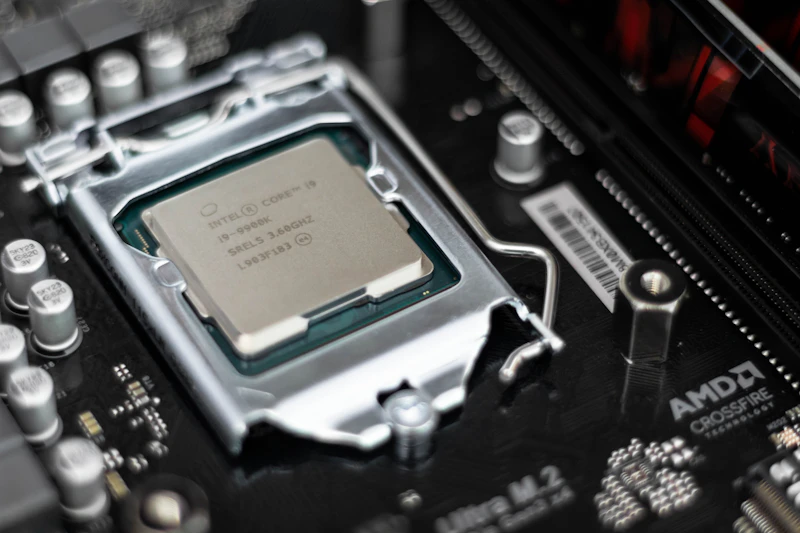
As the yen slides into its weakest territory in four decades, Takaichinomics has entered uncharted monetary terrain. A cheap yen functions as a silent subsidy for Rapidus, Kioxia, and TSMC's Kumamoto fabs—yet the same currency inflates the cost of imported tools and materials and intensifies the talent war with Korea. The question is whether monetary policy can stand in for industrial policy, and what that means for Korea's memory champions.