AIINSIGHT NOTE
AI · Web3 · Tech trends and insights at a glance
AI · Web3 · Tech trends and insights at a glance

On forums like Hacker News, two contradictory claims about AI surface almost simultaneously: that companies have descended into collective psychosis, and that AI skeptics have been consistently wrong. These are not opposing arguments—they are two vantage points on the same structural failure. What corporations are experiencing is not merely hype, but a measurable collapse of the institutional mechanisms that make honest judgment possible.
There is a peculiar tension running through corporate discourse on AI. On forums like Hacker News, two strikingly different claims surface almost simultaneously: that companies have descended into "AI psychosis," spending recklessly on tools they cannot evaluate; and that AI skeptics have been consistently, embarrassingly wrong—that the technology's impact is real, broad, and still underappreciated. These are not opposing arguments. They are two vantage points on the same structural failure: the collapse of deliberate judgment inside organizations caught in a technology wave. One voice is watching decision-making unravel from the inside; the other is observing how the technology's social consequences overwhelmed prior predictions. Both are correct, and neither is sufficient on its own.
The most telling sign of AI groupthink is not hype itself—hype has always been part of technology adoption. The more diagnostic symptom is what happens when someone inside the organization asks whether a given AI investment is actually working. In most companies right now, that question lands awkwardly. Projects are approved, budgets are allocated, implementation begins—and then the formal retrospective, the honest accounting of whether the tool delivered on its promise, quietly disappears from the agenda.
This is not simply negligence. It reflects a specific inversion of causality: leadership declares the conclusion first—"we are an AI-first company"—and the organization works backward to construct evidence that supports it. When logic runs in this direction, no internal failure can serve as disconfirming evidence. A pilot program that underperforms is explained away as a deployment problem. An employee who raises doubts is repositioned as someone who doesn't understand the technology. The organization has not abandoned critical thinking; it has channeled critical thinking entirely into rationalizing a predetermined outcome.
The pressure to conform is amplified from outside. Consulting reports from firms like McKinsey or Gartner frame AI adoption as a survival imperative, using language calibrated to provoke urgency rather than analysis. What rarely appears in the fine print is that these same firms have significant financial interests in accelerating adoption—through advisory fees, software partnerships, and the credibility that comes from being seen as ahead of the curve. When the producers and consumers of information share the same incentive structure, the information stops functioning as analysis and begins functioning as advocacy.
Corporate AI groupthink did not emerge from nowhere. It belongs to a well-documented family of collective cognitive failures that appear with reliable regularity at the peaks of technology cycles. The late-1990s internet boom produced nearly identical rhetoric: companies without a dot-com strategy would not survive; skeptics were simply failing to grasp the magnitude of the shift. The ERP wave of the early 2000s, the big data fever of the mid-2010s, and the blockchain revolution of 2017-2018 all followed comparable arcs—breathless adoption, suppressed doubt, and eventual reckoning.
What these episodes share is not a technology failure but a failure of organizational epistemology: the processes by which institutions form and revise their beliefs. Sociologists sometimes describe this as the paradox of normal bias in reverse. Organizations that are otherwise skeptical and methodical suspend those habits precisely when the stakes are highest, because collective excitement redefines skepticism as incompetence. The result is a belief system that becomes structurally impervious to refutation. When every outcome—success and failure alike—is interpreted as confirmation, the belief has left the domain of rational inquiry.
None of this means AI will follow the same trajectory as blockchain or dot-com stocks. General-purpose technologies do occasionally deliver on their promise, sometimes more slowly and differently than their promoters claimed, but substantially. The internet did transform commerce, communication, and culture, even if Pets.com did not survive. The question is not whether AI will matter, but whether organizations can evaluate how and where it matters without first corrupting their own judgment apparatus.
The antidote to AI groupthink is not skepticism as a posture—reflexive doubt is no more rigorous than reflexive enthusiasm. What organizations need is a deliberate structural restoration of the mechanisms that make honest evaluation possible. That means independent post-implementation review, conducted outside the reporting chain of whoever championed the original investment. It means performance metrics designed before deployment, not reverse-engineered to justify sunk costs. And it means cultural permission—genuine permission, not performative—for dissent at every level of the hierarchy.
The harder challenge is temporal. Quarterly earnings pressure and competitive signaling operate on a faster cycle than deliberate judgment. When a CEO sees a competitor announce an AI strategy, the felt urgency to respond is immediate, while the payoff from careful evaluation is diffuse and delayed. Governing this gap requires something organizations are structurally reluctant to build: a protected space for slow thinking—not because fast decisions are always wrong, but because decisions most likely to be corrupted by groupthink are precisely the ones that feel most urgent in the moment.
Technology cycles have always moved faster than the governance structures designed to manage them. That gap has narrowed before—after the dot-com crash, after the blockchain winter—but only after the cost of credulity became impossible to ignore. The more useful ambition is to close that gap before the reckoning arrives, while conformity pressure is still at its peak and the incentives to look away are strongest. That requires no special technical knowledge. It requires only the institutional willingness to ask, in public and without embarrassment, whether the emperor is actually wearing clothes.

The Land-Permit Paradox of Korea's Chip Belt, When the Cluster's Boom Prices Out Its Own Engineers
Dongtan, Giheung, and Guri have been folded into Korea's land-transaction permit regime just as the AI chip capex boom reshapes the property market around the country's largest fabs. The very prosperity the cluster generates is raising the cost for the engineers it depends on to settle nearby. The real test of agglomeration may lie not in siting megafabs but in housing and labor mobility.

The Collapse of the Closed AI Moat and the Supply-Chain Paradox of Unverifiable Weights
DeepSeek-R1's open reasoning weights and Llamafile's single-file distribution are eroding the performance and distribution moats that closed labs once charged a premium for. Yet the same openness collides head-on with the gap exposed by the "250 samples to break an LLM" research: weight distribution that no recipient can verify. Democratized competition and accumulated security debt now sit on the same scale.
Forty-Year Yen Lows as the Hidden Subsidy Behind Japan's Chip Revival
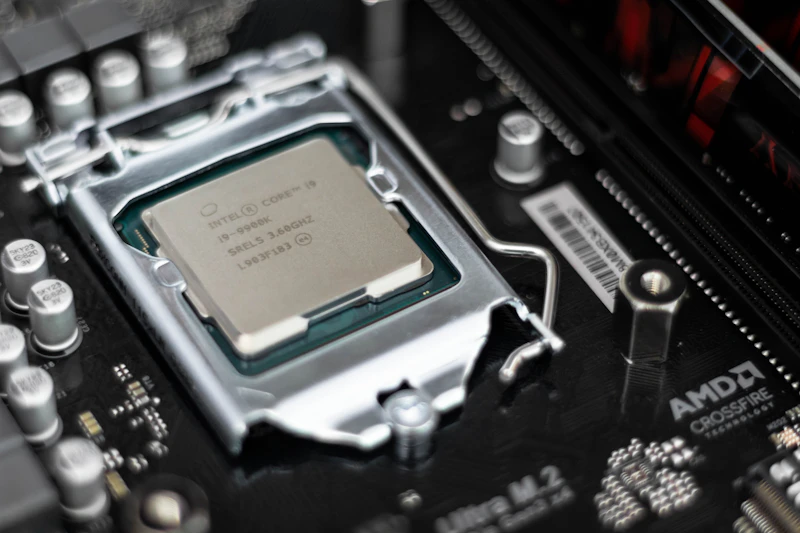
As the yen slides into its weakest territory in four decades, Takaichinomics has entered uncharted monetary terrain. A cheap yen functions as a silent subsidy for Rapidus, Kioxia, and TSMC's Kumamoto fabs—yet the same currency inflates the cost of imported tools and materials and intensifies the talent war with Korea. The question is whether monetary policy can stand in for industrial policy, and what that means for Korea's memory champions.