AIINSIGHT NOTE
AI · Web3 · Tech trends and insights at a glance
AI · Web3 · Tech trends and insights at a glance

China's Tiangong space station has become the site of a quiet but consequential experiment in off-Earth reproductive biology, using stem cell-derived embryo-like structures to probe how human development behaves in microgravity. The research sits at the convergence of AI-driven embryology and synthetic biology—and it is accelerating into a regulatory vacuum that existing international frameworks were never designed to address.
The announcement was deliberately understated. Researchers affiliated with Chinese institutions confirmed that embryo-like structures—blastoids derived from induced pluripotent stem cells rather than actual human embryos—had been cultured aboard the Tiangong space station, and that the results were sufficiently promising to warrant further study. In a different era, this would have triggered international headlines and urgent calls for new oversight frameworks. Instead, it landed mostly as a technical footnote, bracketed between launch schedules and orbital mechanics updates.
That quietude may be the most significant part of the story.
Human reproduction evolved inside a narrow envelope of physical conditions: 1g gravity, Earth's magnetic shielding, consistent biochemical gradients, and a fluid dynamics regime billions of years in the shaping. Every stage of early embryonic development—from fertilization through implantation—has been optimized by evolutionary pressure for this specific context. Remove any one parameter and the choreography of cell polarity, autocrine signaling, and lineage specification can begin to drift in ways that are only now becoming measurable.
Microgravity is particularly disruptive. In weightlessness, the fluid dynamics that shape blastocyst morphology change fundamentally. The inner cell mass and the trophectoderm, which must segregate cleanly for normal development, may receive attenuated positional cues. Animal studies—mice, sea urchins, amphibians—have established that fertilization can proceed in microgravity, but post-fertilization development shows measurable anomalies in gene expression profiles and organelle distribution. The Chinese experiment extends this inquiry to a human-adjacent cellular system, asking not just whether development occurs but how it diverges from the terrestrial baseline, and why.
Galactic cosmic radiation compounds the challenge. Unlike the comparatively well-shielded environment of low Earth orbit, cislunar space and deep-space trajectories expose biological material to high-energy particles capable of inducing double-strand DNA breaks with high efficiency. For embryonic cells undergoing rapid division, this is not a marginal hazard. It is a central variable that any serious program of space reproductive medicine will need to engineer around—through shielding, pharmacological intervention, or genetic screening of embryo-like analogs before any transfer to a gestational host.
What transforms this from an isolated experiment into a research trajectory is the convergence with AI-driven embryology. Over the past several years, machine learning systems trained on IVF clinic datasets have grown remarkably capable at morphological assessment of blastocysts, prediction of implantation potential from time-lapse imaging, and detection of chromosomal abnormalities from non-invasive metabolomic signatures. These tools were designed for terrestrial clinical use, but they carry an unexpected implication for space biology: they can generalize to novel input domains.
The anomalous developmental patterns produced by microgravity exposure—patterns no Earth-based dataset would contain—become, from a machine learning perspective, a novel training domain. An AI system that can accurately classify microgravity-induced deviation from normal development could serve simultaneously as a diagnostic instrument aboard future space habitats and as a discovery tool for understanding which developmental processes are environmentally contingent versus evolutionarily hardwired. The scientific yield of the Tiangong experiments is thus not only biological; it is computational in a way that compounds over time.
Synthetic biology provides the other acceleration vector. Blastoids and gastruloids—self-organizing embryo-like structures derived from stem cells without the ethical constraints governing actual embryo research—have become workhorses of developmental biology precisely because they allow high-throughput experimentation at scale. China's decision to use such structures in its space experiments is not merely a pragmatic workaround for regulatory friction. It is an early signal of how the field intends to expand: using synthetic analogs to systematically probe the parameter space of extraterrestrial development, then applying those findings to increasingly realistic biological systems as the science and the regulatory environment evolve in parallel.
The geopolitical dimension of this research is inseparable from its scientific content. Biomedical research norms have historically been negotiated among a small number of institutional actors—NIH, the Wellcome Trust, the European Research Council, and their associated ethics boards—with China occupying an increasingly prominent but partially peripheral role. That configuration is shifting rapidly.
China has not ratified the Oviedo Convention on human rights in biomedicine, and its domestic regulations on embryo and stem cell research, last comprehensively updated in 2003, have not kept pace with the capabilities of its research institutions. This is not an observation about bad faith; Chinese scientists have demonstrated both technical sophistication and genuine engagement with bioethical discourse at the international level. It is an observation about incentive structures. When a nation-state frames the ability to sustain human populations off-Earth as a long-term strategic objective—as China's space policy documents increasingly do—the regulatory environment for the enabling research tends to expand rather than contract.
The International Space Station era produced an informal consensus that human-subjects research in orbit would follow the ethical standards of the experimenting nation's domestic law. That consensus was never codified, and it was built for a world where only a handful of astronauts were ever simultaneously in space. A Lunar Gateway, a Mars transit vehicle, or a permanent deep-space habitat operates in an entirely different context—one in which reproductive medicine could shift from an abstraction to an operational necessity within decades, long before any international framework has been negotiated to govern it.
The gap between the pace of scientific capability and the pace of international norm-setting has rarely been wider in any domain of biology. The embryo-like structures circling the Earth in Tiangong's laboratory modules are, in the most literal sense, an experiment in what the future is allowed to become—and the institutions that might answer that question are, for now, still catching up.

The Land-Permit Paradox of Korea's Chip Belt, When the Cluster's Boom Prices Out Its Own Engineers
Dongtan, Giheung, and Guri have been folded into Korea's land-transaction permit regime just as the AI chip capex boom reshapes the property market around the country's largest fabs. The very prosperity the cluster generates is raising the cost for the engineers it depends on to settle nearby. The real test of agglomeration may lie not in siting megafabs but in housing and labor mobility.

The Collapse of the Closed AI Moat and the Supply-Chain Paradox of Unverifiable Weights
DeepSeek-R1's open reasoning weights and Llamafile's single-file distribution are eroding the performance and distribution moats that closed labs once charged a premium for. Yet the same openness collides head-on with the gap exposed by the "250 samples to break an LLM" research: weight distribution that no recipient can verify. Democratized competition and accumulated security debt now sit on the same scale.
Forty-Year Yen Lows as the Hidden Subsidy Behind Japan's Chip Revival
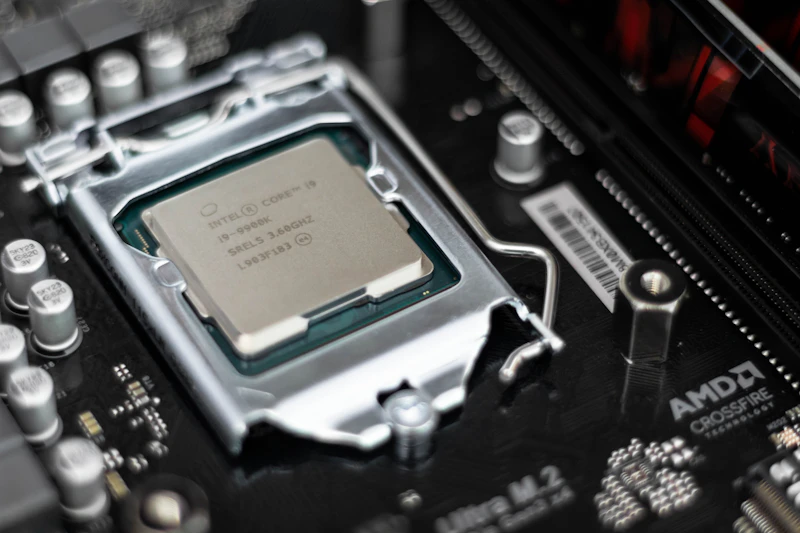
As the yen slides into its weakest territory in four decades, Takaichinomics has entered uncharted monetary terrain. A cheap yen functions as a silent subsidy for Rapidus, Kioxia, and TSMC's Kumamoto fabs—yet the same currency inflates the cost of imported tools and materials and intensifies the talent war with Korea. The question is whether monetary policy can stand in for industrial policy, and what that means for Korea's memory champions.