AIINSIGHT NOTE
AI · Web3 · Tech trends and insights at a glance
AI · Web3 · Tech trends and insights at a glance

Broadcom's AI earnings surprise is less about one company's performance and more about a timestamp: the moment hyperscaler custom ASIC programs crossed from pilot to production. As inference workloads fragment away from GPU monoculture, the architecture of AI silicon is quietly being redrawn.
For years, the story of AI infrastructure was essentially the story of NVIDIA. The H100, the B200, the CUDA moat — these were the facts of life for anyone building at the frontier. Then Broadcom reported its earnings, and analysts noticed something that didn't quite fit the narrative. AI-related revenue wasn't just growing; it was surging at a pace that pointed to a structural shift, not a cyclical bump. The question worth asking is not how Broadcom managed it, but what it reveals about who is quietly reshaping the AI hardware landscape.
Broadcom's growth story is inseparable from the custom ASIC programs of its largest customers: Google's TPU, Meta's MTIA, and Apple's server-side neural processing chips. These programs have been years in the making. Designing a custom chip from tape-out to full datacenter deployment takes three to five years, involves thousands of engineers, and requires semiconductor IP that most hyperscalers cannot build in-house. Broadcom supplies precisely that — SerDes interfaces, high-bandwidth interconnects, UCIe-based die-to-die links — and the fact that these programs are now generating revenue-recognizable scale means the pilot phase is over. Custom silicon is in production.
The logic behind custom XPU development is not anti-NVIDIA sentiment. It is economics and control. A general-purpose GPU like the H100 is extraordinarily versatile: it handles training runs across diverse model architectures, exploratory research workloads, and irregular batch jobs with equal competence. That versatility comes at a cost — in power draw, in die area, in price per teraflop for any given workload.
When a hyperscaler's inference workload stabilizes around a known model architecture — a recommendation engine, a large language model serving tens of billions of daily requests, a vision pipeline — the economics flip. A custom chip can be optimized for that exact computational graph: narrower data paths, higher throughput per watt, less wasted silicon on features the workload never uses. Google's TPU v5e is estimated to deliver roughly three to four times the efficiency of equivalent GPU inference at scale. Meta's MTIA 2 is designed specifically to accelerate Llama-class model inference. Neither chip competes with NVIDIA on flexibility — they compete on cost-per-token at production scale, and that is a competition they are winning.
This is the bifurcation point the industry has been watching for. Training remains GPU-dominated, because it demands flexibility by definition: you don't know what architecture will work until you try it. But inference — which now constitutes the majority of AI compute cycles at large platforms — is fracturing. And inference economics, multiplied by the workload volume of a Google or Meta, are large enough to justify custom silicon R&D investment many times over.
What makes Broadcom's position unusual is that it wins regardless of which hyperscaler's custom chip gains ground. The company does not compete with its customers; it enables them. Its semiconductor IP is embedded in chips across the Google, Meta, and Apple programs simultaneously. The more aggressively the industry fragments away from GPU monoculture, the more indispensable Broadcom's IP catalog becomes.
The competitive moat here is deep and underappreciated. Building high-speed SerDes at 112G or 224G, designing UCIe chiplet interfaces that maintain signal integrity across heterogeneous dies, engineering the interconnect fabric for a multi-trillion-parameter model's memory subsystem — these are capabilities that take decades to develop and cannot be replicated quickly. Broadcom has spent that time. Its hyperscaler customers have not, and likely never will.
This does not mean NVIDIA faces any near-term existential threat. Its datacenter revenue continues to compound, its software ecosystem remains unmatched for research and development workloads, and frontier training — where models are built rather than deployed — shows no sign of defecting to custom silicon. But the more significant story is compositional. The AI silicon market is moving from a near-monopoly to a two-tier structure: NVIDIA dominates generality, and a cluster of specialized players, led by Broadcom as the silent infrastructure provider, captures the efficiency-sensitive inference tier.
Broadcom's earnings surprise is, in this reading, a timestamp. It marks the moment when the custom silicon promise became custom silicon profit — and when the GPU era's dominion quietly began its first structural boundary.

The Land-Permit Paradox of Korea's Chip Belt, When the Cluster's Boom Prices Out Its Own Engineers
Dongtan, Giheung, and Guri have been folded into Korea's land-transaction permit regime just as the AI chip capex boom reshapes the property market around the country's largest fabs. The very prosperity the cluster generates is raising the cost for the engineers it depends on to settle nearby. The real test of agglomeration may lie not in siting megafabs but in housing and labor mobility.

The Collapse of the Closed AI Moat and the Supply-Chain Paradox of Unverifiable Weights
DeepSeek-R1's open reasoning weights and Llamafile's single-file distribution are eroding the performance and distribution moats that closed labs once charged a premium for. Yet the same openness collides head-on with the gap exposed by the "250 samples to break an LLM" research: weight distribution that no recipient can verify. Democratized competition and accumulated security debt now sit on the same scale.
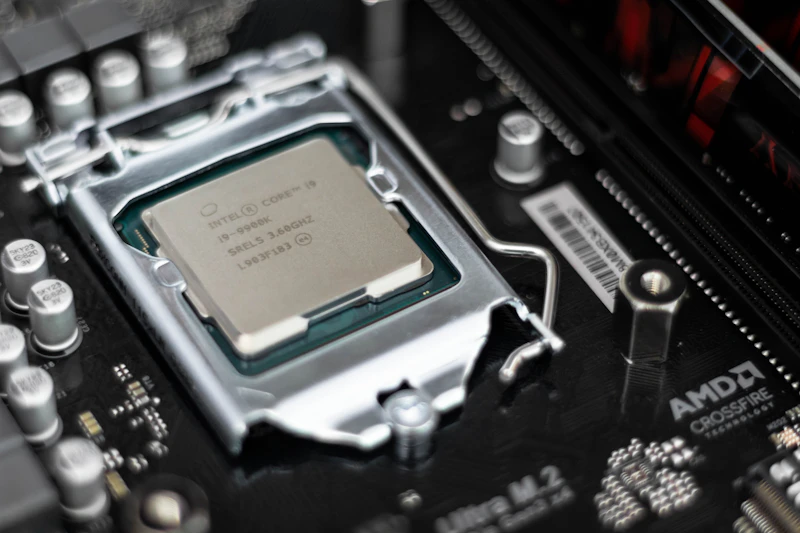
Forty-Year Yen Lows as the Hidden Subsidy Behind Japan's Chip Revival
As the yen slides into its weakest territory in four decades, Takaichinomics has entered uncharted monetary terrain. A cheap yen functions as a silent subsidy for Rapidus, Kioxia, and TSMC's Kumamoto fabs—yet the same currency inflates the cost of imported tools and materials and intensifies the talent war with Korea. The question is whether monetary policy can stand in for industrial policy, and what that means for Korea's memory champions.