AIINSIGHT NOTE
AI · Web3 · Tech trends and insights at a glance
AI · Web3 · Tech trends and insights at a glance
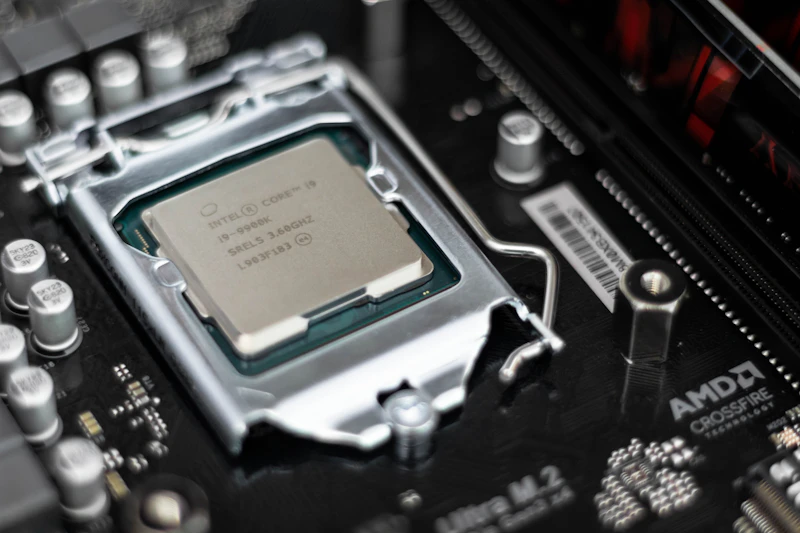
TSMC's Dresden joint fab with Bosch, Infineon, and NXP is read as a sovereignty play, but its real driver is the mature-node demand unleashed by software-defined vehicles. As per-car chip counts explode, automotive-specific supply chains are being revalued strategically — exposing how Korea's memory-and-foundry strength leaves a conspicuous hole in automotive silicon and a dependency risk for its carmakers.
The ESMC fab that TSMC is building in Dresden alongside Bosch, Infineon, and NXP is usually narrated as a story about European sovereignty — a continent clawing back control over semiconductors. But the chips the plant is actually designed to make tell a different story. ESMC will run 12-to-28-nanometer processes, comfortably distant from the bleeding-edge race at three nanometers. These are not the fine geometries that feed AI accelerators or flagship phone processors. They are reliability-first legacy nodes for the one platform that keeps demanding more of them: the car. What Europe is spending billions to protect is not a flag planted on the frontier of miniaturization, but the supply line wired into the heart of its automotive industry.
For decades the semiconductor industry organized its intuitions around shrinking transistors. Smaller meant costlier, and value supposedly lived at the leading edge. The shift to software-defined vehicles exposed the blind spot in that intuition. As a car's functions migrate from mechanical parts to software, the number and variety of chips packed into a single vehicle has expanded dramatically. A combustion-era car carried a few hundred chips; a premium electric vehicle can carry thousands, and most of them are not advanced logic but power semiconductors, microcontrollers, sensor interfaces, and vehicle-network controllers built on mature processes. A car must survive from minus forty to a hundred and fifty degrees and run without fault for fifteen years, so the proven stability of an established node matters more than raw miniaturization.
Within this structure, the standing of automotive-specialist firms like Infineon, NXP, and Renesas has been quietly revalued. Their chips are cheap and unglamorous, yet each is indispensable to making a vehicle move, and once designed into a model they are nearly impossible to swap out for the life of that platform. When the 2021 automotive-chip shortage halted assembly lines across the world, the lesson the industry absorbed was precisely the depth of this dependence. The European joint fab is the product of that lesson — carmakers taking equity in a foundry to secure supply physically rather than contractually, a sign that in the SDV era the chip supply chain has itself become a strategic asset of the automaker.
Viewed from Korea, an uncomfortable asymmetry emerges. The country is a global heavyweight in memory and foundry, but in the power semiconductors, microcontrollers, and analog devices that form the backbone of automotive silicon, its presence is faint. The capabilities of Samsung and SK Hynix are concentrated on the advanced nodes that serve data centers and mobile, while the very category of chips that Korea's own automakers need most is sourced almost entirely from foreign suppliers like Infineon, NXP, and Renesas. Beneath the proud exterior of a memory superpower, the line item for domestic automotive-chip capacity sits empty.
With Hyundai Motor Group pivoting rapidly toward electrification and its own SDV platform, this gap is not an abstract hazard. The more chips each vehicle carries, and the more deeply those chips are fused into the model's architecture, the weaker a carmaker's leverage becomes in a supply disruption or a price negotiation. While European and Japanese automakers structurally blunt their dependency risk through joint fabs, long-term supply agreements, and co-design, Korea — dazzled by the success of its memory story — has not fully confronted the empty seat it occupies in the very different arena of automotive semiconductors. The real question posed by the Dresden venture is not who can fabricate the finest chip, but who holds the supply of the chips a national industry actually runs on. Korea's next semiconductor challenge is to find its answer somewhere beyond the leading edge.

The Land-Permit Paradox of Korea's Chip Belt, When the Cluster's Boom Prices Out Its Own Engineers
Dongtan, Giheung, and Guri have been folded into Korea's land-transaction permit regime just as the AI chip capex boom reshapes the property market around the country's largest fabs. The very prosperity the cluster generates is raising the cost for the engineers it depends on to settle nearby. The real test of agglomeration may lie not in siting megafabs but in housing and labor mobility.

The Collapse of the Closed AI Moat and the Supply-Chain Paradox of Unverifiable Weights
DeepSeek-R1's open reasoning weights and Llamafile's single-file distribution are eroding the performance and distribution moats that closed labs once charged a premium for. Yet the same openness collides head-on with the gap exposed by the "250 samples to break an LLM" research: weight distribution that no recipient can verify. Democratized competition and accumulated security debt now sit on the same scale.
Forty-Year Yen Lows as the Hidden Subsidy Behind Japan's Chip Revival
As the yen slides into its weakest territory in four decades, Takaichinomics has entered uncharted monetary terrain. A cheap yen functions as a silent subsidy for Rapidus, Kioxia, and TSMC's Kumamoto fabs—yet the same currency inflates the cost of imported tools and materials and intensifies the talent war with Korea. The question is whether monetary policy can stand in for industrial policy, and what that means for Korea's memory champions.