AIINSIGHT NOTE
AI · Web3 · Tech trends and insights at a glance
AI · Web3 · Tech trends and insights at a glance
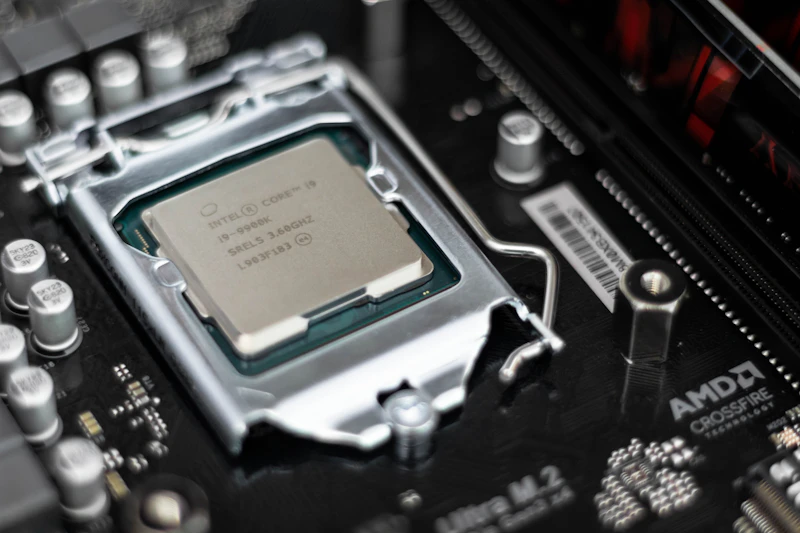
Atomic Semi, founded by Jim Keller and Sam Zeloof, challenges the orthodoxy that chips demand tens of billions in capital and an ASML EUV monopoly. The real question is whether small, cheap fabs can carve out a genuine niche in specialty and prototype silicon, or whether they remain a charismatic gesture against an unmovable industry.
For two decades the semiconductor industry has rested on a brutally simple premise: making advanced chips requires tens of billions of dollars in capital, and at the center of that spending sits a single machine. The extreme ultraviolet lithography systems that ASML alone produces cost hundreds of millions of dollars each, and without them no one crosses into the sub-seven-nanometer regime. The consequence is that leading-edge fabrication lives in the hands of three companies — TSMC, Samsung, and Intel — and the rest of the world rents access. Chipmaking, the doctrine holds, is a game of capital, and there is no seat at the table for the underfunded.
Atomic Semi, the startup founded by Jim Keller and Sam Zeloof, exists to interrogate that doctrine. Keller is among the most decorated chip architects alive, having shaped AMD's Zen, Apple's mobile silicon, and Tesla's self-driving processor. Zeloof became famous as a teenager for fabricating working transistors and integrated circuits in his family's garage. The pairing of a man who operated at the apex of capital-intensive design with the living symbol of garage fabrication is itself a kind of manifesto. It asks whether a chip really costs tens of billions to make, or whether we have simply been trained to call only one narrow category of silicon a chip.
Reading Atomic Semi as a frontal assault on leading-edge logic misses the point entirely. A garage-scale or small-building fab will never compete with a three-nanometer line on raw performance; the physics and the economics both forbid it. But not every chip in the world demands a cutting-edge node. Power devices, sensors, analog and mixed-signal parts, microcontrollers, and above all the small batches of prototype silicon that labs and startups fabricate to validate an idea can be built on processes that are decades old. In this territory the true bottleneck is not transistor density. It is access.
Today a small team with a new chip idea waits months and pays handsomely to hold real silicon, often queuing for a slot on a shared multi-project wafer shuttle. If a small, fast, inexpensive fab could turn a custom prototype wafer around in days, that would not be a revolution in performance but a revolution in iteration speed. Software advanced explosively because compiling and running became instantaneous; hardware design has never enjoyed the same tight feedback loop. The moment chip designers can iterate in days rather than quarters, the discipline evolves at a fundamentally different tempo. What Atomic Semi is really targeting is not the absolute performance of a chip but the coefficient of friction involved in making one.
The skepticism is nonetheless earned. Even a small fab on a mature node demands a cleanroom, deposition and etch equipment, and process engineering expertise that are anything but trivial. There is a deep chasm between coaxing one or two working transistors out of a garage and manufacturing chips with the yield, repeatability, and reliability that customers will pay for. In semiconductor history, yield has been something close to a religion, and small scale is a poor place to sustain that faith. To a pessimist, Atomic Semi looks like an attractive symbol built by two charismatic figures and little more.
Yet defining democratization as replacing the volume foundries asks the wrong question from the start. The personal computer did not transform the world by displacing the mainframe; it did so by multiplying the number of people who could touch computing a thousandfold. Just as 3D printing never beat mass-production factories but demolished the threshold for prototyping and small bespoke runs, the democratization of chipmaking need not topple the great fabs at all. It can instead grow a wholly new layer of experimenters alongside them. The geopolitical fragility of supply chains and the diffusion of specialty-chip demand supply oxygen to this small ember. Whether Atomic Semi succeeds, no one can yet say. What is clear is that, for the first time, a credible crack has appeared in the assumption that fabrication must forever belong to a handful of capital holders. Whether that crack stays a niche or becomes a current is the question the next decade will answer.
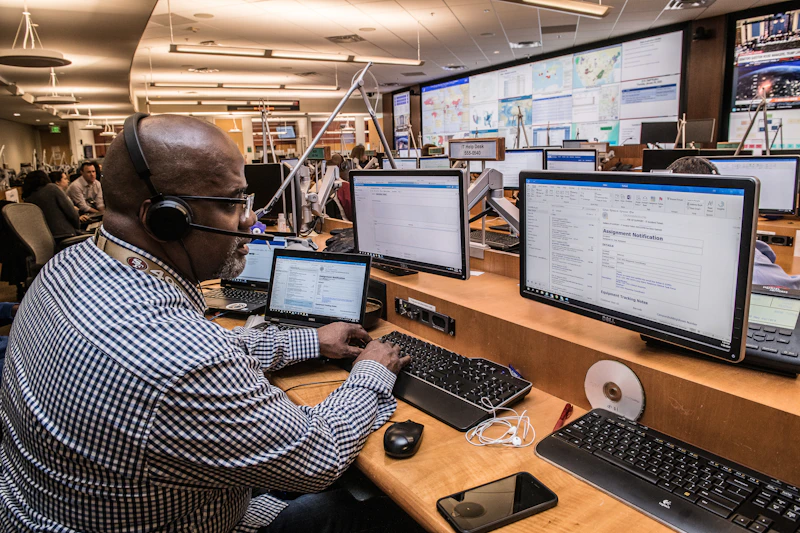
The Land-Permit Paradox of Korea's Chip Belt, When the Cluster's Boom Prices Out Its Own Engineers
Dongtan, Giheung, and Guri have been folded into Korea's land-transaction permit regime just as the AI chip capex boom reshapes the property market around the country's largest fabs. The very prosperity the cluster generates is raising the cost for the engineers it depends on to settle nearby. The real test of agglomeration may lie not in siting megafabs but in housing and labor mobility.

The Collapse of the Closed AI Moat and the Supply-Chain Paradox of Unverifiable Weights
DeepSeek-R1's open reasoning weights and Llamafile's single-file distribution are eroding the performance and distribution moats that closed labs once charged a premium for. Yet the same openness collides head-on with the gap exposed by the "250 samples to break an LLM" research: weight distribution that no recipient can verify. Democratized competition and accumulated security debt now sit on the same scale.
Forty-Year Yen Lows as the Hidden Subsidy Behind Japan's Chip Revival
As the yen slides into its weakest territory in four decades, Takaichinomics has entered uncharted monetary terrain. A cheap yen functions as a silent subsidy for Rapidus, Kioxia, and TSMC's Kumamoto fabs—yet the same currency inflates the cost of imported tools and materials and intensifies the talent war with Korea. The question is whether monetary policy can stand in for industrial policy, and what that means for Korea's memory champions.