AIINSIGHT NOTE
AI · Web3 · Tech trends and insights at a glance
AI · Web3 · Tech trends and insights at a glance
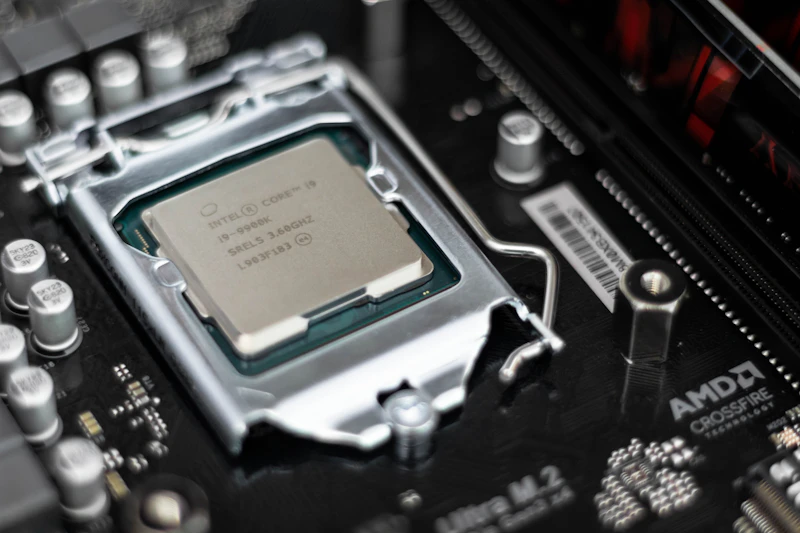
As the EU, TSMC, and Bosch race to plant fabs on European soil, the conversation fixates on where chips are made while ignoring who makes the one machine without which none of them can run. This column argues that the real ceiling on AI-chip expansion is not the number of fabs but the annual output of a single Dutch company's lithography tools.
Europe has fallen in love with the word sovereignty. The European Commission's Chips Act promises to lift the region's share of advanced manufacturing, TSMC has broken ground on a joint fab in Dresden, and Bosch and Infineon have expanded under the banner of securing automotive silicon. The United States courted fabs to Arizona, Japan to Kumamoto, all under the same logic of diversifying away from a dangerous concentration in Taiwan. On the surface the world appears to be spreading its bets, reducing dependence on any one geography. Yet every contestant in this race shares an unspoken premise: not one of these fabs can print a single leading-edge chip without a company headquartered in the small Dutch town of Veldhoven.
ASML is the only firm on earth that builds extreme ultraviolet lithography machines. It has no competition; Nikon and Canon abandoned the EUV chase years ago. The machine generates light at a wavelength of 13.5 nanometers, bounces it off mirrors polished to atomic smoothness, and etches circuitry finer than anything else humanity can manufacture. Each next-generation High-NA tool costs close to four hundred million dollars, assembled from more than a quarter of a million components representing decades of accumulated optics and plasma physics. But the binding constraint is not price. It is volume. ASML ships only a few dozen EUV systems a year, because every link in its chain must scale in lockstep: the optics from Zeiss, the light source from Cymer, the cadre of engineers who install and maintain each unit on site. That chain does not stretch on command.
This is where the sovereignty narrative reveals its blind spot. Whether Washington funds three fabs in Arizona or Brussels subsidizes one in Dresden, those plants must ultimately stand in the same queue for the same EUV tools. Building a fab increases demand for lithography; it does nothing to increase supply. A geographically dispersed constellation of fabs still has to pass through one company's annual production slots, and the width of that aperture is the true ceiling on how fast the world can add advanced capacity. As AI accelerator demand explodes and Nvidia and the hyperscalers clamor for more leading-edge wafers, the limit is set not by how many fabs exist but by the slope of one supplier's shipment curve.
Governments showering subsidies to anchor fabs on home soil looks like a geopolitical insurance policy, but it merely relocates the dependence rather than dissolving it. The comforting scenario in which an Arizona fab keeps humming through a Taiwan Strait crisis holds only if that fab's EUV machines, spare parts, and remote-service links keep functioning. Single-source risk lives in the technology chain, not the map. The fact that the entire world is lashed to one process step and one vendor of that step goes almost unmentioned beneath the glossy investment figures of the fab-attraction contest.
South Korea sits in a particularly exposed spot within this structure. Samsung and SK hynix command world-leading volume manufacturing in memory and foundry, yet nearly every critical tool underpinning that capability is imported. EUV belongs to ASML, etch and deposition to Applied Materials, Lam Research, and Tokyo Electron, metrology to KLA. Korea is a country that makes chips, not a country that makes the machines that make chips. Years of rhetoric about localizing materials, components, and equipment have produced real gains at the margins, but at the deepest pressure point of all, lithography, even entry remains a distant prospect. Semiconductor sovereignty without equipment sovereignty is only half a sovereignty. The real question, then, is not which nation builds the most fabs, but whether anyone can diversify the single lithographic chokepoint at all. Until an answer appears, the fate of the world's most advanced silicon will remain tethered to the number of machines shipped each year from one town in the Netherlands.

The Land-Permit Paradox of Korea's Chip Belt, When the Cluster's Boom Prices Out Its Own Engineers
Dongtan, Giheung, and Guri have been folded into Korea's land-transaction permit regime just as the AI chip capex boom reshapes the property market around the country's largest fabs. The very prosperity the cluster generates is raising the cost for the engineers it depends on to settle nearby. The real test of agglomeration may lie not in siting megafabs but in housing and labor mobility.

The Collapse of the Closed AI Moat and the Supply-Chain Paradox of Unverifiable Weights
DeepSeek-R1's open reasoning weights and Llamafile's single-file distribution are eroding the performance and distribution moats that closed labs once charged a premium for. Yet the same openness collides head-on with the gap exposed by the "250 samples to break an LLM" research: weight distribution that no recipient can verify. Democratized competition and accumulated security debt now sit on the same scale.
Forty-Year Yen Lows as the Hidden Subsidy Behind Japan's Chip Revival
As the yen slides into its weakest territory in four decades, Takaichinomics has entered uncharted monetary terrain. A cheap yen functions as a silent subsidy for Rapidus, Kioxia, and TSMC's Kumamoto fabs—yet the same currency inflates the cost of imported tools and materials and intensifies the talent war with Korea. The question is whether monetary policy can stand in for industrial policy, and what that means for Korea's memory champions.