AIINSIGHT NOTE
AI · Web3 · Tech trends and insights at a glance
AI · Web3 · Tech trends and insights at a glance

AlphaFold demonstrated that deep learning could crack a defining scientific problem — and the template it established is now spreading into materials science, climate modeling, and particle physics. The acceleration of discovery is no longer rhetorical; the question is whether scientists can keep pace with what the machines are finding.
When DeepMind's AlphaFold2 effectively solved protein structure prediction in 2021, it did something more consequential than produce accurate models of molecular geometry. It established a proof of concept: a certain class of scientific problem — one where the search space is vast, the underlying physics are known but computationally intractable, and decades of data exist for training — could yield to a well-designed neural network operating at scale. The scientific community has spent the years since asking how broadly that template applies. The evidence accumulating now suggests the answer is: very broadly indeed.
DeepMind's GNoME, the Graph Networks for Materials Exploration system, predicted over 2.2 million stable crystal structures in late 2023, a catalog that dwarfs what experimental materials science had accumulated over decades. Numbers like these tend to invite skepticism — prediction is cheap, synthesis is hard — but what followed mattered more than the count. A collaboration with Lawrence Berkeley National Laboratory demonstrated that GNoME predictions could feed directly into autonomous robotic synthesis pipelines, running experimental feedback loops continuously without requiring a researcher to supervise each step. The bottleneck shifted. It moved from human intuition about which compounds to try toward human judgment about which confirmed findings are worth building on.
The transformation underway in climate science is structurally distinct from materials discovery but converges on the same theme: AI not as a replacement for physical theory but as a mechanism for navigating spaces that physical models could only approximate. Numerical weather prediction has long solved differential equations on spatial grids — the methodology is accurate and grounded in fluid dynamics, but computationally expensive enough that running even a single high-resolution global forecast requires considerable infrastructure. GraphCast, trained on decades of ERA5 reanalysis data, produced ten-day forecasts that outperformed ECMWF's high-resolution model across most evaluation metrics while consuming a fraction of the compute. The consequence is not merely faster forecasting. Ensemble modeling — running thousands of slightly perturbed simulations to characterize uncertainty in forecast outcomes — becomes financially and technically accessible at scales that were previously reserved for the world's largest meteorological agencies.
The deeper shift involves what climate scientists call parameterization: the empirical approximations inserted into physical models to represent phenomena that occur below the resolution of the simulation grid. Cloud microphysics, ocean eddies, boundary-layer turbulence — these processes are physically real and consequential for climate projections, but traditional models handle them through tuned approximations that encode assumptions known to be imprecise. Neural network parameterizations trained on high-resolution simulations are beginning to replace these approximations, and institutions like ECMWF and NOAA have started integrating AI components into operational forecasting infrastructure. The pace at which academic results are crossing into deployed systems is unusually rapid by the standards of either climate science or software engineering.
In particle physics, graph neural networks applied to collision data at CERN's Large Hadron Collider are improving the sensitivity of searches for anomalous signals — not by autonomously declaring discoveries, but by surfacing candidate events that might fall beneath the threshold of conventional analysis pipelines. The structure is consistent across every domain: AI functions as a hypothesis-generation assistant and anomaly detector, while human scientists retain interpretive authority over what counts as a finding and which questions are worth pursuing next.
What this amounts to across the sciences is a redistribution of where scientific judgment gets applied. The mechanical work of individual experiments — synthesizing a candidate material, running a simulation, scanning a collision dataset — is increasingly handled by AI systems or automated infrastructure. The judgment about which experiments to authorize, which AI-proposed candidates to trust given their provenance and the model's known failure modes, and what a surprising negative result implies for the underlying theory: these remain distinctly human activities, but they are becoming the primary activities rather than secondary ones. The ratio of thinking to doing, in the classical sense, is shifting.
This raises a question that the enthusiasm around AlphaFold's successors tends to elide. AlphaFold produced a powerful predictive tool; it did not, on its own, explain the physical principles governing how amino acid sequences determine fold geometry. GNoME identifies stable crystalline structures without providing chemical intuition about why those configurations are stable or what makes them interesting for specific applications. The interpretive labor — building mechanistic understanding from pattern recognition, connecting a computational finding to a coherent scientific narrative — still falls to researchers. The risk of the current moment is not that AI will make scientists unnecessary. It is that the pace of discovery outruns the pace of comprehension, producing a catalog of findings that accumulates faster than the community can absorb. The challenge AlphaFold's successors have set for the scientific enterprise is not merely technical. It is epistemological.
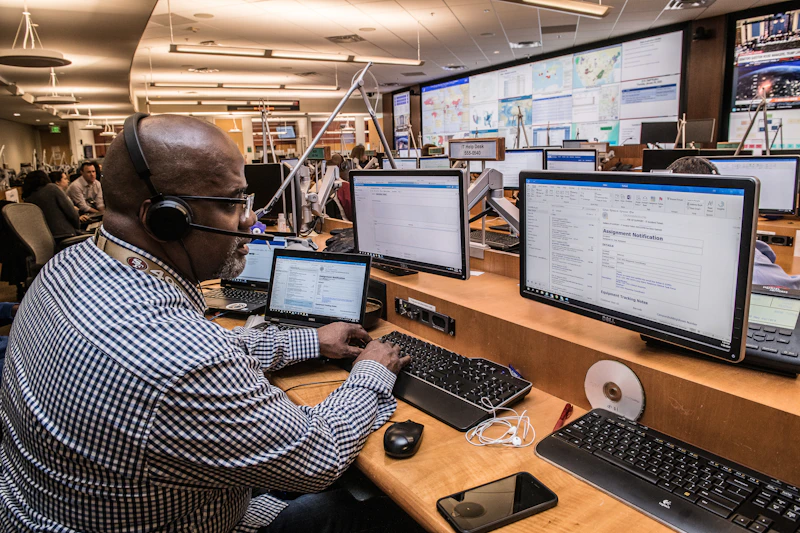
The Land-Permit Paradox of Korea's Chip Belt, When the Cluster's Boom Prices Out Its Own Engineers
Dongtan, Giheung, and Guri have been folded into Korea's land-transaction permit regime just as the AI chip capex boom reshapes the property market around the country's largest fabs. The very prosperity the cluster generates is raising the cost for the engineers it depends on to settle nearby. The real test of agglomeration may lie not in siting megafabs but in housing and labor mobility.
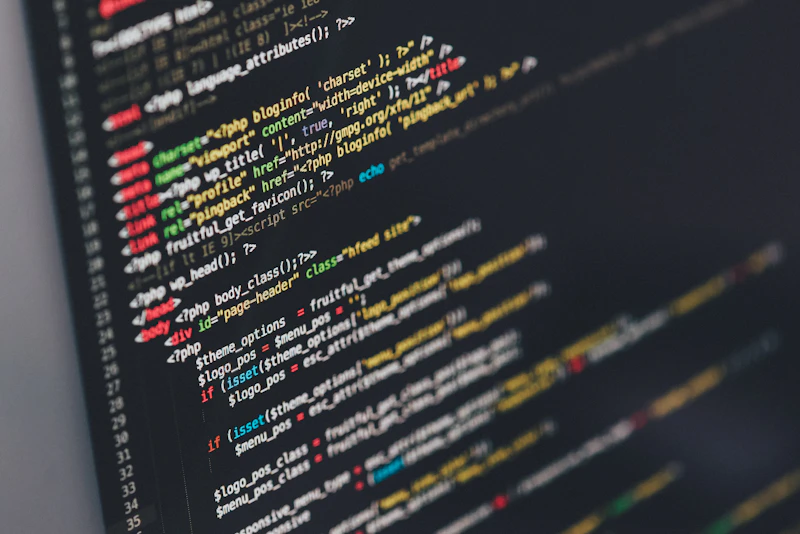
The Collapse of the Closed AI Moat and the Supply-Chain Paradox of Unverifiable Weights
DeepSeek-R1's open reasoning weights and Llamafile's single-file distribution are eroding the performance and distribution moats that closed labs once charged a premium for. Yet the same openness collides head-on with the gap exposed by the "250 samples to break an LLM" research: weight distribution that no recipient can verify. Democratized competition and accumulated security debt now sit on the same scale.
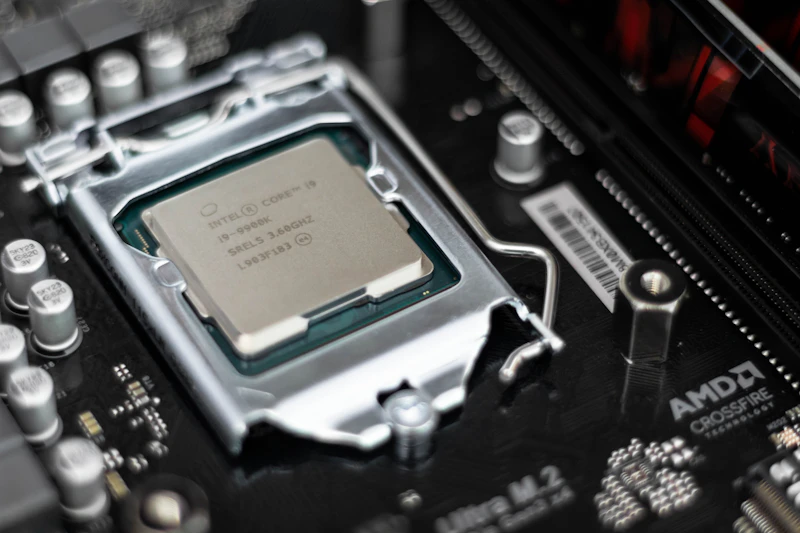
Forty-Year Yen Lows as the Hidden Subsidy Behind Japan's Chip Revival
As the yen slides into its weakest territory in four decades, Takaichinomics has entered uncharted monetary terrain. A cheap yen functions as a silent subsidy for Rapidus, Kioxia, and TSMC's Kumamoto fabs—yet the same currency inflates the cost of imported tools and materials and intensifies the talent war with Korea. The question is whether monetary policy can stand in for industrial policy, and what that means for Korea's memory champions.