AIINSIGHT NOTE
AI · Web3 · Tech trends and insights at a glance
AI · Web3 · Tech trends and insights at a glance
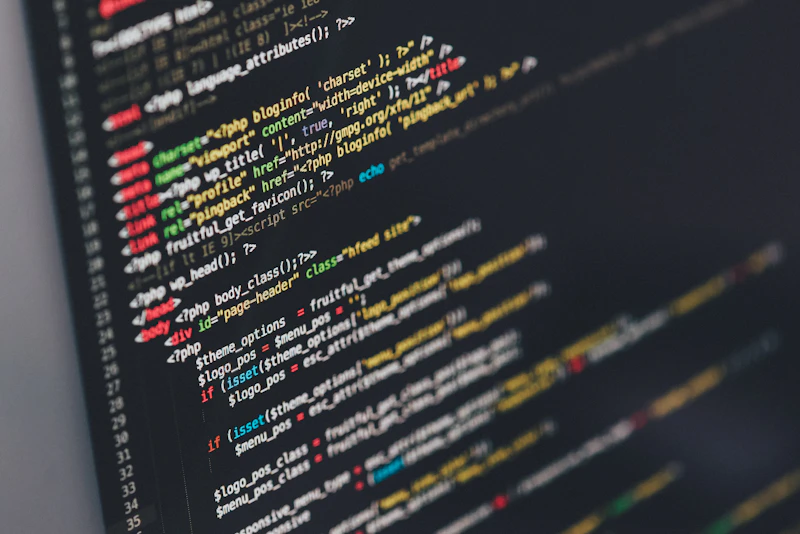
Alphabet's entry into the Dow Jones Industrial Average sent Wall Street higher across the board. When even the price-weighted index that symbolized industrial America for over a century surrenders a seat to AI megacaps, it becomes a mirror in which passive money and index rebalancing reinforce the concentration they reflect.
Wall Street closed broadly higher on the news that Alphabet would join the Dow Jones Industrial Average. A newly admitted name rising, and that strength rippling outward across the market, is no longer a surprising sight. But to read this admission as a simple roster swap is to miss the structural story buried inside it. The Dow has functioned as the symbol of American industrial capitalism for nearly 130 years, since it was first calculated in 1896. Railroads and steel, oil and automobiles, and the giants of manufacturing each took their place within it before fading away. That an index carrying the very word "Industrial" in its name has now welcomed a company that earns its money from search, advertising, the cloud, and artificial intelligence into one of its most symbolic seats is closer to an official declaration that the definition of industry itself has changed.
The weight of the Dow is the weight of what it measures. For more than a century this index has been the most compressed answer to the question of what makes the American economy run. That is why which company enters or exits the Dow is not a mere portfolio adjustment but a record of the spirit of an age. Alphabet's inclusion places another period at the end of a procession of big-tech admissions that ran through Microsoft, Apple, and Nvidia. The face of American industry now reflected in the Dow's mirror is not factories and smokestacks but data centers and GPU clusters. The trouble is that this mirror does not merely reflect reality. The more the most cited and most followed index fills with AI giants, the more the capital and sentiment that take that index as their benchmark flow back into the very same companies. The mirror begins to manufacture the reality it claims to show.
An earlier debate over SpaceX's potential addition to the Nasdaq-100 centered on the distortion of dragging a private company's contested valuation into an index. The heart of this case is different. Alphabet is already a proven megacap that has led the market for years; the issue is not valuation uncertainty but the acceleration of concentration. When even the most conservative and traditional of indices is redefined by AI big tech, the market is left with no safe benchmark standing apart from the trend.
Here the Dow's idiosyncratic method of calculation adds another layer of distortion. Unlike most major indices, which assign weight according to market capitalization, the Dow clings to price weighting, where a company's influence is set by the absolute dollar price of a single share. A statistically arbitrary design that rewards a high share price rather than a company's real size or economic value. A single stock split can shrink a giant's voice within the index, while a high-priced firm is over-represented regardless of its true economic footprint. This antiquated method has survived 130 years precisely because the Dow has been consumed as a symbolic indicator rather than a precise measuring instrument. And that symbolic power is exactly the problem now.
In an era where passive investing commands more than half the market, an index is no longer a passive observer. Whatever names an index holds, the money of index funds and ETFs is mechanically allocated to them, and that money in turn props up their prices. When an AI megacap enters the index, passive capital flows in; as the price rises, its weight within the price-weighted index grows; and the larger weight summons still more tracking capital. This feedback loop, spinning independently of fundamentals, ceaselessly amplifies the tilt toward a handful of companies. The fate of the entire market bound to the earnings and narratives of fewer than a dozen firms is the American stock market of today.
The moment the market cheered Alphabet's arrival in the Dow was, paradoxically, also a signal that concentration risk has reached its tipping point. Now that even the yardstick of industry has become the mirror of AI, the question investors must ask is not how much higher AI can climb, but what benchmark remains for us when this mirror finally cracks. Indices that endure for over a century have always changed the face of their era, but rarely has that face been concentrated in so few hands.
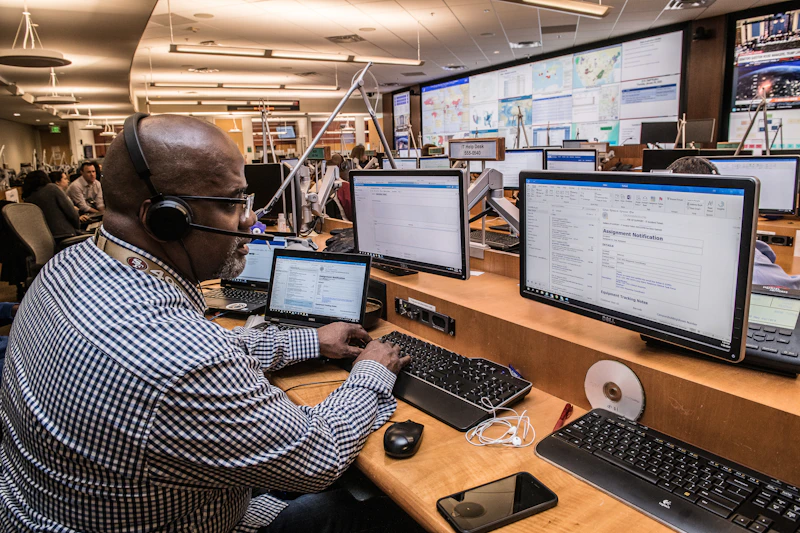
The Land-Permit Paradox of Korea's Chip Belt, When the Cluster's Boom Prices Out Its Own Engineers
Dongtan, Giheung, and Guri have been folded into Korea's land-transaction permit regime just as the AI chip capex boom reshapes the property market around the country's largest fabs. The very prosperity the cluster generates is raising the cost for the engineers it depends on to settle nearby. The real test of agglomeration may lie not in siting megafabs but in housing and labor mobility.
The Collapse of the Closed AI Moat and the Supply-Chain Paradox of Unverifiable Weights
DeepSeek-R1's open reasoning weights and Llamafile's single-file distribution are eroding the performance and distribution moats that closed labs once charged a premium for. Yet the same openness collides head-on with the gap exposed by the "250 samples to break an LLM" research: weight distribution that no recipient can verify. Democratized competition and accumulated security debt now sit on the same scale.
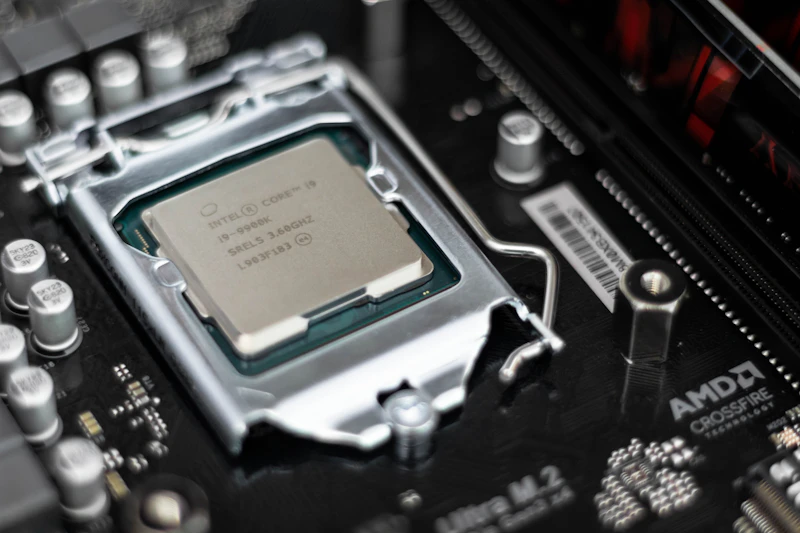
Forty-Year Yen Lows as the Hidden Subsidy Behind Japan's Chip Revival
As the yen slides into its weakest territory in four decades, Takaichinomics has entered uncharted monetary terrain. A cheap yen functions as a silent subsidy for Rapidus, Kioxia, and TSMC's Kumamoto fabs—yet the same currency inflates the cost of imported tools and materials and intensifies the talent war with Korea. The question is whether monetary policy can stand in for industrial policy, and what that means for Korea's memory champions.