AIINSIGHT NOTE
AI · Web3 · Tech trends and insights at a glance
AI · Web3 · Tech trends and insights at a glance

Korea's deputy prime minister has floated the idea of a 'profit-sharing rule,' echoing France's flirtation with bonus caps, just as the AI chip boom hands a handful of firms extraordinary windfalls. The fight is not really about bonus size but about whether the gains from a boom belong solely to those who received them, or whether the society that underwrote the boom holds a claim. This is where the impulse to recirculate windfalls collides with the freedom of capital to dispose of its own profits.
For a long time, a company posting record earnings and paying out bonuses that rival annual salaries was treated as a virtue of the market economy. Capital that bore risk and labor that raised productivity were simply splitting the spoils, and that splitting looked like the natural arithmetic of distribution. But when a finance minister suggests that a 'profit-sharing rule' might be needed, and when France's earlier debate over capping bonuses is dusted off and reconsidered, the naturalness itself becomes the political question. Do the windfalls produced by the AI semiconductor boom belong only to the firms and employees who received them, or can the broader society that sustained the boom assert a share? The question reaches past ordinary quarrels over fairness and asks how far the freedom capital has long enjoyed to dispose of its gains is actually justified.
The bonuses flowing from Korea's memory champions draw attention not merely because the numbers are large, but because of the nature of the profit behind them. The margins generated by high-bandwidth memory and advanced chips are less the product of ordinary managerial efficiency than a form of rent—the result of the entire world pouring capital into AI infrastructure at once and crowding onto the few firms that happen to hold a supply-constrained bottleneck. That bottleneck was not manufactured by any single company's effort. Decades of national industrial policy, talent cultivation, and publicly funded research formed its foundation. In economics, rent refers precisely to a surplus beyond the reward for one's contribution to production, and the rightful owner of such a surplus has always been contested in light of the conditions that made it possible. Because the fruits of the AI boom carry exactly this rent-like character, asking whether the recipient is entitled to keep all of it is hardly demagoguery.
What makes France's bonus-cap conversation interesting is that it grew not from egalitarian envy but from a concern about macroeconomic stability. Enormous rewards concentrated in one sector flow straight into asset markets and real estate, pushing prices higher and colliding head-on with a central bank trying to tame inflation. If the disposable income of a fortunate few surges while the costs of the boom—electricity, water, land, social strain—are borne by everyone, the asymmetry of distribution stops being a question of equity and becomes a question of whether the system can sustain itself.
And yet any attempt to institutionalize profit-sharing runs immediately into the hard wall of capital's freedom. The authority to decide how earned profits are used sits at the core of private ownership, and the moment the state sets a ceiling on bonuses, the move becomes indistinguishable from price control. The counterargument is clear. Cap the reward and talent migrates to freer ground, the motive to bear risk weakens, and the incentive to invest in the next boom thins out. For an economy like Korea's, planted in the middle of a global contest for talent, this worry is far from trivial.
In the end the real arena of this dispute is not the size of any bonus but how institutions choose to recognize the sheer contingency of a boom. Rather than direct intervention that mandates a sharing rule, instruments such as progressive taxation of excess profits, expanded employee ownership that hands workers an equity stake, or setting aside a portion of boom-era gains into a social fund against future shocks can serve the goal of recirculation while doing less violence to capital's freedom of disposal. What gives the minister's remark its weight is not that it offered a concrete solution, but that it lifted the ownership of windfall profit—long dismissed as the market's natural outcome—back into the realm of negotiable political objects. If the wealth produced by AI is large enough to reorder a generation's distribution of assets, then deciding whose wealth it is becomes a matter of politics rather than technology. Regardless of whether a French-style cap is the right answer, the mere fact that the argument has begun shows that the order of capital is once again on trial.

The Land-Permit Paradox of Korea's Chip Belt, When the Cluster's Boom Prices Out Its Own Engineers
Dongtan, Giheung, and Guri have been folded into Korea's land-transaction permit regime just as the AI chip capex boom reshapes the property market around the country's largest fabs. The very prosperity the cluster generates is raising the cost for the engineers it depends on to settle nearby. The real test of agglomeration may lie not in siting megafabs but in housing and labor mobility.
The Collapse of the Closed AI Moat and the Supply-Chain Paradox of Unverifiable Weights
DeepSeek-R1's open reasoning weights and Llamafile's single-file distribution are eroding the performance and distribution moats that closed labs once charged a premium for. Yet the same openness collides head-on with the gap exposed by the "250 samples to break an LLM" research: weight distribution that no recipient can verify. Democratized competition and accumulated security debt now sit on the same scale.
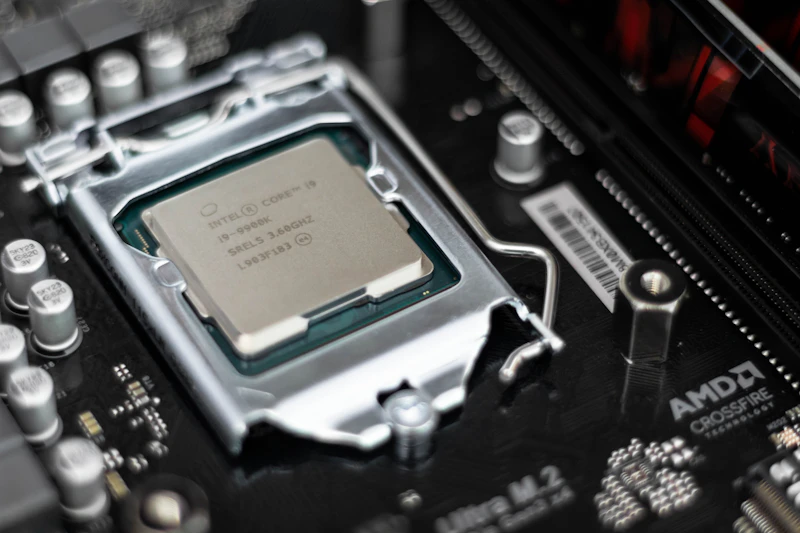
Forty-Year Yen Lows as the Hidden Subsidy Behind Japan's Chip Revival
As the yen slides into its weakest territory in four decades, Takaichinomics has entered uncharted monetary terrain. A cheap yen functions as a silent subsidy for Rapidus, Kioxia, and TSMC's Kumamoto fabs—yet the same currency inflates the cost of imported tools and materials and intensifies the talent war with Korea. The question is whether monetary policy can stand in for industrial policy, and what that means for Korea's memory champions.