AIINSIGHT NOTE
AI · Web3 · Tech trends and insights at a glance
AI · Web3 · Tech trends and insights at a glance

The AI industry has moved well past the initial large language model wave. Reasoning-capable models, autonomous agent frameworks, and a thriving open-source ecosystem are reshaping the competitive landscape — and raising new questions about who controls the technology.
A few years ago, the central AI question was whether language models could generate coherent text. That question feels quaint now. In 2026, the frontier has shifted to whether models can reason reliably, act autonomously across complex multi-step tasks, and do so in ways that remain aligned with human intentions.
Reasoning models represent the most significant architectural evolution. OpenAI's o-series and Anthropic's extended thinking modes both implement variations of chain-of-thought reasoning that allow models to "think" before responding — working through intermediate steps rather than producing an output in a single forward pass. The empirical results on benchmarks like AIME (a challenging mathematics competition) and software engineering evals are striking: reasoning models substantially outperform their non-reasoning counterparts on tasks that require multi-step inference. The tradeoff is latency and compute cost, which makes them unsuitable for applications where response speed matters more than accuracy.
Agent frameworks are where the rubber meets the road for enterprise adoption. The term "AI agent" has been defined loosely enough to cover everything from a chatbot with a web search tool to fully autonomous systems that can browse the internet, write and execute code, and interact with external APIs. What's actually being deployed in production is much closer to the former than the latter. The challenges are reliability (models still hallucinate and make errors that compound in long action sequences), tool integration (connecting models to business systems is surprisingly hard in practice), and oversight (most organizations aren't comfortable running truly autonomous AI on consequential tasks without human checkpoints).
Open-source has become a genuine competitive force rather than just an academic exercise. Meta's Llama series, Mistral's models, and a growing cohort of Chinese labs releasing capable open weights have created a landscape where frontier-level performance is accessible without an API contract. This is reshaping the economics of the industry: if a company can run a locally-hosted model at comparable quality for a fraction of the API cost, the switching costs that sustain cloud AI revenue become negotiable. The closed labs are responding by investing in capabilities that require scale — massive context windows, multimodal reasoning — where open-source alternatives are still catching up.
The geopolitical dimension is increasingly impossible to ignore. Chinese AI labs — DeepSeek, Zhipu AI, and others — have released models that perform competitively with Western counterparts on most standard benchmarks, despite export controls on advanced semiconductors. Whether that continues as semiconductor gaps widen, or whether China's labs find architectural workarounds, is one of the most consequential open questions in tech.

The Land-Permit Paradox of Korea's Chip Belt, When the Cluster's Boom Prices Out Its Own Engineers
Dongtan, Giheung, and Guri have been folded into Korea's land-transaction permit regime just as the AI chip capex boom reshapes the property market around the country's largest fabs. The very prosperity the cluster generates is raising the cost for the engineers it depends on to settle nearby. The real test of agglomeration may lie not in siting megafabs but in housing and labor mobility.

The Collapse of the Closed AI Moat and the Supply-Chain Paradox of Unverifiable Weights
DeepSeek-R1's open reasoning weights and Llamafile's single-file distribution are eroding the performance and distribution moats that closed labs once charged a premium for. Yet the same openness collides head-on with the gap exposed by the "250 samples to break an LLM" research: weight distribution that no recipient can verify. Democratized competition and accumulated security debt now sit on the same scale.
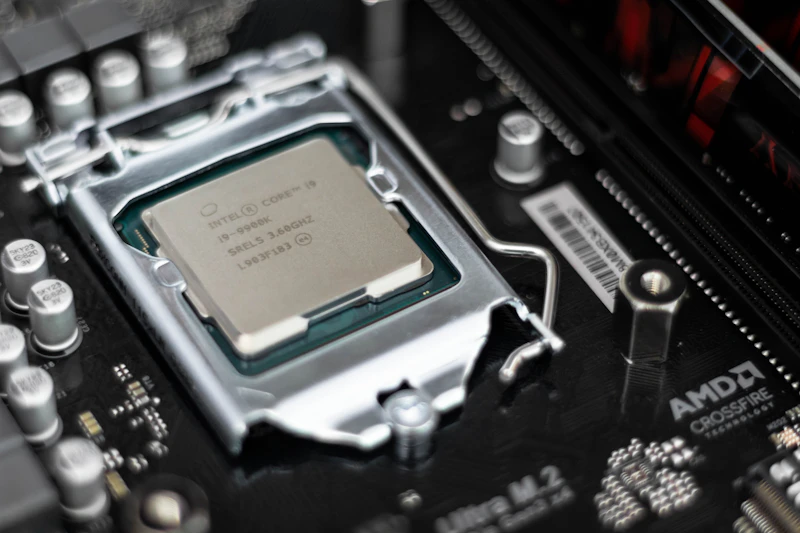
Forty-Year Yen Lows as the Hidden Subsidy Behind Japan's Chip Revival
As the yen slides into its weakest territory in four decades, Takaichinomics has entered uncharted monetary terrain. A cheap yen functions as a silent subsidy for Rapidus, Kioxia, and TSMC's Kumamoto fabs—yet the same currency inflates the cost of imported tools and materials and intensifies the talent war with Korea. The question is whether monetary policy can stand in for industrial policy, and what that means for Korea's memory champions.