AIINSIGHT NOTE
AI · Web3 · Tech trends and insights at a glance
AI · Web3 · Tech trends and insights at a glance
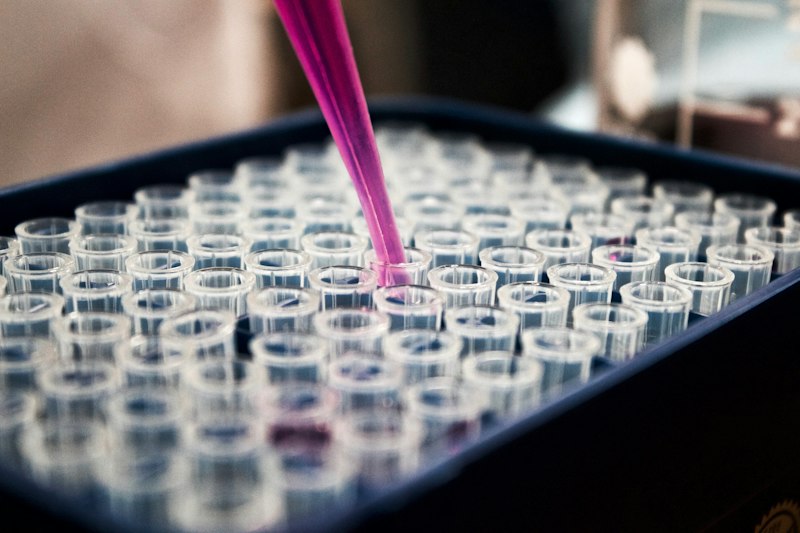
Several AI-native drug development companies have advanced molecules into clinical trials. The results are beginning to separate genuine capability from marketing, and the picture that emerges is nuanced — real progress in certain phases, persistent limitations in others.
Drug development is one of the most compelling potential applications for AI, and also one of the most thoroughly over-hyped. The FDA approves roughly 50 new drugs per year after a process that takes over a decade on average and costs hundreds of millions of dollars per approved compound. If AI can meaningfully compress that timeline or reduce the failure rate, the economic and human health implications are enormous. Whether it can is a question that clinical trial data is beginning to answer.
Insilico Medicine's trajectory is the most watched. They used generative AI to identify a novel target for idiopathic pulmonary fibrosis and design a molecule optimized to hit that target — a process that traditionally takes years and was compressed to months. The resulting compound, ISM001-055, has progressed through Phase I and into Phase IIa trials, demonstrating both safety and preliminary efficacy signals. This is not an approved drug; it's a compound in trials. But it is the most concrete demonstration that AI-assisted target identification and molecule design can produce a clinical-stage asset.
Exscientia, now merged with Recursion, took a different architectural approach: their AI platform focuses on experimental cycle acceleration, using high-throughput screening data to guide molecular optimization. Their early clinical candidates have had mixed results — one candidate partnered with Sumitomo was dropped after Phase I, while others remain in active development. The dropped candidate was a disappointment but not a refutation of the approach; Phase I attrition is endemic to drug development regardless of how the molecule was designed.
BenevolentAI has focused on target identification using knowledge graph approaches — constructing large networks of biological relationships and using AI to identify non-obvious connections between targets and diseases. Their clinical pipeline includes programs in atopic dermatitis and ALS. The ALS program, targeting TYK2 kinase, is particularly interesting because ALS has historically been an area where clinical trials fail with high regularity.
The honest assessment across these programs is that AI has demonstrated the most value in the early discovery phase — identifying targets and designing molecules — where the bottleneck is navigating a vast search space intelligently. It has shown less differentiated value in clinical development itself, where the bottlenecks are patient recruitment, regulatory science, and the fundamental biology of disease. An AI-designed molecule faces the same Phase II failure rates as a conventionally designed one once it enters a human body.
The next five years of clinical trial readouts will be the actual test of whether AI drug design is a productivity multiplier or a faster route to the same failure rates.

The Land-Permit Paradox of Korea's Chip Belt, When the Cluster's Boom Prices Out Its Own Engineers
Dongtan, Giheung, and Guri have been folded into Korea's land-transaction permit regime just as the AI chip capex boom reshapes the property market around the country's largest fabs. The very prosperity the cluster generates is raising the cost for the engineers it depends on to settle nearby. The real test of agglomeration may lie not in siting megafabs but in housing and labor mobility.

The Collapse of the Closed AI Moat and the Supply-Chain Paradox of Unverifiable Weights
DeepSeek-R1's open reasoning weights and Llamafile's single-file distribution are eroding the performance and distribution moats that closed labs once charged a premium for. Yet the same openness collides head-on with the gap exposed by the "250 samples to break an LLM" research: weight distribution that no recipient can verify. Democratized competition and accumulated security debt now sit on the same scale.

Forty-Year Yen Lows as the Hidden Subsidy Behind Japan's Chip Revival
As the yen slides into its weakest territory in four decades, Takaichinomics has entered uncharted monetary terrain. A cheap yen functions as a silent subsidy for Rapidus, Kioxia, and TSMC's Kumamoto fabs—yet the same currency inflates the cost of imported tools and materials and intensifies the talent war with Korea. The question is whether monetary policy can stand in for industrial policy, and what that means for Korea's memory champions.