AIINSIGHT NOTE
AI · Web3 · Tech trends and insights at a glance
AI · Web3 · Tech trends and insights at a glance

On June 29, ahead of a major government semiconductor investment announcement, Korea's memory giants slipped on foreign selling while smaller materials, parts, and equipment names surged. The split session reflects a structural inversion: as AI data-center capex explodes, the firms holding HBM stacking, TSV, and cooling bottlenecks capture the margin that once flowed to finished-chip makers.
Korea's stock market on June 29 refused to move as one block, even though every headline that day carried the word semiconductor. Anticipation was high ahead of a large government investment package, yet the memory giants—Samsung Electronics and SK hynix—drifted lower under foreign selling, while a cluster of smaller materials, parts, and equipment companies on the KOSDAQ jumped by double digits. Firms that build back-end packaging tools, supply etching and deposition materials, or make inspection equipment outran the very champions whose chips they help produce. This asymmetry, where the giant selling finished product falls while the mid-cap selling components rises, is not a quirk of order flow. It reads as a signal that the AI capex supercycle is rewriting how profit is distributed across the chip value chain.
For decades the spoils of a semiconductor boom flowed to the integrated device makers who sold the chips themselves. The logic was simple: the cycle turns, memory prices rise, margins follow. But AI demand does not ask merely for more chips. It asks for a particular kind of chip, made a particular way. High-bandwidth memory only becomes valuable once DRAM dies are stacked vertically and threaded together through microscopic vias. The stacking, the through-silicon connections, the bonding and inspection steps that determine yield—these are where the bottlenecks live. Industrial economics has long held that whoever controls the bottleneck holds the bargaining power. However enormous a finished-chip maker may be, it cannot stack HBM at the pace it needs without specific tools and specific materials.
That is precisely where the inversion happens. The price of a finished memory product remains hostage to the business cycle, to inventory, to currency moves, and to the purchasing leverage of a handful of giant buyers. By contrast, in narrow domains where alternative suppliers can be counted on one hand—bonding equipment for advanced stacking, components for immersion cooling, etching chemistries for TSV formation—pricing power tilts toward the supplier exactly when demand is exploding. The more aggressively hyperscalers raise data-center capex, the faster that money flows not into the unit price of any single chip but into the chokepoint parts and tools that make the chip possible at all. The split session on June 29 is best understood as the market reading this structure before the consensus caught up.
It would be a mistake, though, to treat this rotation as an unconditional buy signal. The strength of the supply chain is, at its core, a premium that holds only while the bottleneck exists. If scarcity is the source of bargaining power, scarcity does not last forever. The moment equipment and material capacity catches up with expansion, the moment advanced packaging becomes standardized, the moment a second and third supplier qualifies, the premium normalizes quickly. KOSDAQ small caps are thin on liquidity, prone to overshoot when expectations crowd to one side, and far more exposed to violent reversals than the large caps the instant the AI capex outlook softens even slightly. Today's surge carries the seed of tomorrow's volatility.
The more durable lesson, however, is clear. The value created by AI infrastructure investment does not stay fixed at any one layer of the chain; it migrates toward whoever holds the narrowest passage at that moment. Right now that passage is HBM stacking, advanced back-end packaging, and thermal management. The question worth asking is not which name is the semiconductor bellwether, but where the next bottleneck will move. The true beneficiary of a supercycle is rarely the fixed champion who reigns from start to finish—it is the supplier who, again and again, monopolizes the solution to whichever process problem is hardest to solve. June 29 compressed that truth into a single trading day.
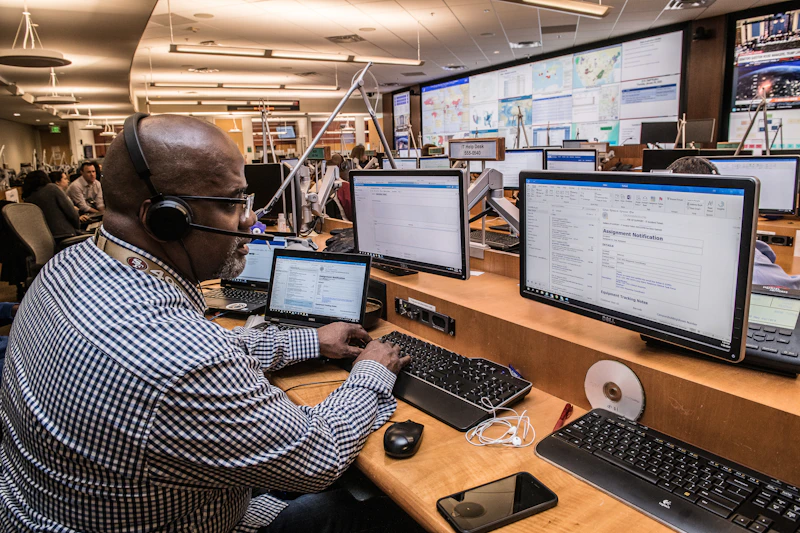
The Land-Permit Paradox of Korea's Chip Belt, When the Cluster's Boom Prices Out Its Own Engineers
Dongtan, Giheung, and Guri have been folded into Korea's land-transaction permit regime just as the AI chip capex boom reshapes the property market around the country's largest fabs. The very prosperity the cluster generates is raising the cost for the engineers it depends on to settle nearby. The real test of agglomeration may lie not in siting megafabs but in housing and labor mobility.

The Collapse of the Closed AI Moat and the Supply-Chain Paradox of Unverifiable Weights
DeepSeek-R1's open reasoning weights and Llamafile's single-file distribution are eroding the performance and distribution moats that closed labs once charged a premium for. Yet the same openness collides head-on with the gap exposed by the "250 samples to break an LLM" research: weight distribution that no recipient can verify. Democratized competition and accumulated security debt now sit on the same scale.
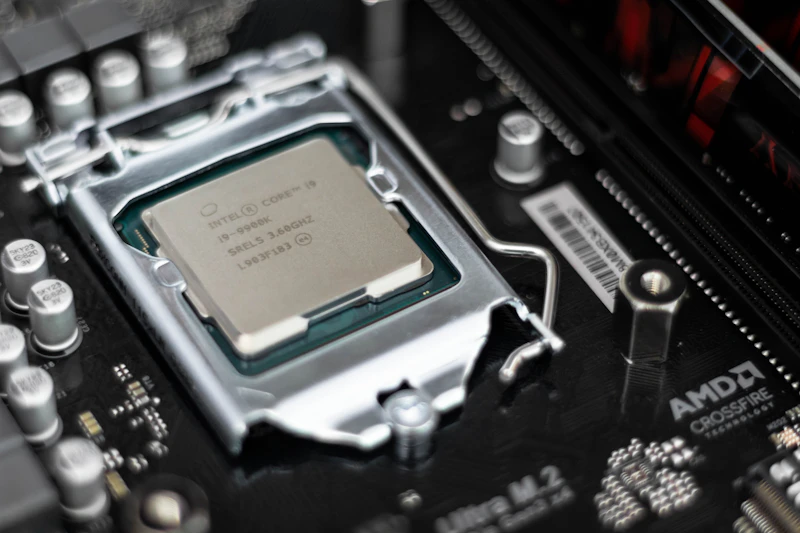
Forty-Year Yen Lows as the Hidden Subsidy Behind Japan's Chip Revival
As the yen slides into its weakest territory in four decades, Takaichinomics has entered uncharted monetary terrain. A cheap yen functions as a silent subsidy for Rapidus, Kioxia, and TSMC's Kumamoto fabs—yet the same currency inflates the cost of imported tools and materials and intensifies the talent war with Korea. The question is whether monetary policy can stand in for industrial policy, and what that means for Korea's memory champions.