AIINSIGHT NOTE
AI · Web3 · Tech trends and insights at a glance
AI · Web3 · Tech trends and insights at a glance

As South Korea's KOSPI clears 8,700 and Seoul apartment prices push toward record highs, software engineers on Hacker News are confessing to a quieter reality: LLMs are hollowing out the careers they spent a decade building. The returns from AI infrastructure investment are pooling in asset markets, while the wage premiums that once made knowledge work the safest bet in the labor market are being structurally compressed. This is not a contradiction — it is one distributional logic producing two faces.
There is something quietly dissonant about the summer of 2026 in South Korea. The KOSPI has clawed its way back above 8,700 points. Apartment prices in Seoul's prime districts are creeping toward record territory again. Financial stocks and semiconductor majors are printing new highs as HBM supply contracts accumulate and AI infrastructure spending shows no sign of plateauing. Meanwhile, on Hacker News, a thread about LLMs hollowing out software engineering careers has drawn hundreds of responses from engineers describing the same experience: fewer job postings, contracting headcount, and the unsettling sense that the work they spent a decade mastering is being quietly automated into irrelevance.
These two realities are not contradictions. They are the two faces of the same structural shift — a redistribution of AI's gains that concentrates returns in capital markets while compressing wage premiums for the skilled knowledge workers who helped build this moment.
The wealth generated by the AI boom is not diffuse. It concentrates at the physical chokepoints of the global AI stack. Nvidia's GPUs, TSMC and Samsung's advanced foundries, SK Hynix's high-bandwidth memory — these command pricing power approaching monopoly precisely because they are the irreplaceable bottlenecks in a supply chain the world cannot do without. When Samsung Semiconductor or SK Hynix books record earnings, those profits flow outward through dividends and buybacks, disproportionately rewarding institutional investors and existing shareholders. The KOSPI recovery narrative is, at its core, a story about which assets are concentrated in whose hands.
The real estate dynamic operates through the same logic at one degree of separation. Surging demand for data center land and power creates localized property premiums. Export-driven income concentration among a narrow stratum of high-paid professionals amplifies demand for premium urban housing. Those who already hold assets — financial or real — receive AI's windfall indirectly, through price appreciation. Those who depend solely on labor income face the same AI economy as a headwind: a force raising the cost of living in Seoul while simultaneously pressing down on the wages meant to cover it. The semiconductor export boom that lifted GDP has also lifted apartment prices, and that price appreciation accrues to those who were already inside the market.
For most of the 2010s, software engineering occupied a privileged position in the labor market. Demand reliably outpaced supply. The wage premium compounded year over year. The career seemed recession-proof by design, because the underlying assumption held firm: cognitive complexity — the kind of work requiring a mental model of an entire system, not just a fragment — would remain beyond the reach of automation for a long time.
That assumption is now under serious pressure. Generative AI coding assistants have materially raised output per engineer, and companies have responded not by hiring more engineers to pursue more ambitious scope, but by maintaining the same scope with fewer people. The contraction of entry-level positions is the most visible symptom: junior roles have dried up across the industry because LLMs can now perform much of the work that junior engineers used to do as part of their developmental arc. But the compression is moving upward. Reading architecture documents, reasoning about system tradeoffs, synthesizing requirements into coherent designs — these are exactly the tasks that command senior-level compensation, and they are also exactly the class of tasks that frontier models are beginning to perform with increasing reliability.
In South Korea, this plays out against a specific industrial backdrop. Outside a handful of platform companies — Naver, Kakao, Coupang — the domestic software sector is dominated by mid-tier SI integrators and solution vendors whose margins were always thin and whose headcount decisions are acutely sensitive to productivity shifts. Reports from practitioners suggest that developer hiring at these firms has contracted measurably since LLM coding tools became mainstream. South Korea's GDP story is being written by semiconductor exports, but the employment story inside the domestic knowledge economy is being quietly rewritten in the opposite direction.
The standard framing of technological displacement imagines a relatively clean sequence: automation destroys some jobs, creates others, and the net effect — after painful but ultimately manageable adjustment — is broadly positive. This framework does not map cleanly onto what is happening now. The distinction that matters in the AI economy is not between types of jobs but between types of income. Capital deployed in AI infrastructure earns amplified returns. Labor applied in AI-adjacent domains faces compression, even when that labor is skilled, adaptive, and performed by workers who understand the tools displacing them.
This is the structural truth that the KOSPI rally and the Hacker News thread share. They are not isolated data points from different worlds. They are expressions of the same distributional logic: AI's productivity gains accrue differentially based on where one sits in the capital-versus-labor divide. For South Korea — a country with a high-saving, asset-holding upper-middle class and a large cohort of knowledge workers employed in domestically oriented firms — this divergence is not a distant abstraction. It is the lived experience of 2026.
The question that follows is not whether AI will continue to generate wealth. It clearly will. The question is whether institutional mechanisms capable of redistributing that wealth exist and whether there is political will to activate them. Tax structures written for an industrial economy, education systems still orienting graduates toward software careers, and labor markets built on the premise that cognitive skill reliably commands premium wages are all overdue for reexamination. The technology moves fast. The redistribution debate, so far, has not kept pace.

The Land-Permit Paradox of Korea's Chip Belt, When the Cluster's Boom Prices Out Its Own Engineers
Dongtan, Giheung, and Guri have been folded into Korea's land-transaction permit regime just as the AI chip capex boom reshapes the property market around the country's largest fabs. The very prosperity the cluster generates is raising the cost for the engineers it depends on to settle nearby. The real test of agglomeration may lie not in siting megafabs but in housing and labor mobility.

The Collapse of the Closed AI Moat and the Supply-Chain Paradox of Unverifiable Weights
DeepSeek-R1's open reasoning weights and Llamafile's single-file distribution are eroding the performance and distribution moats that closed labs once charged a premium for. Yet the same openness collides head-on with the gap exposed by the "250 samples to break an LLM" research: weight distribution that no recipient can verify. Democratized competition and accumulated security debt now sit on the same scale.
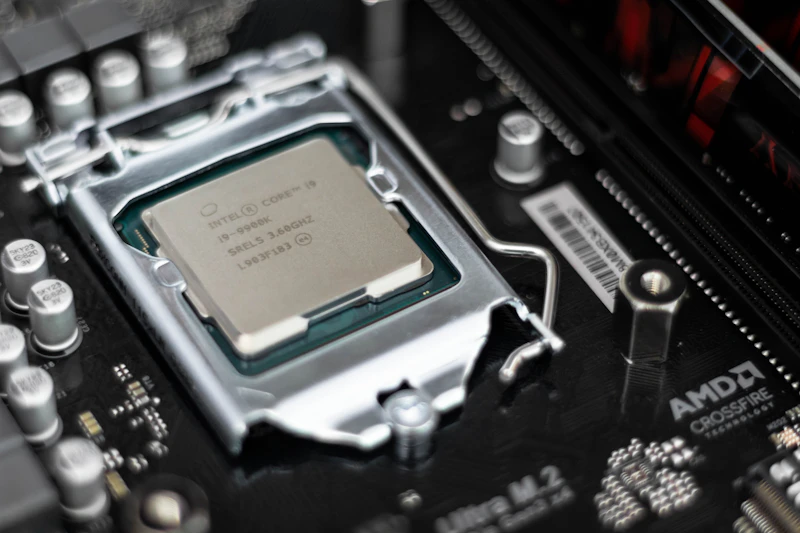
Forty-Year Yen Lows as the Hidden Subsidy Behind Japan's Chip Revival
As the yen slides into its weakest territory in four decades, Takaichinomics has entered uncharted monetary terrain. A cheap yen functions as a silent subsidy for Rapidus, Kioxia, and TSMC's Kumamoto fabs—yet the same currency inflates the cost of imported tools and materials and intensifies the talent war with Korea. The question is whether monetary policy can stand in for industrial policy, and what that means for Korea's memory champions.